(WiredJA) In a scathing judgment that exposes the lengths to which Guyana’s government will go to silence overseas critics, the High Court has declared criminal defamation laws unconstitutional and ordered the state to pay $500,000 in costs after a Guyanese police officer traveled to Brooklyn to serve summons on a political activist who has been living in the United States for 27 years.
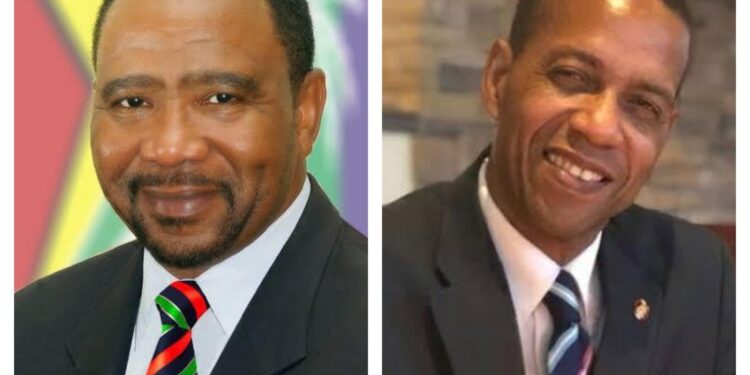
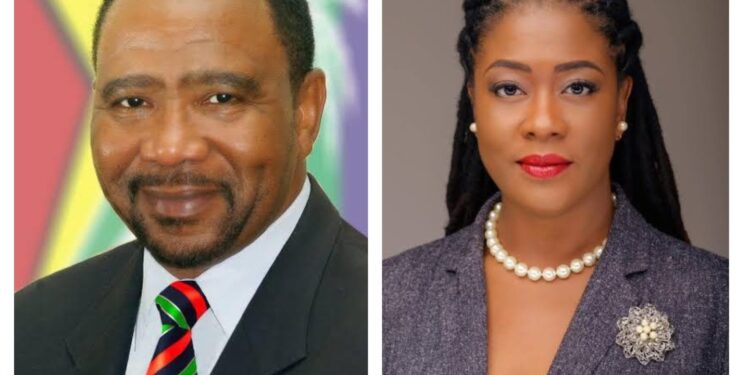
The case against Attorney General Anil Nandlall represents a devastating legal defeat for the Guyana government and a landmark victory for press freedom in the Caribbean, masterfully orchestrated by Senior Counsel Roysdale Forde, who marshalled a brilliant constitutional challenge that would ultimately dismantle the government’s favorite weapon against critics.
The controversy centers around Rickford Burke, a vocal critic of the People’s Progressive Party/Civic (PPP/C) government who faces accusations related to conspiracy to publish defamatory libel with intent to extort money from businessman Afras Mohammed.
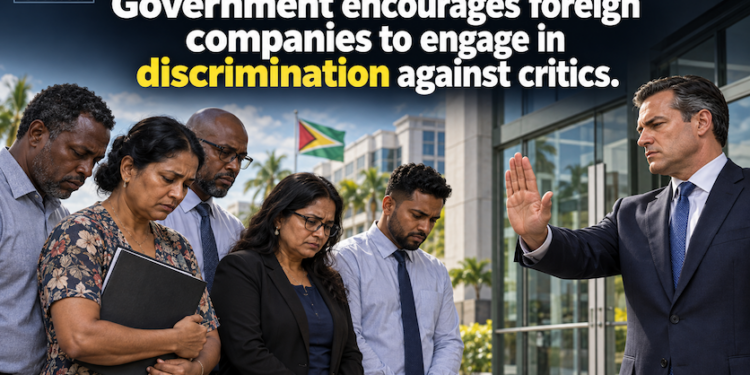
What began as a routine criminal charge quickly transformed into a constitutional crisis when authorities dispatched Assistant Superintendent Rodwell Sarabo on what the court termed “a frolic” to New York at taxpayers’ expense. The officer’s mission: to serve legal documents on Burke at his Brooklyn residence, despite the defendant’s decades-long absence from Guyana.
A Journey into Legal Absurdity
The court’s findings paint a picture of prosecutorial overreach that borders on the farcical. Burke, who has been living in the United States for twenty-seven years, was charged with offenses allegedly committed at Lusignan, East Coast Demerara—a geographical impossibility that prosecutors apparently failed to disclose to the magistrate who issued the summons.
The evidence reveals a troubling pattern of prosecutorial misconduct. When ASB Sarabo first attempted to locate Burke at his last known Guyanese address in Fellowship, West Coast Demerara, relatives informed him that Burke had been living in the United States for decades. Rather than acknowledging the jurisdictional limitations, authorities doubled down on their pursuit.
In what the court described as an unprecedented breach of legal protocol, Sarabo traveled to Brooklyn in December 2023, accompanied by a process server identified as “Wiseman.” The attempted service at Burke’s Maple Street address was rejected by the defendant, with the documents ultimately being left on his doorstep—a method the court noted “may not be acceptable in relation to criminal proceedings.”

Constitutional Earthquake
Beyond the jurisdictional circus, the High Court delivered a crushing blow to one of the government’s favorite legal weapons: criminal defamation laws. In a judgment that reverberates across the Caribbean legal landscape, the court declared that criminal defamation laws under Articles 107-114 of the Criminal Law (Offences) Act violate Article 146 of Guyana’s Constitution, which guarantees freedom of expression.
The ruling places Guyana’s government in the embarrassing position of being among the last Caribbean holdouts clinging to colonial-era laws that neighbouring nations have abandoned. Jamaica became the first independent Caribbean country to completely abolish criminal defamation laws in 2013, while Grenada repealed criminal libel provisions in 2012 and Trinidad and Tobago partially decriminalized defamation.
The court’s reasoning was unambiguous: “The resort to criminal defamatory libel to protect individual reputation is unnecessary, disproportionately excessive and not justified and or required to protect reputations, rights and freedoms of other persons and are unconstitutional as being in violation of Article 146.”
Vague Charges, Clearer Intent
The constitutional challenge exposed another glaring weakness in the prosecution’s case: the charges themselves were so vague as to be meaningless. The court noted that the charges failed to specify what allegedly defamatory statements Burke was accused of making against businessman Mohammed. In the court’s words, “It is not enough on a criminal charge to simply say they have been libel. An accused must know precisely what are the words allegedly used by him or her to found the charge.”
This vagueness appears to be a feature, not a bug, of how criminal defamation laws have been wielded in Guyana. Attorney General Nandlall has made clear his intention to pursue overseas-based critics, recently stating that “persons believe that they have the license to say what they want, to libel persons, to publish incitements” on social media platforms.
A Pattern of Intimidation
The Burke case fits into a broader pattern of the Guyana government’s increasingly aggressive stance toward critics. The government has lodged formal complaints with U.S. law enforcement agencies about Burke and retained American law firms to pursue legal action against him. Burke himself has filed a $500 million defamation lawsuit against Minister Gail Teixeira and state media outlets, creating a web of cross-border legal warfare.
The government’s pursuit of Burke has taken on an almost obsessive quality. Burke has alleged that Nandlall is under police investigation in New York in connection with an alleged conversation about having Burke “eliminated and killed”—claims that add a sinister undertone to what might otherwise be dismissed as legal theater.
Regional Rebellion Against Colonial Relics
The High Court’s decision represents more than a legal setback for the Guyana government; it’s a recognition that the Caribbean is finally shedding the colonial-era legal structures that have long stifled press freedom. International Press Institute research confirms that 13 out of 15 Caribbean states maintain criminal libel laws, with most also maintaining seditious libel provisions.
The timing is particularly significant given recent calls by Guyana’s opposition Alliance for Change (AFC) to repeal blasphemous libel laws, calling them “archaic and incompatible” with constitutional rights. The opposition noted that several Commonwealth countries including the United Kingdom, Canada, and Ireland have already scrapped blasphemy laws.
The Price of Overreach
Perhaps most stinging for the government is the court’s $500,000 costs order—a substantial sum that reflects the court’s disapproval of the state’s conduct. The judge’s language was particularly harsh regarding the decision to send a police officer overseas, describing it as conduct that “cannot be countenanced” and questioning whether proper legal advice was even sought from the Director of Public Prosecutions.
The court’s criticism extends beyond the jurisdictional issues to the fundamental question of resource allocation: “The court frowns on the course of action taken by the prosecution and the Guyana Police Force to in effect send an officer on a frolic on what must have been a taxpayer’s expense.”
A Watershed Moment
This judgment represents a watershed moment for press freedom in Guyana and the broader Caribbean. By declaring criminal defamation laws unconstitutional, the High Court has effectively dismantled one of the government’s primary weapons against critics and journalists.
The court’s reasoning was particularly pointed in noting that civil remedies remain available for those who feel aggrieved by allegedly defamatory statements: “If someone feels aggrieved by what has been said about them, they may file a civil suit. It should not be for the State, through any law enforcement arm, to charge persons for criminal defamation.”
Looking Forward
Attorney General Nandlall has vowed that if courts rule existing laws cannot be used to serve documents on overseas defendants, the government would “amend the law to give the court jurisdiction to bring before the court persons who have committed offences against the laws of this country”. Such threats ring hollow in the face of a constitutional declaration that the underlying criminal defamation framework is fundamentally unconstitutional.
The Burke case exposes the dangerous intersection of authoritarian impulses and outdated colonial laws. In an era where surveys show that more than half of Caribbean respondents believe top government officials engage in authoritarian behaviour, this judgment serves as a crucial reminder that constitutional protections for free expression cannot be circumvented by creative interpretations of archaic statutes.
For Guyana’s government, the message is clear: the days of using criminal defamation laws to silence critics are over. For press freedom advocates across the Caribbean, the decision provides powerful precedent that colonial-era restrictions on free speech have no place in modern democratic societies.
The ultimate irony is that the government’s overreach in the Burke case may have achieved exactly what it sought to prevent: shining an international spotlight on Guyana’s authoritarian tendencies while simultaneously dismantling the legal framework that enabled such conduct. In attempting to silence one critic, the government may have freed countless others from the threat of criminal prosecution for their words.
As neighbouring Caribbean nations continue their march away from criminal defamation laws, Guyana now faces a choice: embrace this constitutional clarification and join the regional movement toward press freedom, or persist in authoritarian impulses that have been decisively rejected by its own High Court. The $500,000 price tag suggests the cost of choosing poorly will only continue to mount.