


With General and Regional Elections slated for September 1, 2025, social commentator GHK Lall is urging media houses and political parties to step up and engage meaningfully with the electorate on the issues that matter most. In a recent op-ed titled “To Editors: Let Election(s) Contestants Speak”, Lall called on newspaper editors and party leaders to prioritize substance over slogans and commit to a transparent, issue-driven dialogue with the public.
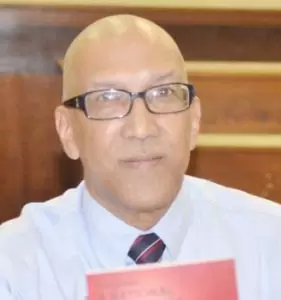
With just over a month remaining before Nomination Day, Lall emphasised the need for voters to hear directly and comprehensively from all contenders—old and new. Nomination Day is July 14.
Lall identified four parties currently in the race: the governing People’s Progressive Party (PPP), the opposition People’s National Congress (PNC), the Alliance For Change (AFC), and an unnamed newcomer.
“Guyanese voters are entitled to the clearest answers from each of them,” Lall wrote. “They should all be made to reintroduce themselves to all citizens in the frankest, most comprehensive manner.”
A Call for Substance Over Soundbytes
Lall proposed a structured media format—akin to a newspaper version of Face the Nation—to allow each candidate or party to address key policy areas in depth. He rejected the reliance on “sweet soundbytes” and what he described as “heehaw braying on Facebook pages,” advocating instead for detailed responses to issues that directly impact the lives of everyday Guyanese.
He laid out 11 core issues he believes resonate with a broad spectrum of the population:
- Poverty alleviation
- Oil governance and equitable benefit
- Corruption eradication
- National healing and reconciliation
- Venezuela policy
- Ethical governance
- Institutional independence
- Constitutional compliance
- Crime control
- Indigenous rights
- Reducing fear of government
Lall stressed that these issues are not just campaign talking points but represent the “disappointments and fears, frustrations and anguish, and hopes and aspirations” of Guyana’s citizens.
“Guyana is a broken, kleptocratic society,” he said. “The people are tired of party propaganda, leadership snow jobs, and empty platitudes.”
A Framework for Accountability
In a bid to make candidates more accountable, Lall recommended that the media require each party or candidate to answer a standard set of policy questions for each issue, including:
- What is the problem?
- Why is it serious for poor Guyanese families?
- Why is this a priority?
- Why does it matter personally to the candidate?
- What policy changes are needed?
- What are the costs and expected benefits?
- Which government agency would implement the change?
- What are the milestones and timelines?
- How will progress be measured?
Lall noted that these questions provide a practical, performance-based framework for voters to assess the credibility and readiness of each political group. He argued that political leaders have long taken the electorate for granted and that this election must mark a turning point.
Trust Must Be Earned
Lall warned that voter distrust is deep and widespread, even within parties’ own support bases, and urged all political contenders to rise to the occasion.
“Those who have a history of making fools of Guyanese are political leaders and the members of their groups. No one or any group is innocent,” he wrote.
He concluded by reiterating the importance of honest, detailed engagement: “All parties, all candidates should have a forum to say where they stand on the burning issues. The rest is up to the voting public.”



![People visit the Qianmen street in Beijing, capital of China, July 6, 2023. [Photo/Xinhua]](https://villagevoicenews.com/wp-content/uploads/2023/07/Photo-120x86.png)


