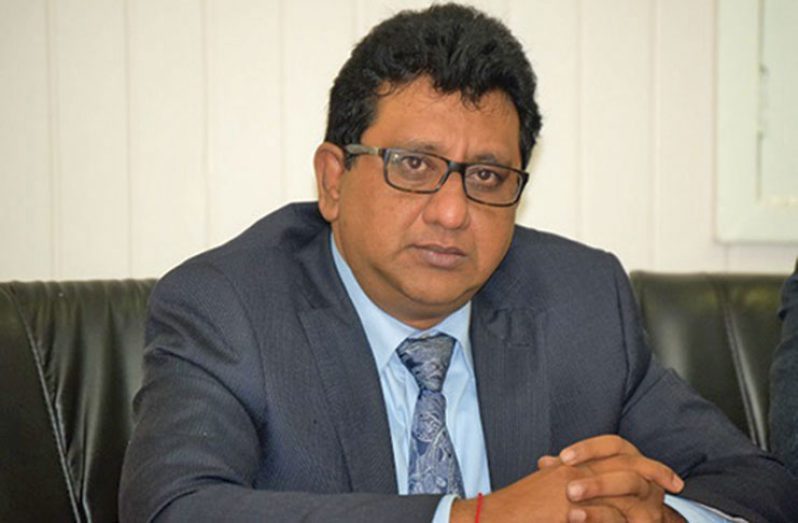
By Mark DaCosta- Azruddin Mohamed, a prominent businessman and new presidential contender, has been granted bail amounting to $500,000 after facing serious allegations of fraudulent declaration and tax evasion. The decision was made in the Georgetown Magistrate’s Court, where he is accused of knowingly misrepresenting the value of a high-end Lamborghini Aventador that was imported in December 2020. The court appearance took place on Thursday before Acting Chief Magistrate Faith McGusty, with the next hearing scheduled for June 26.
The accusations stem from a declaration made to the Guyana Revenue Authority (GRA) which is alleging deception by Mohamed. This supposed deception is said to be an attempt to evade substantial taxes owed on such a luxury item. Mohamed has firmly denied these allegations, pleading not guilty to both charges, and his attorneys have suggested that the legal proceedings represent a politically motivated attack against him as a competitor to the current ruling party.
As the court proceedings unfolded, Mohamed stood resolute, clad in a black suit and white shirt, displaying an air of composure despite the seriousness of the charges against him. His legal team, comprising noted attorneys Siand Dhurjon, Damian Da Silva, and Darren Wade, posited that the nature of the charges was flawed, highlighting that they dated back almost five years. They contended that the claims against him were rendered “bad in law” due to the elapsed period since the alleged offences occurred. Wade argued that the law stipulates such charges should be initiated within six months, suggesting that the GRA acted well beyond this timeframe, which raises questions about the legitimacy of their case.
The defence articulated that this case is intertwined with ongoing civil disputes involving the GRA, asserting that all fiscal obligations have been met satisfactorily. Mohamed’s attorney, Da Silva, indicated that his client had long been in full possession of the vehicle, having not encountered any issues until he received a notice in March 2025 regarding a new investigation. He described the tax authority’s actions as excessive and unfounded, implying that they were more interested in punitive measures than fair enforcement of the law.
In response, the prosecution insisted that the charges were rightfully established following the GRA’s investigation into potential fraud regarding the luxury vehicle’s import declaration. Special Prosecutor Sanjeev Datadin argued that procedural protocols were adhered to, including notifying Mohamed with an opportunity to challenge the Revenue Authority’s reassessment of the vehicle’s value. He underscored the gravity of tax evasion, particularly given the amounts reportedly evaded were in the realm of hundreds of millions of dollars.
Tensions ran high in the courtroom as both sides articulated their positions vehemently. Mohamed’s supporters and political allies look on with concern and indignation, convinced that what is ostensibly a legal challenge is in fact a tactic orchestrated by the ruling People’s Progressive Party (PPP) to undermine a formidable political rival. Given the charged political climate in our homeland, many observers believe that such prosecutions are reflective of deeper issues — the misuse of state mechanisms to target political opposition.
The proceedings hit a crucial point as the GRA introduced new evidence in the form of a supplementary affidavit, including documentation obtained through international legal cooperation, affirming their claims against Mohamed. This latest twist only strengthens the perception of a politically charged atmosphere as the businessman continues to navigate through these turbulent waters.
Despite the serious nature of the allegations, it is essential to acknowledge the context in which they are being levied. The optics of the situation, combined with Mohamed’s aspirations for political leadership, fuel speculation regarding the real motives behind the charges. As the nation watches closely, the intersection of law and politics will undoubtedly take centre stage in the coming weeks, with the future implications for Mohamed and the country’s political landscape hanging in the balance.