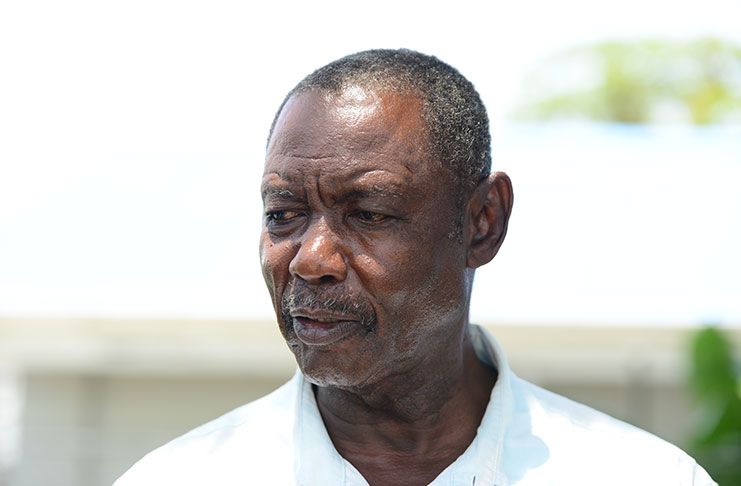
“The act by Venezuela is to annex Essequibo by way of laws, and while its election for the Essequibo was held only on Ankoko and its environs, a part of Ankoko belongs to Guyana,” says Guyana Trades Union Congress (GTUC) General Secretary Lincoln Lewis.
The veteran trade unionist noted that in 1966, just months after Guyana gained independence, Venezuela began its incursion into Guyana’s territory. However, in December 2023, when Venezuelans voted to make Essequibo a new state of that country, Lewis said that through proclamation, the Maduro regime effectively annexed the Essequibo region, which comprises two-thirds of Guyana. “It is annexation by proclamation.”
Venezuela ignored the International Court of Justice’s (ICJ) Order to “refrain from any action which might aggravate or extend the dispute before the Court or make it more difficult to resolve.”
The trade unionist added that this annexation was solidified in December 2024 when the Venezuelan military commissioned a bridge from mainland Venezuela to Ankoko Island, facilitating unrestricted movement.
Speaking on “Straight Up With Mark Benschop” last evening, Lewis contended that history offers examples of such aggression. He cited Israel’s seizure of Arab land during a war under Prime Minister Golda Meir, noting that although the international community passed several resolutions condemning the act, the land remained under Israeli control and saw further expansion.
Lewis stressed that all the settlements established by Israel on Palestinian land are now treated as Israeli territory. He said the same strategy is being employed by Venezuelan President Nicolás Maduro in his attempt to seize Guyana’s land. According to Lewis, this move aims to place Essequibo under Venezuelan control, even as the International Court of Justice (ICJ) has ruled that no election should be held in the Essequibo region while the border matter remains before the court.
The ICJ’s Order expressly states:
“Venezuela shall refrain from conducting elections, or preparing to conduct elections, in the territory in dispute, which the Co-operative Republic of Guyana currently administers and over which it exercises control.”
In a follow-up conversation with Village Voice News, the veteran trade unionist expressed concern over the government’s failure to systematically develop border communities to establish new settlements populated by Guyanese citizens. Lewis condemned the PPP government’s dismantling of the Guyana National Service (GNS) in 2000. Established in 1974 during the Forbes Burnham administration, the GNS aimed to populate remote areas as part of Guyana’s post-independence defense strategy.
The bridge in question links Venezuela’s mainland to Ankoko Island, connecting it to a small Venezuelan military base built illegally on Guyana’s side of the island. According to the Government of Guyana, the island is primarily inhabited by gold miners and military personnel.
Lewis reiterated his concern that President Irfaan Ali’s decision to sign the December 2023 Argyle Declaration with President President Nicolás Maduro was a grave misstep. According to him, it undermines the spirit and intent of turning to the ICJ as the sole arbiter of the border issue between the two nations.
He said it is telling that the shrewd Maduro pays no heed to the terms of the Argyle Declaration, nor can the interlocutors enforce them. Lewis believes the declaration reflects Guyana’s retreat from the ICJ process and its vulnerability in entertaining bilateral talks under Venezuelan pressure. The interlocutors are: St Vincent and the Grenadines Prime Minister Ralph E. Gonsalves: Pro-Tempore President of CELAC (Community of Latin American and Caribbean States); Dominica Prime Minister Roosevelt Skerrit; Brazil President Luiz Inacio Lula da Silva.