Friday, August 21, 2026
Village Voice News
ADVERTISEMENT
  • Home
  • News
  • Sports
  • Editorial
  • Letters
  • Global
  • Columns
    • Eye On Guyana
    • Hindsight
    • Lincoln Lewis Speaks
    • Future Notes
    • Blackout
    • From The Desk of Roysdale Forde SC
    • Diplomatic Speak
    • Mark’s Take
    • In the village
    • Mind Your Business
    • Bad & Bold
    • The Voice of Labour
    • The Herbal Section
    • Politics 101 with Dr. David Hinds
    • Talking Dollars & Making Sense
    • Book Review 
  • Education & Technology
  • E-Paper
  • Contact Us
No Result
View All Result
  • Home
  • News
  • Sports
  • Editorial
  • Letters
  • Global
  • Columns
    • Eye On Guyana
    • Hindsight
    • Lincoln Lewis Speaks
    • Future Notes
    • Blackout
    • From The Desk of Roysdale Forde SC
    • Diplomatic Speak
    • Mark’s Take
    • In the village
    • Mind Your Business
    • Bad & Bold
    • The Voice of Labour
    • The Herbal Section
    • Politics 101 with Dr. David Hinds
    • Talking Dollars & Making Sense
    • Book Review 
  • Education & Technology
  • E-Paper
  • Contact Us
No Result
View All Result
Village Voice News
No Result
View All Result
Home Global

UNITED NATIONS | Millions of Illiterate Teens in Wealthy Nations says UNICEF

Admin by Admin
May 17, 2025
in Global
UNITED NATIONS | Millions of Illiterate Teens in Wealthy Nations says UNICEF

UNITED NATIONS | Millions of Illiterate Teens in Wealthy Nations says UNICEF

0
SHARES
0
VIEWS
Share on FacebookShare on Twitter

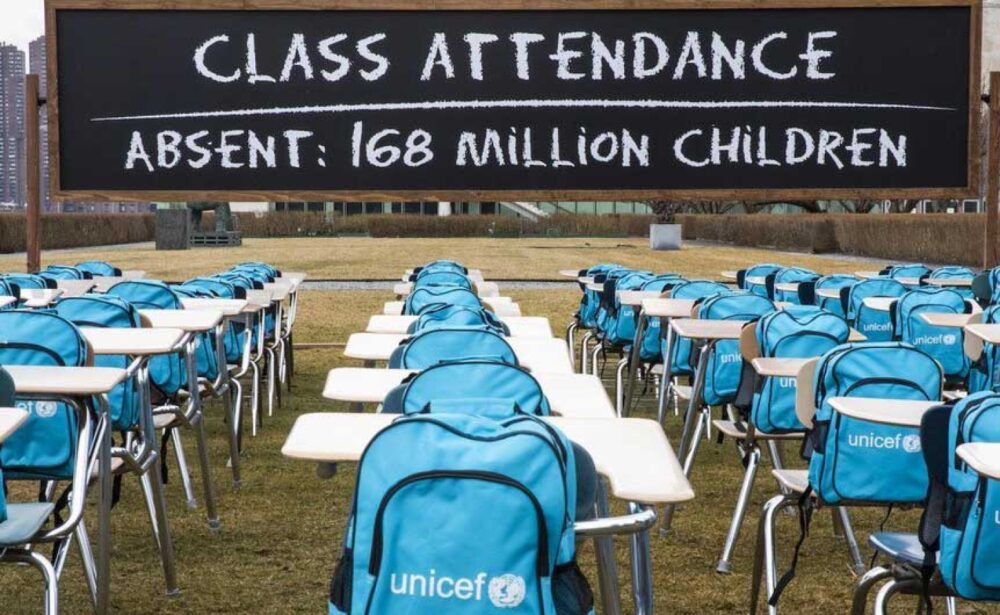
In a damning indictment of educational failure across the developed world, UNICEF revealed Wednesday that approximately eight million teenagers in the world’s wealthiest countries cannot read or understand basic texts—a shocking testament to pandemic-era policies that have left a generation academically crippled.

The UN agency’s latest report paints a bleak picture: children across affluent nations are falling behind academically, struggling with deteriorating mental health, and battling rising obesity rates. These troubling trends suggest that even nations with abundant resources have fundamentally failed their youngest citizens.

READ ALSO

AI needs a symbiotic reset with humanity

China makes a $2 billion push into Africa’s third-most industrialized nation as Beijing moves ahead of the US

“We’re witnessing nothing short of a silent crisis,” said Bo Viktor Nylund, Director of UNICEF’s Innocenti research office, describing what he termed a “worrying benchmark for children’s wellbeing” in countries that should, by all measures, be providing world-class support systems.

While the Netherlands and Denmark topped UNICEF’s ranking of child wellbeing, followed by France, nations like Mexico, Türkiye, and Chile languished at the bottom of the list. This disparity raises uncomfortable questions about resource allocation and policy priorities even among nations with substantial wealth.

The academic fallout from COVID has been particularly severe. As schools shuttered and remote learning became the norm, students fell between seven and twelve months behind expected progress in core subjects. The pandemic didn’t just interrupt education—it derailed it, with disadvantaged children bearing the heaviest burden of these setbacks.

Perhaps most alarming is the functional illiteracy crisis: across 43 studied countries, approximately half of 15-year-olds surveyed couldn’t comprehend simple texts. This staggering statistic doesn’t just represent academic failure—it forecasts diminished lifetime opportunities and economic potential for millions of teenagers.

The pandemic’s mental health impact has been equally devastating. In nearly half of the countries with available data, children reported lower life satisfaction, while adolescent suicide rates—which had been declining—have plateaued. This psychological toll comes alongside physical health concerns, as obesity rates climbed among children aged five to 19, with those from lower socioeconomic backgrounds suffering disproportionately.

UNICEF’s Nylund has called for a “coherent” and “holistic” approach that addresses “every stage” of childhood development. The agency specifically advocates for including youth voices in policy decisions—a recommendation that acknowledges how systematically children’s perspectives have been overlooked during the pandemic response.

The report serves as a stark warning that even hard-won progress in child wellbeing remains “increasingly vulnerable” in wealthy nations. As these countries grapple with the pandemic’s aftermath, UNICEF urges governments to focus interventions on disadvantaged communities to prevent further widening of already alarming equity gaps.

For millions of children across the world’s richest nations, the pandemic didn’t just interrupt their education—it may have permanently altered their life trajectories. The question now is whether governments will finally prioritize the recovery of a generation at risk of being left behind. (WiredJA)

ShareTweetSendShareSend

Related Posts

Visitors interact with a robot from Unitree Robotics during the sixth China International Consumer Products Expo (CICPE) in Haikou, South China's Hainan province, April 14, 2026. [Photo/Xinhua]
Global

AI needs a symbiotic reset with humanity

by Admin
August 21, 2026

China Daily As companies pour billions of dollars into artificial intelligence while cutting jobs, fears of human replacement are mounting....

Read moreDetails
Chinese leader Xi Jinping and Egyptian President Abdel Fattah el-Sisi (Photo: Reuters)
Global

China makes a $2 billion push into Africa’s third-most industrialized nation as Beijing moves ahead of the US

by Admin
August 20, 2026

This proposed initiative would establish a massive, integrated industrial complex in the Egypt's Suez Canal Economic Zone (SCZONE), marking a...

Read moreDetails
Ebola Treatment Centre at the Centre Médical Évangélique in Bunia, the first Ebola treatment centre to be built in Bunia. Constructed by WHO and run by ALIMA.
Global

WHO and Africa CDC Welcome Allocation of Ebola vaccines to Democratic Republic of the Congo

by Admin
August 20, 2026

Last week, the government of the Democratic Republic of the Congo (DRC) requested a release of Ervebo vaccines from the...

Read moreDetails
Next Post
Venezuelan Migrants (World Vision photo)

Venezuelan Migration to Guyana Sparks Alarm Amidst Rising Border Tensions


EDITOR'S PICK

Nigeria seizes donkey penises to be smuggled to Hong Kong

September 9, 2022
Opposition Leader Mr. Aubrey C. Norton,  Leader of the Opposition

Opposition not buying Agri Ministry’s explanation on alleged chicken smuggling, fires off questions

December 4, 2023
Barbados Prime Minister Mia Mottley has welcomed Roston Chase

Mottley hails Chase’s Test captaincy as reflection of Barbados’ cricket leadership

May 17, 2025
Dr. Terrence Campbell

Dr. Campbell Again Urges Guyana Opposition to Unite Ahead of Elections

June 4, 2025

© 2024 Village Voice

No Result
View All Result
  • Home
  • News
  • Sports
  • Editorial
  • Letters
  • Global
  • Columns
    • Eye On Guyana
    • Hindsight
    • Lincoln Lewis Speaks
    • Future Notes
    • Blackout
    • From The Desk of Roysdale Forde SC
    • Diplomatic Speak
    • Mark’s Take
    • In the village
    • Mind Your Business
    • Bad & Bold
    • The Voice of Labour
    • The Herbal Section
    • Politics 101 with Dr. David Hinds
    • Talking Dollars & Making Sense
    • Book Review 
  • Education & Technology
  • E-Paper
  • Contact Us

© 2024 Village Voice