In a developing saga that has sparked political tension and public outcry, evidence continues to mount suggesting that the government of President Irfaan Ali is indeed targeting the Mohamed family, contradicting the President’s claims that the actions against the business family are merely a matter of legal compliance.
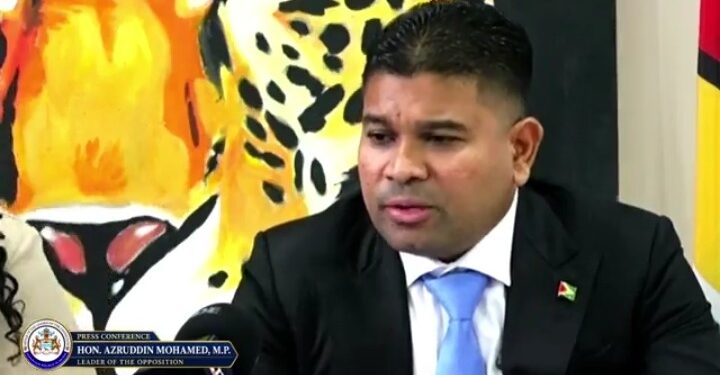
On Saturday, officers from the Guyana Revenue Authority (GRA) appeared at the home of businessman Azruddin Mohamed to seize luxury vehicles over alleged non-payment of $900 million in taxes. This is despite the ongoing legal proceedings over the matter, which the Mohameds have challenged in court, insisting all taxes were settled at the time of import. The GRA’s post-audit of the vehicles has been met with accusations of political retaliation, with the Mohameds asserting that the government is using the tax claims as a weapon due to Azruddin Mohamed’s growing political influence.
In a notable twist, President Ali himself used one of the Mohamed family’s luxury vehicles during his swearing in ceremony, even placing the presidential seal on it, further intensifying questions about the political undertones of the GRA’s actions.
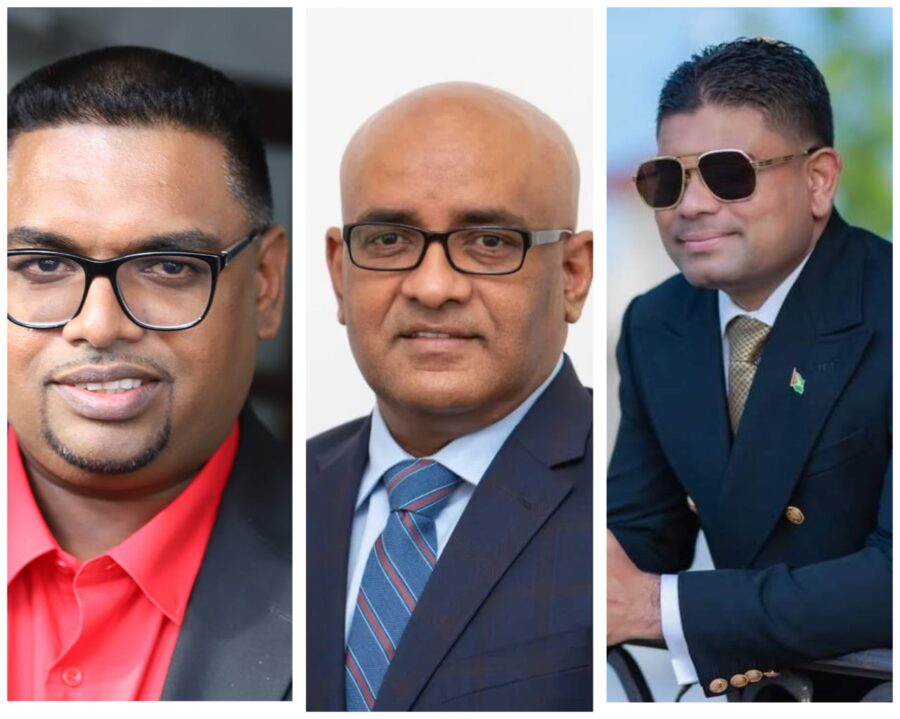
In a recent revelation, Azruddin Mohamed claimed that his family’s troubles with the GRA may not be purely about taxes. According to Mohamed, the government revoked the firearm license from Mohamed Enterprise, a security service company he operates. He alleged that both Vice President Bharrat Jagdeo and Attorney General Anil Nandlall made a backdoor deal, offering to have the $900 million tax claim against his family withdrawn if he agreed to issue a letter stating that he would not run for president. The claim adds a new layer to the ongoing political and legal drama, suggesting that the government is attempting to curtail Mohamed’s influence by pressuring him into political submission.
During a public meeting at Canal Number 2 on Sunday morning, President Ali insisted that the GRA’s actions were not politically motivated, but were instead a matter of upholding the rule of law. The GRA made it very clear that there is something called post-audit, and they have a duty and responsibility when information comes before them to act in the interest of the rule of law, to act in the interest of the country, Ali stated, emphasising that the government was merely following legal protocols.
However, despite Ali’s reassurances, the situation has taken on a political dimension, with PPP General Secretary Bharrat Jagdeo launching a verbal attack on Azruddin Mohamed during a recent trip to Barbados. Jagdeo publicly insulted the Mohamed family, particularly Azruddin, further deepening the divide between the PPP and the prominent businessmen. This move raises concerns over whether the personal attacks are linked to Azruddin Mohamed’s political outreach and growing popularity.
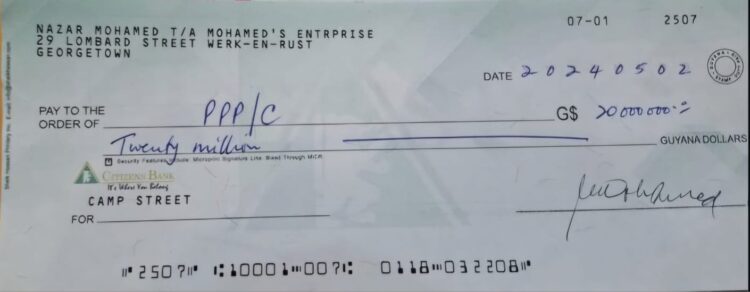
What makes this situation even more intriguing is that the PPP itself has greatly benefitted from the Mohamed family. As recently as May 2024, the Mohamed family made a significant $20 million donation to the PPP, raising questions about the government’s handling of a family that has previously supported them financially. Despite this, President Ali continues to deny any targeting of the family, claiming the GRA’s actions are solely about legal accountability.
The Mohamed family, however, maintains their innocence and asserts that they have complied with all necessary tax obligations. They have vowed to fight the GRA’s actions in court, and their case is expected to be heard this week. The situation has further fueled the growing perception that the government’s response is politically motivated, given Azruddin Mohamed’s increasing influence and his reported ambitions for political office.
This political and legal battle highlights a critical moment for Guyana, where the lines between legal action, political retribution, and power struggles seem increasingly blurred. As the case goes to court, the nation watches closely to see whether the ruling will reflect true legal due process or whether it will further expose the politicisation of state institutions. The growing tension between the Mohamed family and the PPP, coupled with accusations of governmental overreach, is creating a volatile environment that could have long-lasting implications for Guyana’s political landscape.
The Mohameds continue to maintain their innocence and vow to fight the GRA’s actions in court, raising fundamental questions about the state of governance, political power, and fairness in Guyana.