by Ahmed Reid and Verene Shepherd – March has two significant historical events that the global community, but especially Africa and its Diaspora, mark each year: The International Day for the Elimination of Racial Discrimination in memory of the Sharpville Massacre in South Africa during the anti-apartheid struggle, and March 25, The “International Day of Remembrance of the Victims of Slavery and the Transatlantic Slave Trade”. [Of course, these days “chattel enslavement” and “trafficking” are regarded by descendants of the original victims as more suitable descriptors].

This latter commemorative Day recalls March 25, 1807, when the British Parliament, after witnessing the declining fortunes of its Caribbean plantations, the epochal quest for freedom by enslaved people in St. Domingue (now Haiti), and elsewhere, and anti-slavery activities in England, enacted legislation to end its almost 300-hundred-year involvement in the capture and enslavement of over 3 million Africans.
The 1807 Act prohibited British registered ships from carrying out raids in Africa after January 1, 1808, though it is important to note that the enslavement and brutalization of Africans continued way beyond that Act.
It is worth recalling that Britain’s first raiding mission to Africa started with the public/private partnership between John Hawkins, Elizabeth I, members of her court, and wealthy speculators during the 16th century. The Elizabeth I – led consortium financed three of Hawkins’ raiding missions and provided Hawkins with money, ships, supplies, and guns to terrorize African communities.
For the next 300 years, Britain carried out 11,240 raids that led to the capture and enslavement of an estimated 3,259,441 Africans. During that period, the world’s most powerful navy was employed to safeguard national interests. Royal Navy vessels were deployed to protect the ships of royally chartered companies such as the Company of Royal Adventurers, the Royal African Company, and the South Sea Company on raiding expeditions.
Additionally, these naval forces were tasked with protecting barracoons in West Africa and suppressing African resistance to enslavement. Between 1662 and 1741, these companies conducted approximately 876 missions, resulting in the capture and enslavement of 256,545 Africans. Leading investors (and directors of these companies) were Charles I, Charles II, James I, James II, William III, George 1, George II, and Queen Anne.
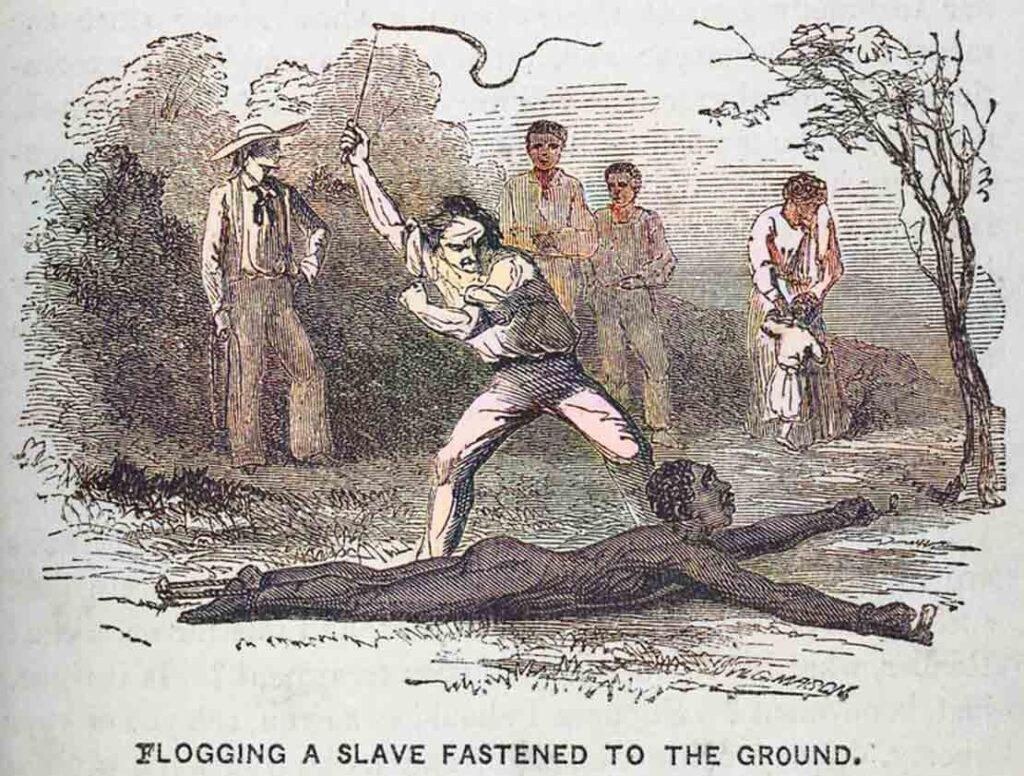
Death, trauma, and sexual exploitation were characteristics of the trafficking in enslaved Africans. Of the number enslaved by Britain, 526,117 African men, women, and children lost their lives (some deliberately thrown overboard), while crossing the Atlantic. Children as young as three years old and men and women as old as 77 years were trafficked to the Americas and were forced to survive the horrific conditions onboard.
They were forced into cramped spaces no larger than the size of a coffin, with fecal to oral transmissions of microbes and pathogens quite commonplace. Olaudah Equiano, in his famous biography, spoke of the trauma and the dreaded conditions aboard the ship. Estimated to be about 11 years old when captured Equiano stated, “the shrieks of the women, and the groans of the dying, rendered the whole a scene of horror almost inconceivable.”
Alexander Falconbridge, enslaver-turned-ship’s doctor, recounted the brutality meted to enslaved women: “…The officers are permitted to indulge their passions among them at pleasure, and sometimes are guilty of such brutal excesses as disgrace human nature.” He further stated, that “some of them have been know to leap overboard and drown themselves.” Consequently, enslaved individuals brought psychological scars with them to the Americas. Chattel enslavement on plantations and other properties and in domestic households, would further dehumanize and traumatize those enslaved, deemed property/non-persons, to suit the economic needs of empires and depraved owners and overseers.
Freedom Delayed
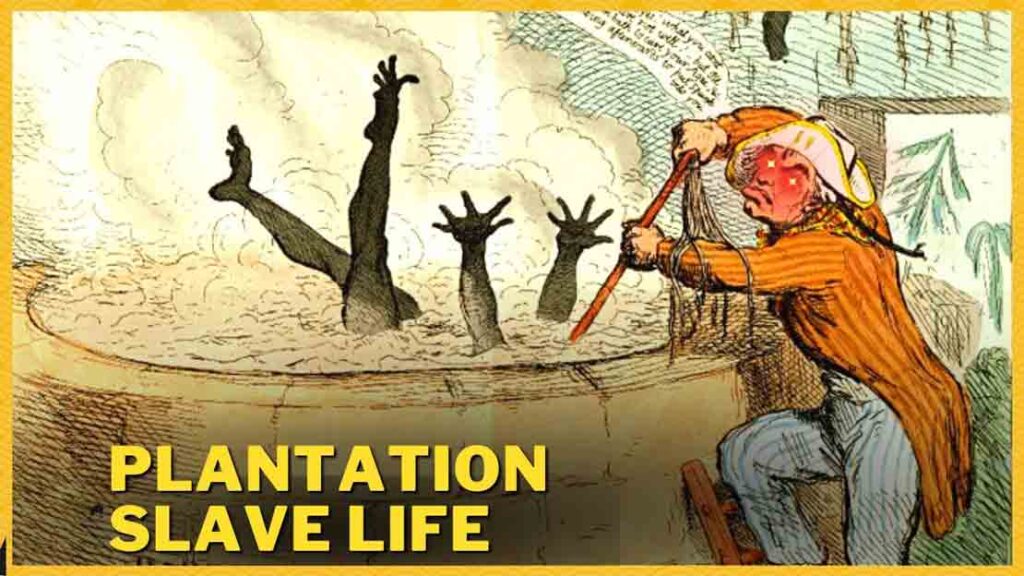
Despite this evidence it is Britain’s about turn in 1807 and 1833 that is etched in our historical consciousness and widely promoted in some historical narrative. However, it is worth highlighting that Haiti/Ayiti, and not Britain, was the first nation to take this moral stance to outlaw chattel enslavement, the historic trafficking in enslaved people, and restore the dignity of Africans.
Following its successful revolution, Haiti/Ayiti abolished chattel enslavement entirely when it declared independence in 1804. Article 2 of its revolutionary constitution stated emphatically that “slavery is forever abolished.” This was a complete rejection of the institution of chattel slavery itself.
While European Enlightenment championed ideas of liberty, progress, and natural rights, non-Europeans were excluded from their conceptions of universal rights. This was evident in the glaring contradictions/tensions in how colonial powers articulated ideas on liberty and natural rights yet engaged in restricting those same rights to millions of enslaved people.
There are other noteworthy contradictions. John Locke, a philosopher known for advocating for natural rights, held significant investments in the Royal African Company (£600), and profited from shares in the company. There was no contradiction amongst Haiti’s/Ayiti’s philosophical and political thinkers. There was philosophical clarity that liberty, progress, and natural rights should extend to all. That was the society they imagined and that was the political system they formed. Haiti/Ayiti, not colonial Europe, gave democracy its truest political meaning.
Haiti/ Ayiti paid dearly for having “the audacity” to declare its independence, abolish chattel slavery, and disrupt the colonial superstructure of economic exploitation and wealth extraction, and the impact is being felt to this day. Haiti’s/Ayiti’s approach was markedly different from the gradualist strategies of her North American neighbours, Denmark, and Britain.
For example, in 1799, the state of New York passed the Gradual Emancipation Act, but it was not until 1827, that chattel slavery was fully abolished in the state. Denmark, the first European colonial power to ban the trafficking in enslaved Africans in 1792, ushered in a ten-year transition period that made it illegal to trade enslaved people in Danish colonies after 1803. The British also tried to extend chattel slavery through an Apprenticeship system.
The growing call for reparations is grounded in these atrocities and the legacies, including underdevelopment and psychological trauma, that haunt African people today. It is time for those who perpetrated such atrocities to own up to their past wrongs and forge a new present and future for Haiti/Ayiti and the former colonized world. In the meantime, we use each March 25 to remember and remind those who would rather forget, why we remember.
Professor Verene A. Shepherd is Immediate Past Director, Centre for Reparation Research, The UWI (2016-2024); Former Chair (now Vice-Chair), The UN Committee on the Elimination of Racial Discrimination; Former Chair, the UN’s Working Group of Experts on People of African descent; Hon Fellow, Jesus College, Univ of Cambridge; External Advisory Board Member, the Centre for Human Rights and Restorative Justice, McMaster University and Advisory Board Member, The PJ Patterson Institute for Africa-Caribbean Advocacy.
Please send comments to – verenalber@yahoo.com