Christianity is the largest religion in the world and the largest in Guyana. Christians – whose beliefs are based on the birth, ministry and death of Jesus of Nazareth (the Christ) – constitute 64 per cent of this country’s population.
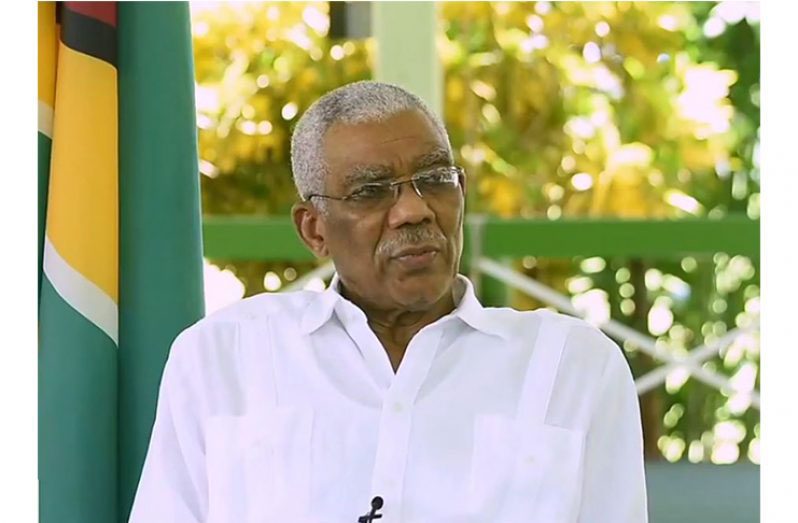
Former President David Granger, speaking on the programme – The Public Interest – recalled that Christianity changed the community in fundamental ways over the last two centuries. The most important change was the Church’s steadfast support for the Emancipation of enslaved Africans in the early years of the 19th century. Christian abolitionists such as Thomas Buxton, Thomas Clarkson and William Wilberforce contributed to the achievement of African Emancipation in 1838.
Mr. Granger alluded to the well-known fact that the Christian Church pioneered primary and secondary education by providing both religious and secular education to Africans both in the pre- and to others in the post-Emancipation periods.
Emancipation opened opportunities for the promotion of public education which overcame the exclusion of enslaved Africans and children of indigenous and indentured labourers from formal education. Early post-Emancipation villages became the common ground where church and school were established side by side, often conveniently co-located in the same churchyard.
It is a well-known fact that the Christian Church established the ‘six sisters’ – Queen’s College, Bishops’ High, St. Rose’s High, St. Stanislaus College, St. Joseph High and Berbice High all over one hundred years and today still remain the country’s leading secondary schools.
Christian Churches – particularly the Anglicans, Catholics, Congregationalists, Lutherans, Methodists and Presbyterians – built and administered schools which were eventually open to the poor of all ethnic groups and faiths.
The Christian Church helped to lift enslaved Africans and most indigenous and indentured labourers from the lowest and worst forms of manual and menial toil to positions in the professional classes. Enhanced access to employment after enslavement and indentureship allowed for the emergence of the middle-class workforce.
Christian Churches deliberately set about ‘evangelising’ Amerindians, Africans and Indians. Portuguese immigrants were already mostly Christian and were ministered to by a mainly foreign Catholic clergy. Churches played a cohesive role by advocating social, economic and political justice, promoting opportunities for young people by working with cultural groups and fostering friendly relations among the faithful.
The Congregational Union supported the free population in the post-Emancipation period by establishing churches and schools in many coastal villages. Most Congregational churches today are over 150 years old – the ‘A to Z’ from Arundel Congregational Church; Albion Chapel; Ebenezer Congregational Church; Freedom Congregational Church; Mission Chapel Congregational Church; Smith Memorial Congregational Church and Ebenezer – to Zoar Congregational Church.
The Christian church can be credited with emphasising the rite and role of marriage –regarded as a ‘sacrament’ – which had been prohibited during the era of enslavement when Africans were legally prohibited from marrying and the separation of parents and children was prevalent.
The former president warned that, despite the Christian Church’s unequalled contribution to the Emancipation Movement, education, economic equality and community development, some older Churches are threatened with declining congregations and face the prospect of becoming mere places of Sunday worship.
Some Christians at present may not be as concerned about doctrinal orthodoxy and moral precepts as in the past; they might regard material possessions and money as more important than Jesus’ message, ministry and mission.
Modern moral standards as portrayed in popular entertainment and the mass media, however, are often seen to be inconsistent with traditional Christian values. Nevertheless, many people respectfully acknowledge the historical role that the Christian Church played in the dark days so that others could attain a good life today.