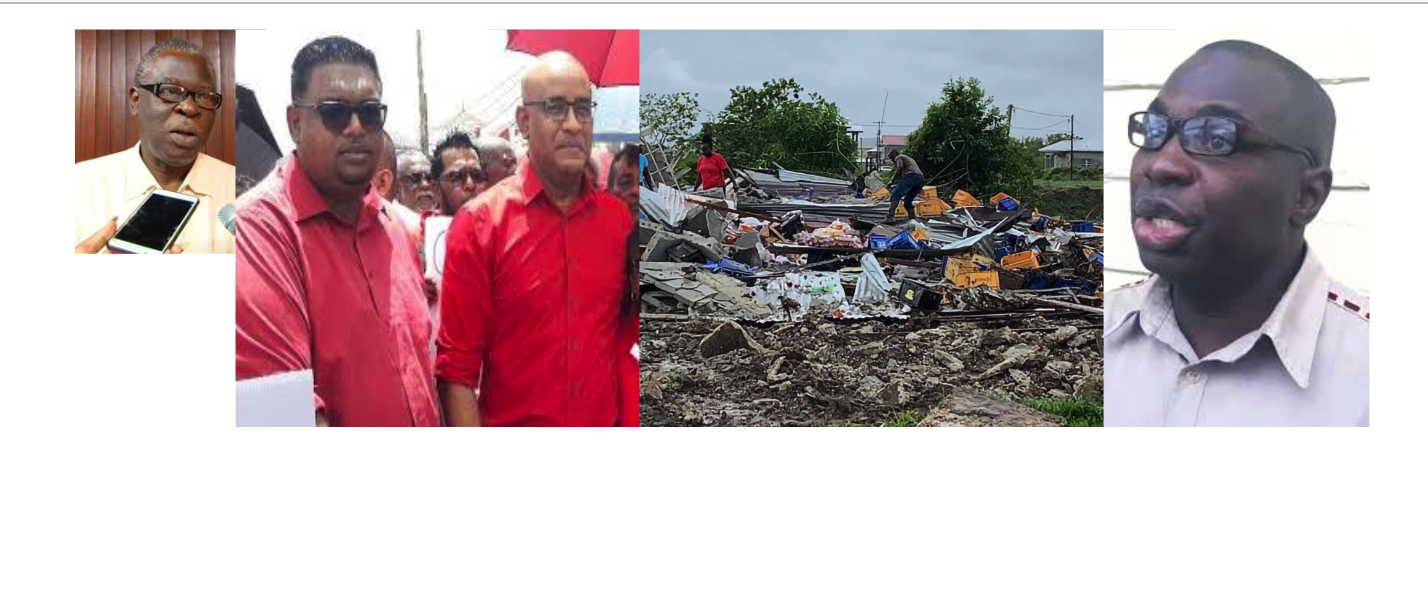
The recent statement by Minister Kwame McCoy, in response to Adam Harris’s article on the Mocha Arcadia evictions, represents a troubling defense of what can only be described as an egregious overreach by the government. The eviction and destruction of property belonging to the Mocha community have raised serious concerns about the government’s commitment to fairness, transparency, and the rule of law.
Minister McCoy’s response, filled with accusations of political bias against Harris, conveniently sidesteps the core issue: the unjust treatment of Mocha residents, predominantly of African descent. The Minister’s attempt to deflect criticism by labeling Harris as a propagandist for the opposition does nothing to address the legitimate concerns raised about the government’s actions.
Let us not lose sight of the facts. The residents of Mocha Arcadia were displaced, their homes and livelihoods destroyed, under the guise of development. The government claimed that these homes were in the path of the new Heroes Highway, yet it has since been revealed that the road was completed without encroaching on their properties. Instead, these lands are now being allocated to individuals with close ties to the People’s Progressive Party (PPP) or of Indian ancestry, a move that reeks of discrimination and bias.
Attorney Ronald Daniels raises critical questions that remain unanswered:
1. When was this area designated a commercial zone?
2. Were the affected residents notified of this designation?
3. To whom were these commercial lots allocated?
4. Were the residents given the opportunity to invest commercially should they have the capacity?
5. What metrics were used to allocate these commercial lots?
6. Who presided over the allocation process?
These questions strike at the heart of the issue: transparency and accountability. The government’s refusal to provide clear answers only deepens suspicions of racial discrimination and favoritism.
Minister McCoy boasts of the government’s efforts to create a “One Guyana” through initiatives like house lot allocations and scholarships. But how can we believe in this vision when we witness the government forcibly removing citizens from their homes, offering inadequate compensation, and then redistributing the land to those with political connections? How can we trust a government that appears more interested in silencing critics than in addressing the grievances of its people?
The government’s narrative that the evictions were necessary for progress falls flat when weighed against the evidence. The reality is that these actions have disproportionately affected Guyanese of African descent, fueling the perception that this administration is intent on marginalizing a specific ethnic group. This is not the “One Guyana” we were promised.
It is time for the government to come clean. The people of Guyana deserve to know why these lands were seized, how the new occupants were chosen, and why the affected residents were not given a fair opportunity to benefit from the development they were displaced for. Anything less than full transparency is a betrayal of the public trust.
Minister McCoy, rather than attacking the messenger, should focus on addressing the real issue: the government’s role in perpetuating inequality and injustice. The Mocha evictions are a stain on our nation’s conscience, and no amount of deflection can erase the pain and suffering inflicted on those families.
We must demand better from our leaders. We must demand accountability, fairness, and respect for all Guyanese, regardless of their race or political affiliation. Only then can we truly begin to build the “One Guyana” that we all deserve.