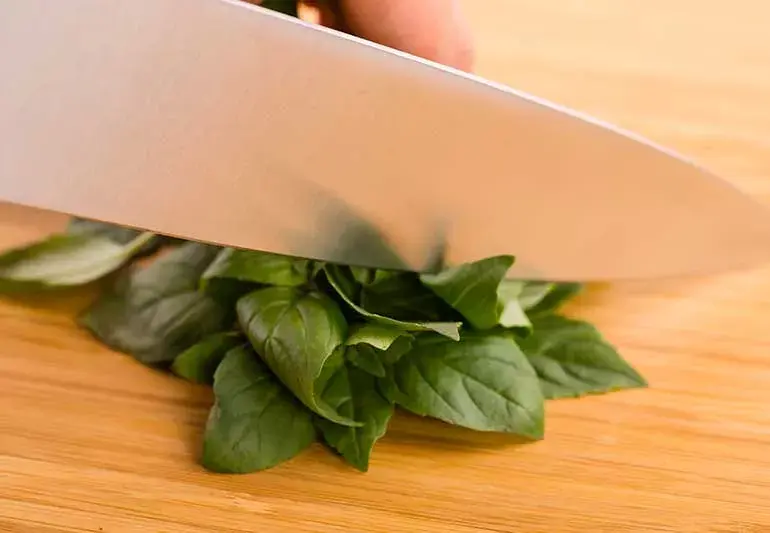
More than a pop of colour for your latest culinary creation, basil leaves provide benefits that are almost endless.
“Basil contains nutrients and compounds that can help stave off chronic diseases, including cancer, diabetes, heart disease and arthritis,” says registered dietitian Gillian Culbertson, RD, LD. “On top of that, basil has antibacterial and anti-inflammatory benefits. And it may even boost your mental health, depending on the variety and form that you use.”
What is basil?
Basil (scientific name: Ocimum basilicum) is an herb commonly used in both Italian and Southeast Asian cooking, such as Thai and Vietnamese food. It comes in many varieties with different flavors, colours and leaf shapes, so the sky’s the limit for how you prepare and consume it.
Common types of basil include:
Sweet basil: If you’ve tried basil before, chances are it was sweet basil — the most popular variety. Sweet basil has basil’s trademark round, curved, grass-green leaves and is a great base for pesto.
Genovese basil: Genovese basil is sweet basil’s Italian cousin. Also great in pesto and other Italian dishes, it has larger, darker green leaves and a stronger flavor.
Thai sweet basil: Thai sweet basil leaves are flatter and pointier than sweet basil leaves. But the differences don’t stop there. Its leaves have a distinct black licorice flavor that holds up well in high cooking temperatures, unlike sweet basil.
Purple basil: This variety of basil has striking reddish-purple leaves. And its flavor is just as bold — it tastes like herby cloves.
Holy basil (tulsi): Like its name suggests, people use it for worship in Hinduism. In Ayurvedic medicine (an ancient medical system from India), practitioners also consider it to be one of the most important medicinal herbs. It’s more bitter than other basil varieties when eaten raw.
You can buy basil leaves that are fresh, frozen or dried. Basil is also an easy DIY herb — all you need is a pot, soil and lots of sunlight. And to remember to water it. When used medicinally, you can purchase basil as an:
Essential oil.
Extract.
Powder.
Is basil good for you?
The answer is a resounding yes, says Culbertson — in more ways than one. “Basil is a great source of vitamin K, especially dried basil leaves. Vitamin K helps strengthen your bones. It also plays a big role in your blood’s ability to clot. But that’s just the tip of the iceberg.”
A review of 24 human studies found that all reported results in favor of basil’s health benefits, including positive effects on:
Blood sugar health.
Heart and vascular (blood vessel) health.
Immunity.
Thinking and reasoning ability (neurocognition).
Culbertson shares five main health benefits of basil:
- Protects against cell damage
Basil leaves are chock full of antioxidants, natural compounds that protect your body’s cells. Your cells get damaged by oxidative stress when they have too many free radicals. “Your body makes free radicals in response to stress and inflammation. Free radicals also come from environmental exposures, like cigarette smoke and ultraviolent (UV) radiation,” explains Culbertson. “But antioxidants act as a shield against free radicals — and the health problems they cause.”
Left unchecked, oxidative stress can lead to health conditions that include:
Cancer.
Cardiovascular disease.
Cataracts.
Inflammatory diseases, like arthritis.
- Prevents cancer
Several studies have demonstrated sweet basil essential oil’s potential to ward off certain cancers. In one lab study, sweet basil prevented the growth of human colon cancer cells in test tubes. In another study, scientists found that leaf extracts from six different types of basil all had anticancer properties. Basil got in the way of the cancer cells’ ability to grow and divide, ultimately destroying them.
“There is a growing body of evidence that basil could be a powerful cancer prevention tool,” says Culbertson. “But researchers need to do more human studies to confirm these promising results and understand how much basil people should consume.”
- Helps manage blood pressure and cholesterol
Traditional Chinese medicine (TCM) practitioners have treated cardiovascular disease with basil for centuries — and with good reason. Nonhuman studies have shown it can reduce high blood pressure and improve cholesterol levels.
“Plus, holy basil contains eugenol, an oil that may help lower blood pressure by relaxing your blood vessels,” notes Culbertson. “Studies have tested several forms of basil, including extracts, leaves and leaf powders.”
- Improves blood sugar levels
Both human and lab studies have shown basil’s special ability to manage blood sugar. For example, scientists observed that basil extract contributed to significant reductions in blood sugar levels in lab models of diabetes. Another nonhuman study showed similar effects with holy basil extract.
“Human studies are in the early stages but have shown some exciting potential benefits for blood sugar management and Type 2 diabetes,” says Culbertson. “But we need more research to fully understand the impacts of different types of basil on blood sugar health.”
- Boosts mental health
Research shows that daily basil consumption can influence many aspects of your mental health. In four different human studies, holy basil was shown to:
Enhance cognitive function, including short-term memory and attention.
Improve mood.
Reduce stress and anxiety.
Another nonhuman study in the lab showed that basil essential oils have the potential to decrease depression and stress- and age-related memory loss. “The results were so positive that researchers concluded it was time to see if basil could improve symptoms associated with Alzheimer’s disease,” says Culbertson. “It will be interesting to better understand basil’s potential after more research is conducted.”
How to include basil into a healthy diet
Before you run out to get your basil supplements, Culbertson has a few words of caution. “If you want to add basil to your diet to improve a specific medical condition, you should look to food sources first, not supplements, and you should speak with your healthcare provider as well.
“They can help you make sure eating too basil won’t interact with any medications you’re taking. For example, basil along with blood-thinning medications could thin your blood too much. There’s also a risk that your blood sugar or blood pressure could get too low when ingesting both basil and medication for these issues.”
Most grocery stores carry both fresh and dried basil leaves. You can also find rarer varieties at farmer’s markets and ethnic food stores.
“The flavor of dried basil tends to be stronger. So, if you only have dried basil on hand, use one-half to one-third the amount of fresh basil you need,” recommends Culbertson. “Stick with the leaves, and pay close attention to the kind you have. Some types of basil, like sweet basil and Italian, are best used fresh as a garnish. But other types, like Thai basil, can handle heat and be cooked.”
However you choose to eat it, you can feel good knowing that you’re not only exciting your taste buds, but also improving your health.