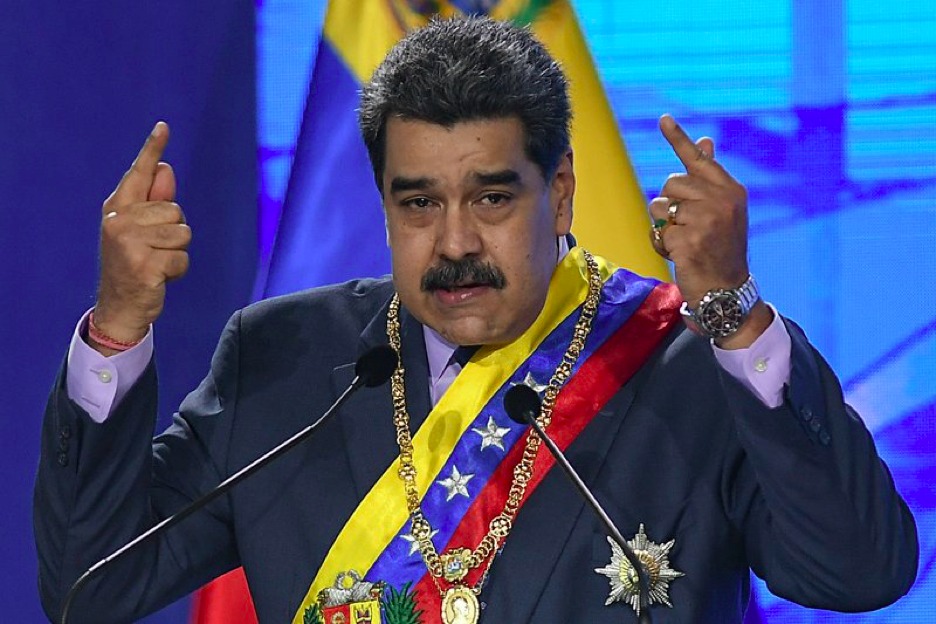
Maduro’s interesting journey from being a bus driver to the President of Venezuela is marked and characterised by bold political activism, controversial decisions, and ongoing personal and challenges.
Maduro has been married twice. His first marriage was to Adriana Guerra Angulo, with whom he had his only son, who was appointed to several senior government posts.
Maduro’s political career, though, began as a trade unionist and bus driver. In the early 2000s, he aligned himself with the socialist movement led by the late President Hugo Chávez, who would become a pivotal figure in Venezuela’s political landscape. Maduro’s close association with Chávez proved to be instrumental in his rise to power.
As Chávez’s protégé and understudy, Maduro served in various key roles within the government, including as Minister of Foreign Affairs and Vice President. Following Chávez’s death in 2013, Maduro assumed the presidency, winning a narrow victory in a highly contested election. His inauguration marked a transition period for Venezuela, as the nation navigated the challenges of economic instability, political polarisation, and social unrest. One may argue that this reality still exists in Venezuela.
One of the defining features of Maduro’s presidency has been Venezuela’s economic crisis. The country – heavily dependent on oil exports – faced a sharp decline in oil prices during Maduro’s tenure. Of course, this severely impacted the country’s economy. Hyperinflation, rampant unemployment, and severe scarcity of basic goods became pressing issues. Those issues caused widespread dissatisfaction among the population.
Maduro’s leadership has been a subject of intense domestic and international scrutiny by governments and scholars. Supporters commend his efforts to continue Chávez’s socialist policies, emphasising social programs and wealth redistribution. However, critics argue that his administration has eroded democratic institutions, stifled political opposition, and contributed to the economic downturn through mismanagement and corruption.
The political landscape during Maduro’s presidency has been characterised by tense relations with the United States and other Western nations, but especially Guyana. Accusations of human rights abuses, electoral irregularities, and authoritarian governance have strained Venezuela’s diplomatic ties with many countries. It is the expressed view of many experts that Maduro may be one of the most destabilising political figures in the region.
Maduro faced a significant and probably existential challenge to his presidency in 2019 when opposition leader Juan Guaidó declared himself interim president with the support of the United States and several other nations. This led to a complex power struggle, with both leaders vying for legitimacy. Despite international pressure and sanctions, Maduro retained control with the support of the military and key allies.
The political turmoil in Venezuela has had far-reaching humanitarian consequences. Millions of Venezuelans have fled the country in search of better opportunities and living conditions, creating a regional migration crisis. Currently, thousands of Venezuelans live in Guyana. The impact of this exodus, coupled with internal challenges, has brought Maduro’s leadership under increasing pressure. Some analysts believe that this pressure is a contributor to Venezuela’s claims against Guyana because the situation distracts Venezuela’s citizens from their own domestic problems.
In any case, Maduro’s leadership has been marked by resilience in the face of domestic and international challenges. He has navigated complex geopolitical dynamics, maintained the support of key allies, and weathered attempts to oust him from power. However, the ongoing struggles in Venezuela may have been a key – but not the only factor – in the current crisis with Guyana.
As Venezuela continues to grapple with its multifaceted internal challenges, and increases its aggressive behaviours towards Guyana, the ongoing situation continues to evolve under the hand of Nicolás Maduro.