Tuesday, January 6, 2026
Village Voice News
ADVERTISEMENT
  • Home
  • News
  • Sports
  • Editorial
  • Letters
  • Global
  • Columns
    • Eye On Guyana
    • Hindsight
    • Lincoln Lewis Speaks
    • Future Notes
    • Blackout
    • From The Desk of Roysdale Forde SC
    • Diplomatic Speak
    • Mark’s Take
    • In the village
    • Mind Your Business
    • Bad & Bold
    • The Voice of Labour
    • The Herbal Section
    • Politics 101 with Dr. David Hinds
    • Talking Dollars & Making Sense
    • Book Review 
  • Education & Technology
  • E-Paper
  • Contact Us
No Result
View All Result
  • Home
  • News
  • Sports
  • Editorial
  • Letters
  • Global
  • Columns
    • Eye On Guyana
    • Hindsight
    • Lincoln Lewis Speaks
    • Future Notes
    • Blackout
    • From The Desk of Roysdale Forde SC
    • Diplomatic Speak
    • Mark’s Take
    • In the village
    • Mind Your Business
    • Bad & Bold
    • The Voice of Labour
    • The Herbal Section
    • Politics 101 with Dr. David Hinds
    • Talking Dollars & Making Sense
    • Book Review 
  • Education & Technology
  • E-Paper
  • Contact Us
No Result
View All Result
Village Voice News
No Result
View All Result
Home Columns Annals

Annals. The Rise of the Kingdom of Nri

Staff Reporter by Staff Reporter
February 21, 2021
in Annals, Columns
0
SHARES
0
VIEWS
Share on FacebookShare on Twitter

by David A. Granger

The Kingdom of Nri was a medieval state located within the boundaries of present-day Nigeria. The Kingdom existed as a sphere of religious and political influence over a third of Igboland. It was administered by a priest–king called Eze Nri, which was the title of the ruler of Nri. He was a ritual figure rather than a king in the traditional or executive sense and was endowed with mystic, but not military, power.
READ ALSO

Hubert Nathaniel Critchlow: The Man Who Gave Caribbean Workers a Voice

Guyanese Bhaji (Sautéed Spinach)

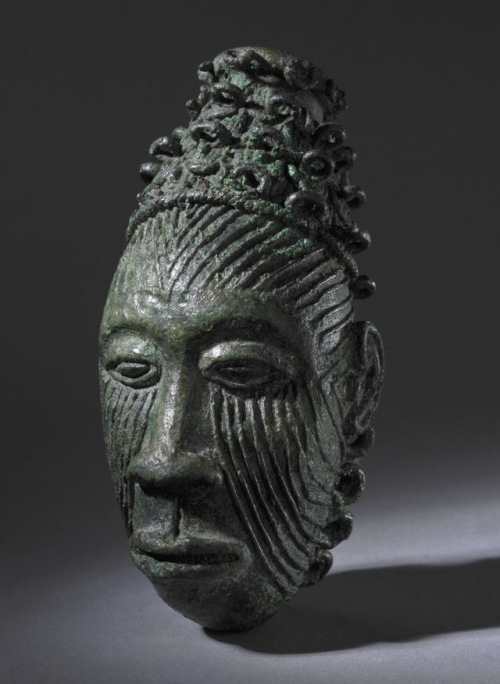
The art of ancient Nri

The Eze Nri managed trade and diplomacy on behalf of the Nri people – a subgroup of the Igbo-speaking people – and possessed divine authority in religious matters. The Kingdom was a haven where enslaved persons could be set free from bondage and a refuge for persons who had been rejected in their own communities.

The Nri Kingdom, unlike many other economies of the period, did not indulge in human enslavement or trade. Certain parts of the Kingdom, did not recognize enslavement and served as a sanctuary. After the selection of the tenth Eze Nri, any enslaved person who set foot on Nri soil was considered free.

The Eze Nri obtained allegiance not by coercion but through ritual oath. Religious authority was vested in the local ruler and ties were maintained and extended by traveling mbùríchi, or converts, to other settlements. In this way, Nri influence was taken beyond the nuclear northern Igbo region to Igbo settlements on the west bank of the Niger River, by the late 16th century.

The Kingdom of Nri was a theocratic polity that developed in the central heartland of the Igbo region. The people within the Nri-related areas were said to be committed to peace for many centuries. This religious pacifism was rooted in a belief that violence was an abomination which polluted the earth. Nri believed in cleansing and purifying the earth (a supernatural force to Nri called Ana and Ajana) of human abominations and crimes.

The Eze Nri could declare a form of excommunication from the odinani Nri against those who violated specific taboos. Members of the Ikénga could isolate entire communities through this form of ritual sanction.

Igbo-Ukwu artifacts are one of the better-known remnants of the Nri culture which permanently influenced the northern and western Igbo, especially through religion. Igbo-Ukwu bronzes have been compared to those of Ife and Benin. They come from a different tradition, however, and are associated with the Eze Nri by descendants of Eri.

Nri’s cultural tradition was based on the concepts of peace, truth and harmony. This culture was disseminated through the ritualistic Ozo traders who maintained Nri influence by traveling and spreading Nri practices – such as the ìkénga which represents a personal embodiment of human endeavor, achievement, success and victory – to other communities.

The Eze Nri used the Igu Aro festival (counting of the year) as a royal ritual to maintain his influence over the communities under his authority. Eri, the sky being, revealed the opportunity of time to the Igbo, who would use the days for exchanging goods and knowledge. The festival was seen as a time of peace on which certain activities and unnecessary noise were prohibited.

The Nri Kingdom was encroached upon by the Benin and Igala kingdoms eventually and, later, by the Trans-Atlantic Trade in Captive Africans.

The British Army forced the reigning Eze Nri to renounce the ritual power of the religion – the ìkénga – ending the Kingdom of Nri as a political power in 1911.


ShareTweetSendShareSend

Related Posts

The Voice of Labour

Hubert Nathaniel Critchlow: The Man Who Gave Caribbean Workers a Voice

by Admin
January 4, 2026

Hubert Nathaniel Critchlow is widely regarded as the father of the trade union movement in Guyana and one of the...

Read moreDetails
Guyanese Bhaji (Sautéed Spinach)
Recipe

Guyanese Bhaji (Sautéed Spinach)

by Admin
January 4, 2026

Ingredients  3 bundles Fresh Spinach chopped OR 4-6 cups of frozen chopped whole leaf spinach 3 Large Tomatoes diced 5 Garlic Cloves grated 3 tbsp Oil ½ tsp Salt Instructions  1....

Read moreDetails
Eye On Guyana

Power Belongs to the People, Not a Few

by Admin
January 4, 2026

This year marks a century since the trade union movement began the fight for one-man-one-vote. The right to vote is...

Read moreDetails
Next Post

Breach by Guyana Police Force PR Dept of trafficking in Persons Law


EDITOR'S PICK

Multi-million dollar renewable energy projects lagging

December 30, 2020

Today is International Day of Peace

September 21, 2022
The mothers of Isaiah and Joel Henry Patricia Henry and Gail Johnson (respectively) and Opposition Leader, Joseph Harmon

Henry family calls on President to fulfill his promise of Justice

December 23, 2020

Melanie Damishana community latest victim of Govt continuous move to dispossess persons of land

August 19, 2023

© 2024 Village Voice

No Result
View All Result
  • Home
  • News
  • Sports
  • Editorial
  • Letters
  • Global
  • Columns
    • Eye On Guyana
    • Hindsight
    • Lincoln Lewis Speaks
    • Future Notes
    • Blackout
    • From The Desk of Roysdale Forde SC
    • Diplomatic Speak
    • Mark’s Take
    • In the village
    • Mind Your Business
    • Bad & Bold
    • The Voice of Labour
    • The Herbal Section
    • Politics 101 with Dr. David Hinds
    • Talking Dollars & Making Sense
    • Book Review 
  • Education & Technology
  • E-Paper
  • Contact Us

© 2024 Village Voice