WASHINGTON (AP) — On its way out the door, the Trump administration is enacting new rules, regulations and orders that it hopes will box in President-elect Joe Biden’s administration on numerous foreign policy matters and cement President Donald Trump’s “America First” legacy in international affairs.
Yet, the push may not work, as many of these decisions can be withdrawn or significantly amended by the incoming president when he takes office on Jan. 20.
In recent weeks, the White House, State Department and other agencies have been working overtime to produce new policy pronouncements on Iran, Israel, China and elsewhere that aim to lock in Trump’s vision for the world. Some have attracted significant attention while others have flown largely under the radar.
And, while Biden could reverse many of them with a stroke of the pen, some will demand the time and attention of his administration when it comes into power with a host of other priorities that perhaps need more urgent attention.
The most recent of these moves took place this past week as Secretary of State Mike Pompeo made what may be his last visit to Israel as secretary of state and delivered two announcements in support of Israel’s claims to territory claimed by the Palestinians.
Biden’s team has remained silent about these announcements, but Biden has made clear he supports few, if any, of them and will reverse many as he intends to return to a more traditional policy toward Israel and the Palestinians.
The Trump administration’s determined efforts to thwart potential Biden policy reversals actually began months earlier, half a world away from the Jewish state, with China, even before the former vice president was formally declared the Democratic Party’s presidential nominee.
As opinion polls started to show Biden as a clear favorite to beat Trump in November, the administration began to move even as the president maintained a public face of defiance and absolute confidence in his reelection.
Some officials point to a July 13 declaration from Pompeo that the United States would now reject virtually all of China’s territorial claims in the South Chine Sea, a 180-degree shift from previous administrations’ positions that all such claims should be handled by arbitration.
While many of Trump’s foreign policy decisions from early on have been designed to blow up the previous administration’s foreign policy achievements — withdrawing from the Iran nuclear deal, the Paris Climate Accord and the Trans Pacific Partnership on trade — the South China Sea decision was the first to be linked by administration officials to the possibility that Biden might be the next president.
One administration official said at the time that decisions made after that would all be taken with an eye toward Biden becoming president. Thus, the fear that Trump might be a one-term president began to take hold in July and has been followed by an acceleration of pronouncements aimed mainly at thwarting any reversal by Biden.
A look at some of those moves:
ISRAEL
On Thursday, before making an unprecedented trip to an Israeli settlement in the West Bank, Pompeo announced that the U.S, would henceforth consider “antisemitic” the groups that advocate for Palestinian rights by supporting the Boycott, Divestment and Sanctions movement against Israel.
He also announced a change in import labeling rules that will require products made in settlements to be identified as “Made in Israel.” The product labeling will take some time to take effect and, as yet, no groups have been hit with the antisemitic designation. But, even if they are implemented, Biden could reverse them on Day One.
Those moves followed numerous other Israel-friendly steps the administration has taken since it came to office. They include recognizing Jerusalem as the capital, moving the U.S. Embassy there from Tel Aviv, and cutting off aid to the Palestinian Authority and the U.N. refugee agency that works with Palestinians. While Biden is unlikely to move the embassy back to Tel Aviv, the other measures can be reversed quickly.
IRAN
Pompeo and other officials have spoken of a new push for sanctions against Iran, but the fact is that the administration has been ramping up such penalties since Trump withdrew from the 2015 nuclear deal two years ago. New sanctions could potentially target supporters of Iranian-backed militia in Iraq and Afghanistan along with the Shiite Houthi movement in Yemen, which has been involved in a disastrous war with the country’s internationally recognized government.
Biden has spoken of wanting to rejoin the nuclear accord, and Iranian officials have said they would be willing to come back into compliance with the accord if he does. Biden could eliminate many of the Trump administration’s reimposed sanctions by executive order, but it remains unclear how high a priority it will be for him.
BROADER MIDDLE EAST
While the withdrawal of significant numbers of U.S. forces from Afghanistan and Iraq — bringing troop levels down to 2,500 in each country — is a clear indication of Trump’s intentions, Biden’s approach remains less certain. The withdrawals could be delayed or slow-rolled by the Pentagon, and it remains unclear how the State Department will handle staffing at its embassies in Baghdad and Kabul, both of which are dependent on U.S. military support.
Pompeo has threatened to close the U.S. Embassy in Baghdad unless rocket attacks by Iranian-backed militias against the area in which it’s located are halted. However, despite the troop withdrawal determination last week, there has been no announcement about the embassy’s status.
CHINA
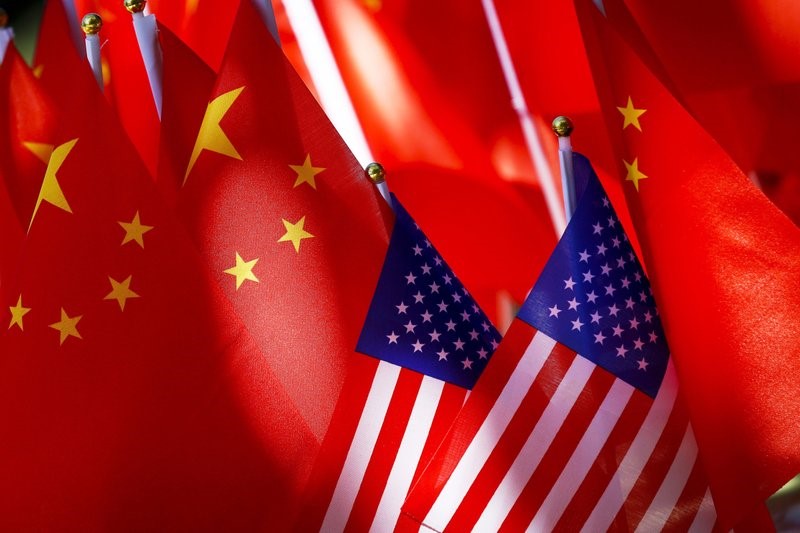
Although the administration’s most strident actions against China began more than a year ago, they have gained momentum since March, when Trump determined that he would at once blame China for the spread of the novel coronavirus and accuse Biden of being soft on Beijing.
Since then, the administration has steadily ramped up sanctions against China over Taiwan, Tibet, trade, Hong Kong and the South China Sea. It has also moved against the Chinese telecoms giant Huawei and sought restrictions on Chinese social media applications like TikTok and WeChat.
Last week, the State Department’s policy planning office released a 70-page China policy strategy document. While it contains little in the way of immediate policy recommendations, it advocates for increased support and cooperation with Taiwan. Indeed, as the document was released, U.S. officials were meeting with Taiwanese counterparts in Washington to discuss economic cooperation.
RUSSIA
Sunday marked the formal withdrawal of the U.S. from the “Open Skies Treaty” with Russia, which allowed each country overflight rights to inspect military facilities. The withdrawal, six months after the U.S. notified the Russians of its intent, leaves only one arms-control pact still in force between the former Cold War foes — the New START treaty, which limits the number of nuclear warheads each may have. That treaty will expire in February.
The Trump administration had said it wasn’t interested in extending the New START treaty unless China also joined, something Beijing has rejected. In recent weeks, however, the administration has eased its stance and said it’s willing to consider an extension. As the transition to the Biden administration approaches, those negotiations remain a work in progress.