| by Arthur Deakin
(Caribbean News Global)- Back in 2010, Guyana and Suriname were not known for their hydrocarbon reserves. But now, both (neighboring countries) have discovered more than 17 billion barrels of oil equivalent and gas reserves that exceed 30 trillion cubic feet. By mid 2030, Guyana is expected to produce over 1.4mn barrels per day (bpd), the third-highest in the region, while Suriname will produce 650,000 bpd, the fifth most in Latin America. Despite the promising future for the two South American countries, their energy developments will be hindered by the lack of access to affordable capital. Suriname, who defaulted on its debt payments in 2021 and has historically suffered from double-digit inflation, is in a precarious position. Locally, Surinamese banks are severely undercapitalized and often breach regulatory requirements obliging them to have a minimum amount of capital. Outside of its borders, bilateral foreign investors do not trust the Surinamese government or the institutions that are responsible for safeguarding their assets. Although the situation is slightly better in Guyana, it still remains an underdeveloped capital market with limited financing options for local companies. Most of its local businesses resort to money-lenders, who charge exorbitantly high interest rates, or families and friends for capital. Guyana’s stock exchange is also minuscule, with a US$2.8 billion market cap and 19 listed securities. As a means of comparison, the NYSE has a market cap of U$27 trillion with nearly 3,000 listings. Limited funding opportunities are concerning as the lack of capital is the number one reason startups fail. Nowhere is this more apparent than in “risky” jurisdictions, such as Suriname or Guyana. In fact, the International Energy Agency (IEA) states that nominal financing costs are up to seven times higher in emerging and developing markets vis-a-vis Europe and the US. Simply put, if an investor wants to develop a solar farm in Guyana, they will have to pay seven times more for the same amount of capital they would receive in Florida. With the acceleration of net zero policies, this situation is exacerbated for fossil fuel assets. Policymakers need to establish the necessary mechanisms to reduce overall cost of capital, as well as increase its availability, to help frontier markets develop their energy sectors at a sustainable pace. Much of capital in the near-term will come from development finance institutions. In April 2022, the IDB announced a US$27 million loan to help Guyana with the development of human resources. However, without the infusion of private capital, from both local and foreign sources, local companies will struggle to emerge in what could be an economic boom for the Guyanese people. There are five proposed solutions that frontier energy markets such as Guyana can pursue to improve their access to capital. 1. Improve their macroeconomic policies to avoid overheating. Although Guyana hasn’t suffered with inflation in recent years, it has historically been high and volatile. Given the current inflationary times, and Guyana’s rapid economic growth, it is fundamental to implement macroeconomic reforms that will prevent an overheating of its economy. This includes, but is not limited to: complying with the spending limits of the national resource fund, implementing control mechanisms to measure the efficiency of the monies, and directing resources towards infrastructure and social gaps – rather than direct payments to citizens. 2. Become more transparent/less corrupt. This is often investors’ biggest concern before investing in riskier jurisdictions such as Guyana and Suriname. It is fundamental to respect contracts, both new and old, to provide investor certainty. Depoliticizing the regulatory system, by keeping politicians at arm’s length from regulatory institutions, will also ensure a more accountable and transparent process. Failure to have proper regulatory and fiscal safeguards will discourage new capital from coming in (outside of what is absolutely vital) 3. Establish an investor-friendly framework to attract blended capital from Development finance institutions (DFIs) and institutional investors. This will require a more developed sovereign debt market, as well as a secondary market (especially a repo market), to increase liquidity. This framework, as well as innovative financial instruments, will help jumpstart investments and create momentum for new investments. However, without first implementing solutions #1 and #2, this framework will be rendered ineffective. 4. Increase funding towards higher education and technical training to foster local entrepreneurs. This is perhaps the most important element in the development of local companies. Without the proper skills and training, and the dissemination of the different financial tools that are available, local entrepreneurs will struggle to succeed. Investment in primary education must also be done in parallel to nurture future generations. 5. Loosening immigration laws to encourage the migration of Surinamese diaspora and regional neighbors. Another major challenge for frontier energy markets is the access to skilled local labor to sustain the large-scale development of the economy. While point #4 will help in this endeavor, opening the country to ex-pats and Guyanese diaspora will lead to more local labor capacity and capital reinvestment into the community. As seen in Shoe Dog, the book written by Nike founder Phil Knight, the largest challenge for the Oregon-based company was having enough liquidity to sustain its purchase orders. On numerous occasions, Nike almost declared bankruptcy because it lacked access to credit. Banks often made the situation direr by failing to understand the nature of Nike’s business: to capture market share through high growth and cash flow reinvestment. Luckily, the company survived. Led by brilliant minds that used innovative financial instruments, as well as a strategic partnership with Japanese banks, Nike is now worth nearly U$200 billion dollars. Guyana is unlikely to have a Nike in the making, but it will have the opportunity to grow local businesses and transform its economy. Now is the time for regulators to act.
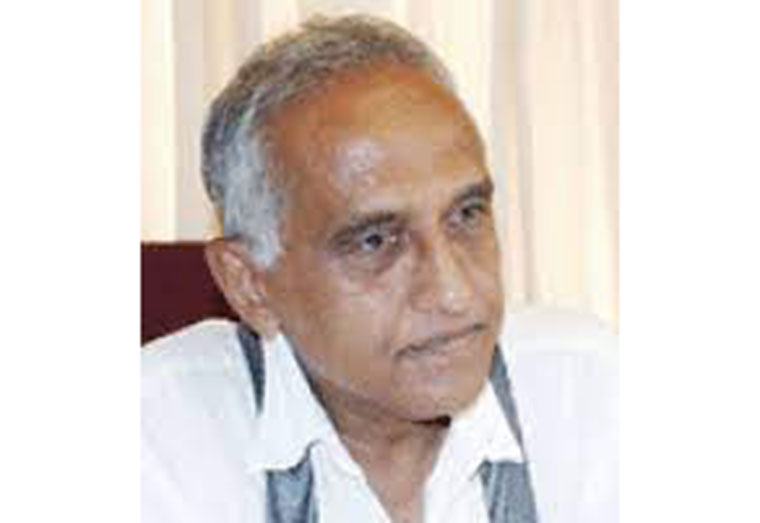
About the author Arthur Deakin is co-director of AMI’s energy practice, where he oversees projects in solar, wind, biomass and hydrogen power, as well as energy storage, oil & gas and electric vehicles. Arthur has led close to 50 Latin American energy market studies since 2016 and has project experience in over 20 jurisdictions in the Americas. He has also written and published over 20 articles related to the energy sector. |
Guyana at a Crossroads: Will Guyanese Stand Up Against Corruption and Abuse of Power?
By Egland Gomes- Guyana, the success of our nation rests in the hands of the We Invest in Nationhood (WIN)...
Read moreDetails