Sunday, September 13, 2026
Village Voice News
[adning id="37476"]
ADVERTISEMENT
  • Home
  • News
  • Sports
  • Editorial
  • Letters
  • Global
  • Columns
    • Eye On Guyana
    • Hindsight
    • Lincoln Lewis Speaks
    • Future Notes
    • Blackout
    • From The Desk of Roysdale Forde SC
    • Diplomatic Speak
    • Mark’s Take
    • In the village
    • Mind Your Business
    • Bad & Bold
    • The Voice of Labour
    • The Herbal Section
    • Politics 101 with Dr. David Hinds
    • Talking Dollars & Making Sense
    • Book Review 
  • Education & Technology
  • E-Paper
  • Contact Us
No Result
View All Result
  • Home
  • News
  • Sports
  • Editorial
  • Letters
  • Global
  • Columns
    • Eye On Guyana
    • Hindsight
    • Lincoln Lewis Speaks
    • Future Notes
    • Blackout
    • From The Desk of Roysdale Forde SC
    • Diplomatic Speak
    • Mark’s Take
    • In the village
    • Mind Your Business
    • Bad & Bold
    • The Voice of Labour
    • The Herbal Section
    • Politics 101 with Dr. David Hinds
    • Talking Dollars & Making Sense
    • Book Review 
  • Education & Technology
  • E-Paper
  • Contact Us
No Result
View All Result
Village Voice News
No Result
View All Result
Home Global

G7: Rich nations back deal to tax multinationals

Staff Reporter by Staff Reporter
June 6, 2021
in Global
0
SHARES
0
VIEWS
Share on FacebookShare on Twitter

BBC – The G7 group of advanced economies has reached a “historic” deal to make multinational companies pay more tax.

Finance ministers meeting in London agreed to battle tax avoidance by making companies pay more in the countries where they do business.

READ ALSO

Before the Next UN Secretary-General: What the Previous Nine Brought to the Job

BRICS Expands Its Global Ambitions as Emerging Powers Challenge Western Dominance

They also agreed in principle to a global minimum corporate tax rate of 15% to avoid countries undercutting each other. Tech giants such as Amazon and Google could be among those affected.

The deal announced on Saturday, between the US, the UK, France, Germany, Canada, Italy and Japan, plus the EU, could see billions of dollars flow to governments to pay off debts incurred during the Covid crisis.

Negotiated over many years, it will put pressure on other countries to follow suit, including at a meeting of the G20 next month, which includes China, Russia and Brazil.

US Treasury Secretary Janet Yellen told reporters that the “historic” agreement on a global minimum tax would “end the race to the bottom in corporate taxation and ensure fairness for the middle class and working people in the US around the world”.

UK Chancellor of the Exchequer Rishi Sunak, who hosted the summit, said the agreement would make the global tax system “fit for the global digital age”.

His German counterpart, Olaf Scholz, said it was “very good news for tax justice and solidarity and bad news for tax havens”.

“Companies will no longer be in a position to dodge their tax obligations by booking their profits in lowest-tax countries,” he said.

Governments have long grappled with the challenge of taxing global companies operating across many countries.

That challenge has grown with the boom in huge tech corporations like Amazon and Facebook.

At the moment companies can set up local branches in countries that have relatively low corporate tax rates and declare profits there. That means they only pay the local rate of tax, even if the profits mainly come from sales made elsewhere. This is legal and commonly done. The deal aims to stop this from happening in two ways.

Firstly the G7 will aim to make companies pay more tax in the countries where they are selling their products or services, rather than wherever they end up declaring their profits. Secondly, they want a global minimum tax rate so as to avoid countries undercutting each other with low tax rates.

The right to tax is the essence of sovereign power. That is why co-ordinated international action is so difficult.

It has been the dream of campaigners and mainly European finance ministers for years. They would scarcely have believed it was possible until the past few months. But the need to fill coffers emptied by the pandemic, and the arrival of the Biden administration in the US, created a moment of opportunity.

There was, however, a big compromise to get this across the line. A minimum corporation tax rate of 15% is rather low. Although European finance ministers succeeded in including the phrase “at least 15%”, which offers a path to get that number higher.

How much bite this change actually has will depend on the fine print of ongoing negotiations. Tech firms say they welcomed the move. Facebook vice president Nick Clegg said they recognised it could mean the company “paying more tax, and in different places”.

And then there is the question of the rest of the world. This now goes from the G7 to the wider G20 group, including China, Russia and Brazil, and then beyond. The German finance minister told me that the likes of Ireland, with its low corporation tax rate, now needed to “get on the train”.

The Irish finance minister told me he accepted that change was coming, but he would continue to argue for legitimate tax competition. A process has begun, a precedent has been set. It may or may not end up being transformative, but this moment is historic.
ShareTweetSendShareSend

Related Posts

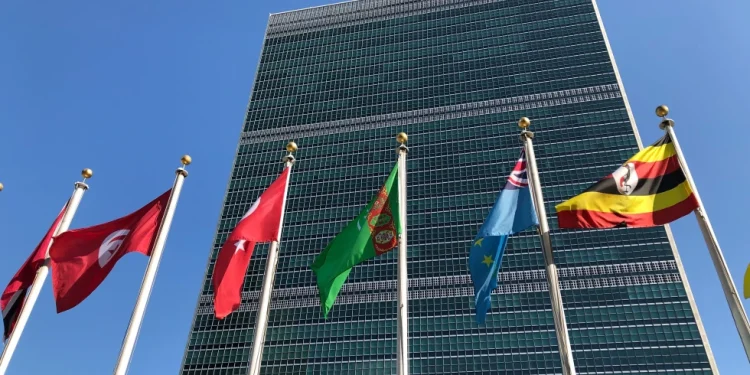
Flags fly outside the United Nations headquarters Sept. 28, 2019. (AP Photo/Jennifer Peltz, File)
Global

Before the Next UN Secretary-General: What the Previous Nine Brought to the Job

by Admin
September 13, 2026

As the United Nations moves toward choosing its 10th Secretary-General, the history of the office offers an important warning against...

Read moreDetails
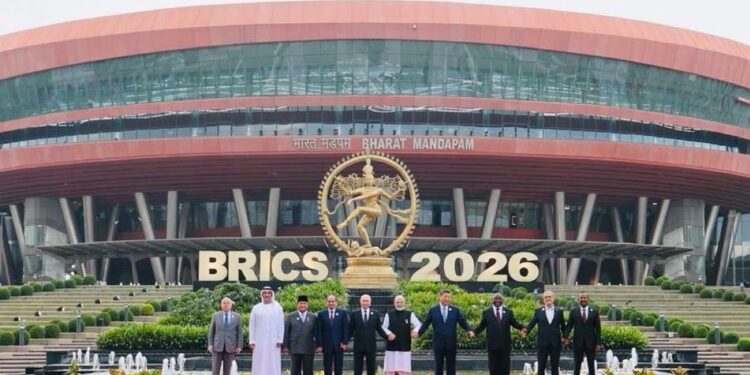
BRICS 2026
Global

BRICS Expands Its Global Ambitions as Emerging Powers Challenge Western Dominance

by Admin
September 12, 2026

BRICS is seeking to turn its growing economic and political weight into greater influence over the international system, with leaders...

Read moreDetails
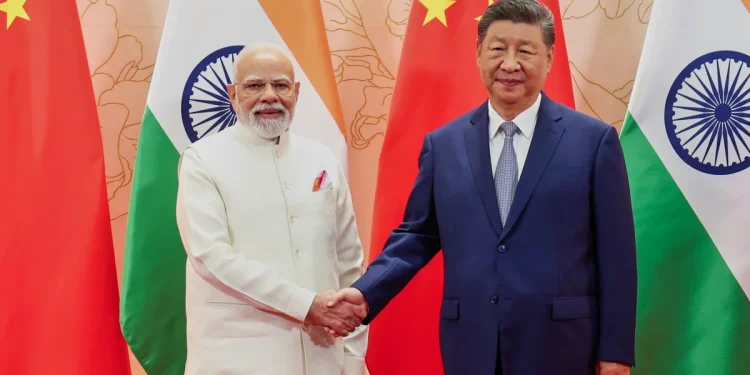
In this photo provided by Indian Prime Minister's Office, Indian Prime Minister Narendra Modi, left, and Chinese President Xi Jinping shake hands before their meeting on the sidelines of the Shanghai Cooperation Organization (SCO) summit in Tianjin, China Sunday, Aug. 31, 2025.

Indian Prime Minister's Office/AP
Global

India-China Reset: Modi and Xi Seek to Move Beyond Border Confrontation

by Admin
September 12, 2026

India and China are attempting to put their most serious confrontation in years behind them, with Prime Minister Narendra Modi...

Read moreDetails
Next Post

Saipem opens offshore facility


EDITOR'S PICK

Three Guyanese granted scholarship to study in India

February 19, 2023

Cricket West Indies Announces 15-Member Squad for Test Series Against Pakistan

July 23, 2026

IDB (Continues) to Bankroll Corruption in Guyana? – Water Loan is a $30 Million Betrayal of its People

July 29, 2025

Guyanese Heritage Advocate Andrea Bryan-Garner Wins Prestigious Godfrey Chin Prize

June 28, 2026

© 2024 Village Voice

No Result
View All Result
  • Home
  • News
  • Sports
  • Editorial
  • Letters
  • Global
  • Columns
    • Eye On Guyana
    • Hindsight
    • Lincoln Lewis Speaks
    • Future Notes
    • Blackout
    • From The Desk of Roysdale Forde SC
    • Diplomatic Speak
    • Mark’s Take
    • In the village
    • Mind Your Business
    • Bad & Bold
    • The Voice of Labour
    • The Herbal Section
    • Politics 101 with Dr. David Hinds
    • Talking Dollars & Making Sense
    • Book Review 
  • Education & Technology
  • E-Paper
  • Contact Us

© 2024 Village Voice