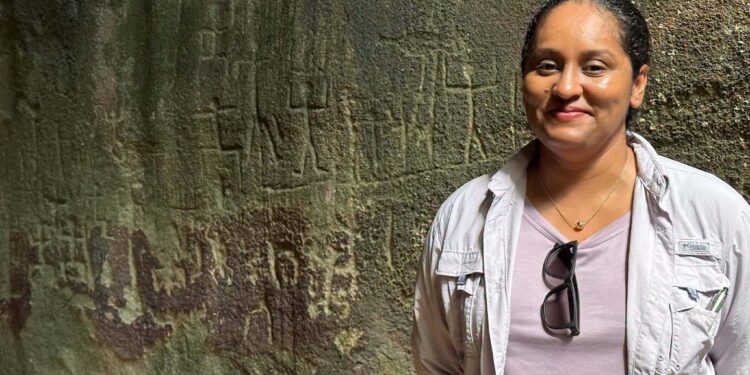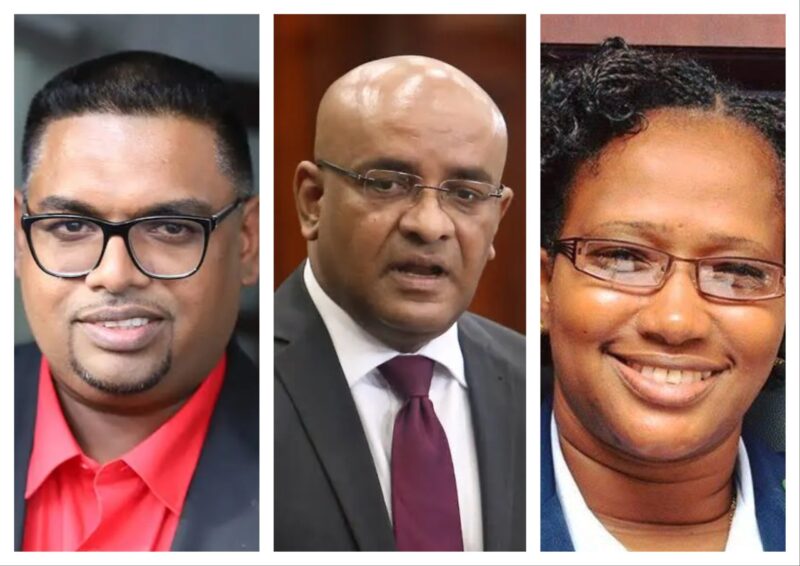
Former Member of Parliament and former Minister Annette Ferguson has declared that she will not be intimidated into silence by President Irfaan Ali, Vice-President Bharrat Jagdeo or the governing People’s Progressive Party/Civic (PPP/C), while raising serious questions about the Government’s engagement of a Canadian-based attorney to address social media content it considers misleading or defamatory.
In a strongly worded social media post, Ferguson declared that her allegiance was to God Almighty and that neither political pressure nor the influence of those holding public office would weaken her determination to speak out.
“Let me make this abundantly clear; I am not afraid of Ali, Jagdeo, nor the PPP!
The only one I fear is God Almighty!”
Ferguson said she would continue to demand accountability, challenge decisions she considers wrong and defend the interests of Guyanese, insisting that her conscience was clear and her convictions remained firm.
Her remarks come amid growing public debate over the Government’s decision to retain Canada-based Guyanese attorney-at-law Selwyn Pieters to engage Meta, Facebook’s parent company, over online publications considered defamatory, misleading or otherwise objectionable.
The President defended the engagement during his November 13 press conference, arguing that Pieters possessed the specialised expertise necessary to address what he described as misinformation, disinformation and attempts to damage the reputations of senior Government officials.
Ali also maintained that Meta independently determines whether reported material should remain on its platform.
Ferguson, however, questioned the safeguards surrounding the arrangement, arguing that legitimate criticism of the Government and public officials must not be confused with misinformation or defamation simply because those in authority find it uncomfortable.
She raised three central questions: Who determines what constitutes misinformation? What criteria are being used to flag social media content? And who is financing the legal engagement?
Those questions touch on a broader constitutional issue. Article 146 of Guyana’s Constitution protects freedom of expression, including the right to hold opinions and communicate ideas and information, while recognising lawful limitations, including those intended to protect the reputations and rights of others.
The distinction between protecting an individual’s reputation and restricting legitimate public criticism is therefore central to the debate.
Pieters has previously confirmed submitting a post by Opposition Leader Azruddin Mohamed to Meta after determining that it was defamatory. He maintained that Meta independently assessed the complaint and made its own decision. He has also rejected allegations that he was responsible for the earlier deactivation of Mohamed’s principal Facebook page.
Ferguson insisted that public officials cannot be shielded from scrutiny simply because they occupy positions of power, arguing that accountability must apply regardless of political office.
“The President is not above scrutiny. Neither is the Government. Public office comes with public accountability.”
She further warned against allowing Government authority to be mistaken for ownership of the country or its people, insisting that citizens must never feel that exercising their constitutional rights could result in their voices being silenced.
Her closing message was unequivocal:
“We must not confuse Government authority with ownership of the country or its people!”
The controversy places renewed attention on the boundaries between defamation, misinformation and political criticism, as well as the transparency surrounding the Government’s engagement of outside legal counsel.
For Ferguson, the issue is not whether public officials are entitled to defend their reputations, but whether the pursuit of that protection could undermine the public’s right to question those entrusted with governing the country.