Tuesday, November 17, 2026
Village Voice News
ADVERTISEMENT
  • Home
  • News
  • Sports
  • Editorial
  • Letters
  • Global
  • Columns
    • Eye On Guyana
    • Hindsight
    • Lincoln Lewis Speaks
    • Future Notes
    • Blackout
    • From The Desk of Roysdale Forde SC
    • Diplomatic Speak
    • Mark’s Take
    • In the village
    • Mind Your Business
    • Bad & Bold
    • The Voice of Labour
    • The Herbal Section
    • Politics 101 with Dr. David Hinds
    • Talking Dollars & Making Sense
    • Book Review 
  • Education & Technology
  • E-Paper
  • Contact Us
No Result
View All Result
Village Voice News
No Result
View All Result
Home News

New Schools Alone Cannot Guarantee Quality Education as Guyana Confronts Poverty and Child Malnutrition

Admin by Admin
November 17, 2026
in News
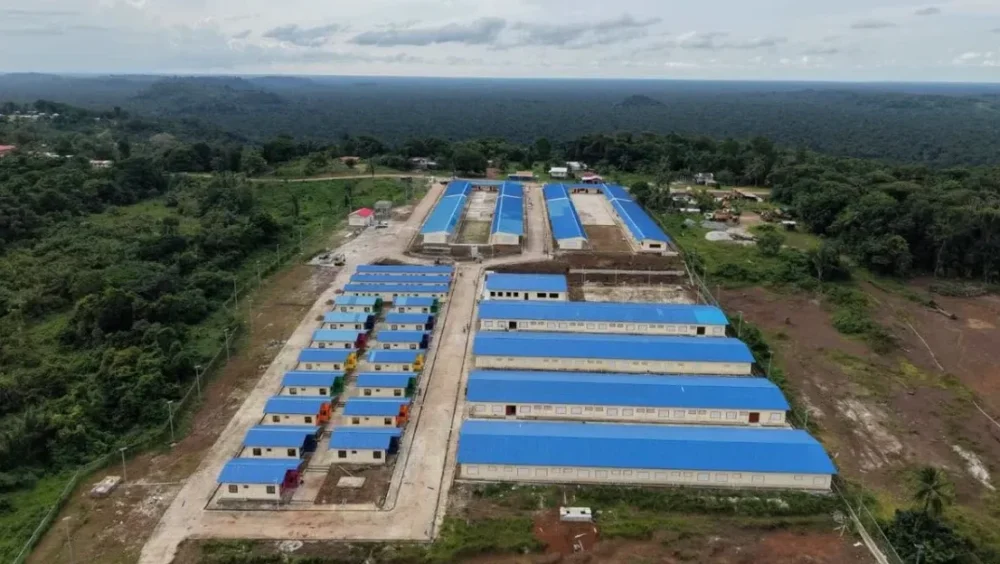
Aerial view of the newly constructed Hosororo Secondary School in Region One

Aerial view of the newly constructed Hosororo Secondary School in Region One

0
SHARES
0
VIEWS
Share on FacebookShare on Twitter

Guyana’s drive towards universal secondary education is gathering momentum, with the government reporting the construction of 33 new secondary schools and several additional facilities expected to be completed between the end of 2026 and 2027. However, questions remain about whether expanding physical access will translate into meaningful improvements in educational outcomes for children confronting poverty, inadequate nutrition and other socioeconomic disadvantages.

Education Minister Sonia Parag announced the latest developments during an appearance on the Starting Point Podcast on Saturday, November 14, declaring that the country was moving closer to universal secondary education.

READ ALSO

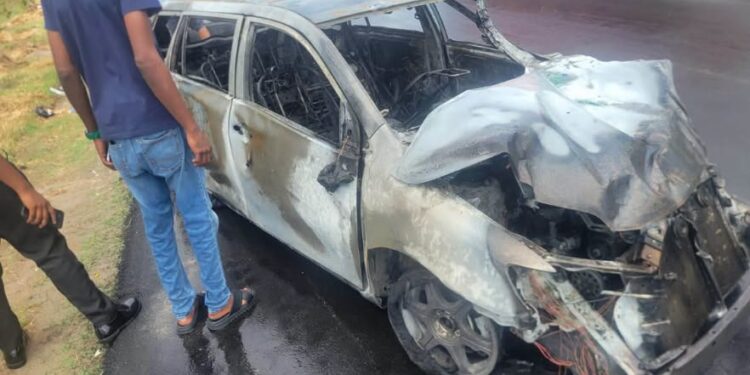
Two Off-Duty Firefighters Injured As Car Bursts Into Flames In ECD Collision

Duncan Challenges Parliamentary Barriers To Scrutiny Of Police Surveillance

“We have been able to achieve universal access to primary education. We are on our way to achieving universal access to secondary education,” she said.

The expansion is supported by the 2026 National Budget, which allocated $183.6 billion to education, including $24.3 billion specifically for school infrastructure.

Recently completed facilities include Issano Secondary, Nappi Secondary, Shulinab Secondary and Hosororo Secondary. Schools in Kwebanna, Jawalla, Kopinang and Monkey Mountain are progressing towards completion.

Parag said the developments were removing longstanding barriers for children who previously faced lengthy journeys by boat or on foot to attend school. The new facilities are also replacing primary tops, allowing students to pursue secondary education from Grade Seven through Grade 11.

“We have been able to bridge that gap by building so many schools in different and various communities, making access very easy for children now and parents,” she said.

While the expansion represents an important intervention in addressing geographical inequalities, access to a school building is only one component of delivering quality education.

Poverty and nutrition remain barriers

The challenges confronting children are reflected in international development data. The United Nations’ 2024 Common Country Analysis for Guyana highlighted significant disparities in poverty estimates. The 2023 UNDP Multidimensional Poverty Index estimated a poverty headcount of 1.8 per cent, while World Bank and Inter-American Development Bank estimates ranged between 40 and 50 per cent. The UN also highlighted that Guyana had not conducted a comprehensive national poverty assessment in nearly two decades, leaving significant gaps in understanding household vulnerability.

Nutrition is another concern. UNICEF’s 2025 Early Childhood Development country profile reported that approximately 7 per cent of Guyanese children under five experience stunted growth, while 17 per cent are born with low birthweight. Only 36 per cent of young children receive a minimum acceptable diet.

These conditions matter because children experiencing hunger and inadequate nutrition can face difficulties with concentration, memory, attendance and learning. Poverty can also affect access to transportation, school supplies, adequate meals and supportive learning environments.

Providing a classroom does not automatically remove the disadvantages children bring through the school gates.

Infrastructure must translate into learning outcomes

Parag acknowledged that access involves more than physical infrastructure, pointing to textbooks, exercise books, classroom grants and digital platforms as additional interventions.

“Access is not just about the physical infrastructure, of course; it’s also access to resources,” she said.

She explained that students attending schools without mathematics teachers could receive instruction through digital learning platforms. The government also intends to expand the use of artificial intelligence to accommodate different learning abilities and individual progress.

However, technology cannot independently resolve shortages of qualified teachers, unreliable connectivity, inadequate classroom support or the effects of poverty and malnutrition. Digital instruction must complement, rather than replace, properly trained teachers.

The government must demonstrate how its substantial education expenditure is improving literacy, numeracy, examination performance, attendance and secondary-school completion, particularly in disadvantaged communities.

The $183.6 billion allocation represents a significant financial commitment, but expenditure and the number of schools constructed are not, by themselves, measures of educational success.

Guyana’s ambition should extend beyond ensuring that every child has a school to attend. It must ensure that every child has the nutrition, qualified teachers, learning materials and supportive environment necessary to succeed.

Universal access is an important milestone, but access without quality risks producing classrooms filled with children who are physically present but still being denied the full benefits of education.
ShareTweetSendShareSend

Related Posts

Firefighters Accident- November 16, 2026
News

Two Off-Duty Firefighters Injured As Car Bursts Into Flames In ECD Collision

by Admin
November 17, 2026

Two off-duty firefighters attached to the Guyana Fire Service were injured on Monday morning after a collision involving a Canter...

Read moreDetails
Sherod Duncan MP (APNU) delivering his presentation on the 2026 Budget in the National Assembly
News

Duncan Challenges Parliamentary Barriers To Scrutiny Of Police Surveillance

by Admin
November 17, 2026

By Mark DaCosta- The rapid deployment of high-tech policing tools across our nation has collided with a troubling wall of...

Read moreDetails
Guyana’s 5th FPSO
News

Guyana’s Oil Output Nears 1.15 Million Barrels Daily as Wealth Questions Persist

by Admin
November 17, 2026

Guyana’s offshore oil industry has reached another milestone with the commencement of production from the Errea Wittu, the country’s fifth...

Read moreDetails
Next Post
An editorial stock photo of a Permeant Resident Card also known as Green Card. | Getty

US Proposes Sweeping Changes To Employment-Based Green Card Process


EDITOR'S PICK

US official holds talks with Region 9 community leaders

July 24, 2021
Dr. Vivian M. Williams, Esq.

“A State cannot exercise it sovereign authority beyond its territorial jurisdiction”- Dr. Vivian Williams

January 3, 2024
APNU+AFC deeply saddened by assassination of Haitian President 

The APNU+AFC Coalition said it is deeply saddened and immensely troubled by the news of the assassinations of the President of Haiti, His Excellency Jovenel Moïse and the First Lady Her Excellency Martine Moïse.  

"We condemn this heinous and cowardly act in the strongest possible terms and lament this dark day in the history of the region," the coalition said in a statement. 

"The APNU+AFC extends its deepest condolences to the family and loved ones of President Moïse and First Lady Martine Moïse as well as the Government and people of Haiti. 


We urge a full and thorough investigation that will bring justice to the Moïse family and people of Haiti. 


We assure the people of Haiti that the arms of Guyanese continue to be wrapped around them and our thoughts and prayers remain with them as they navigate this most tumultuous period in their history."

APNU+AFC deeply saddened by assassination of Haitian President

July 7, 2021
Former Mayor Ubraj Narine left with the children who were attacked by acid and their families.

Former Mayor Ubraj Narine Condemns Acid Attack on Schoolchildren, Calls for Swift Justice

May 3, 2025

© 2024 Village Voice

No Result
View All Result
  • Home
  • News
  • Sports
  • Editorial
  • Letters
  • Global
  • Columns
    • Eye On Guyana
    • Hindsight
    • Lincoln Lewis Speaks
    • Future Notes
    • Blackout
    • From The Desk of Roysdale Forde SC
    • Diplomatic Speak
    • Mark’s Take
    • In the village
    • Mind Your Business
    • Bad & Bold
    • The Voice of Labour
    • The Herbal Section
    • Politics 101 with Dr. David Hinds
    • Talking Dollars & Making Sense
    • Book Review 
  • Education & Technology
  • E-Paper
  • Contact Us

© 2024 Village Voice