Toshao Nikita Miller and several residents of Chinese Landing were reportedly beaten and threatened with gunfire by miners during a violent confrontation late Thursday night, exposing the deepening tensions over mining operations within the Indigenous community’s titled lands in Region One.
The reported assault, which allegedly involved the firing of several shots over residents’ heads and the seizure of mobile phones, has raised fresh questions about the protection of Indigenous communities and the authorities’ handling of a long-running land and mining dispute.
In a video broadcast live on the Chinese Landing-Tassawini Village Council’s Facebook page, Miller described being physically attacked during the confrontation and accused a miner and one of his workers of firing shots at the scene.
“We just had a confrontation with the miner… he beat me up; he and one of his workmen fired shots over our heads. We are here; this is overbearing what the miners are doing,” Toshao Miller said.
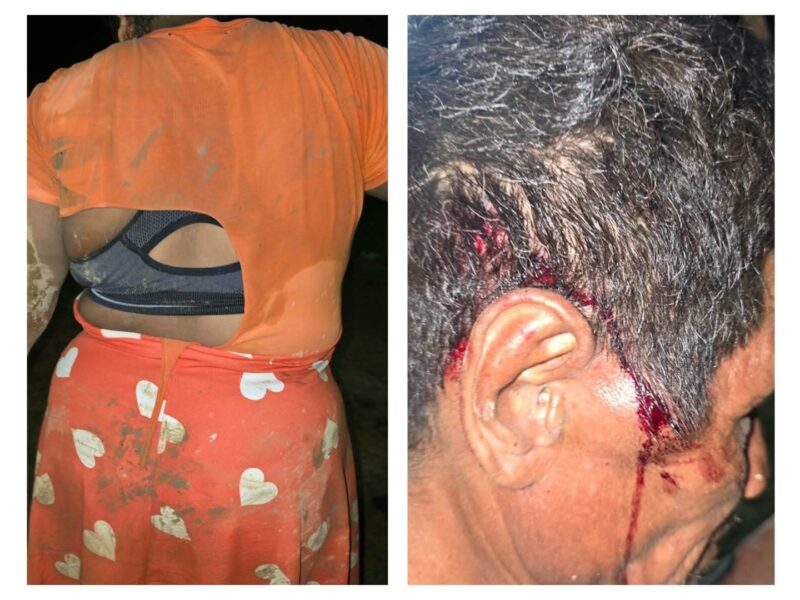
The Village Council subsequently circulated photographs and additional videos showing individuals reportedly injured during the incident. Miller also identified the alleged perpetrator.

According to the Council, residents had attempted to prevent miners from entering the community and had seized an excavator amid renewed efforts by mining operators to gain access to the area.
The confrontation reportedly turned violent when miners retaliated, allegedly assaulting Miller and other residents, seizing some of their cellphones and recovering the excavator.
The incident is the latest escalation in a dispute that has persisted for decades, despite court proceedings, government intervention and international human rights scrutiny.
A decades-old dispute over Indigenous lands
Chinese Landing received title to its lands in 1976. However, in 1995, the Guyana Geology and Mines Commission (GGMC) granted mining concessions to businessman Wayne Vieira within the boundaries of the community’s titled lands, without the consent of the Village Council, according to historical accounts of the dispute.
The concessions became a major source of conflict, particularly following the passage of the Amerindian Act in 2006, which established legal protections for Indigenous village lands and provided for village council consent in relation to small- and medium-scale mining.
In November 2010, the GGMC issued a Cease Work Order against Vieira’s mining operations, citing the absence of an agreement with the Village Council.
Vieira challenged the order in the courts, and the dispute eventually reached the Caribbean Court of Justice (CCJ). In December 2017, the CCJ ruled in his favour, finding that the cease-work order could not stand because the statutory requirements governing its issuance had not been properly satisfied.
The ruling, however, did not erase the underlying tensions between the mining operation and the community, which has continued to oppose mining activities it considers damaging to its land and residents.
International human rights concerns
The dispute has also attracted the attention of the Inter-American Commission on Human Rights (IACHR).
In 2023, the Commission granted precautionary measures concerning Chinese Landing, following allegations of unconsented mining encroachment, threats and harassment, as well as environmental pollution and potential risks to residents’ health, personal integrity and lives.
The Commission urged Guyana to take protective measures. The Government subsequently acknowledged the Commission’s intervention and said it was committed to addressing the concerns.
The latest reported violence raises renewed concerns about whether sufficient protection is being provided to residents who have repeatedly challenged mining activities in their community.
Police investigation expected
Police officers are expected to travel to Chinese Landing on Friday to investigate Thursday night’s confrontation.
The authorities will need to establish the circumstances surrounding the alleged assault, the reported discharge of firearms and the seizure of residents’ belongings.
The Natural Resources Minister, Vickram Bharrat, has previously maintained that the CCJ ruling limits the Government’s ability to halt Vieira’s operations, telling Demerara Waves in August 2026 that there were no legal grounds to stop them.
But the latest confrontation raises an urgent question: how long must Indigenous residents endure escalating conflict over their own community’s lands before the authorities ensure their safety and address the underlying dispute?
For Chinese Landing, the issue is no longer simply about mining concessions. It is about the security of residents, the authority of their Village Council and whether their rights can be meaningfully protected.
The allegations of assault and gunfire have not yet been independently established. The accused miner’s response was not available at the time of writing.