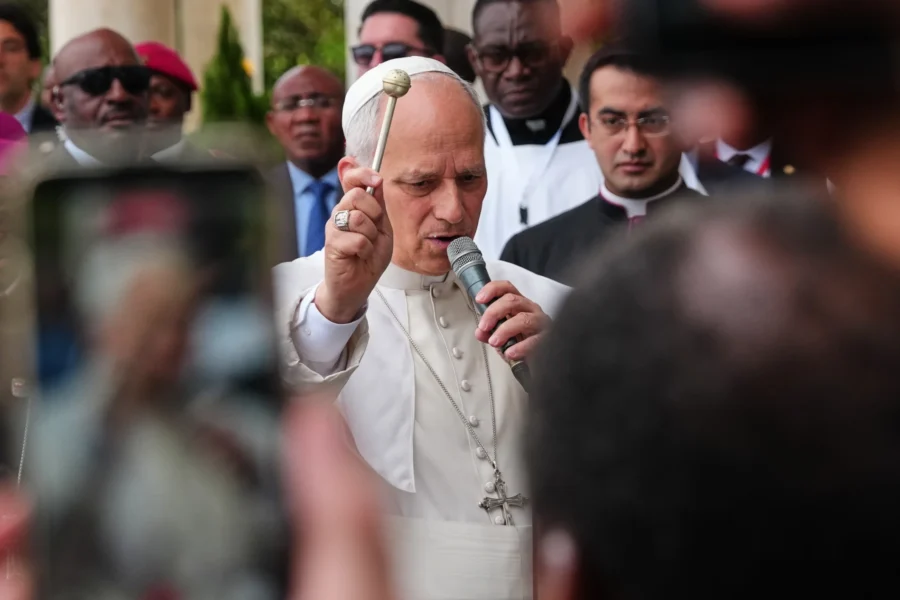
Pope Leo XIV has begun a 12-day visit to South America, opening his three-country tour in Uruguay with an appeal for greater unity, cooperation and stronger social bonds across the region.
The 71-year-old pontiff arrived in Montevideo on Friday, November 6, where he was welcomed by crowds and government officials, including Uruguayan President Yamandú Orsi. The visit marks the beginning of an extensive journey that will also take him to Argentina and Peru, covering 10 cities before concluding on November 17.
On Saturday, the Pope celebrated Mass in Paysandú, Uruguay, before an estimated 40,000 people. Drawing on the bridge connecting Uruguay and neighbouring Argentina, he urged people across the continent to overcome divisions, build relationships and strengthen cooperation.
The gathering attracted pilgrims from Argentina and Brazil, highlighting the regional significance of the visit.
The journey carries particular significance for Leo, the first US-born pope, who spent decades as a missionary and church leader in Peru and later acquired Peruvian citizenship. The Vatican has described the journey as a homecoming, particularly because of his longstanding connection to Peruvian communities.
His itinerary includes Montevideo, Paysandú and Florida in Uruguay from November 6 to 8; Buenos Aires, Córdoba and Luján in Argentina from November 8 to 11; and Lima, Chiclayo, Cusco and Pucallpa in Peru from November 11 to 17.
The Argentina leg is expected to attract considerable attention because it is the homeland of his predecessor, Pope Francis. Francis, who died in 2025, never visited his native country during his papacy. The last papal visit to Argentina was by Pope John Paul II in 1987. Uruguay has not received a papal visit since 1988.
Beyond religious celebrations, Leo is expected to address issues affecting the region, including environmental destruction, arms trafficking and political instability. His programme includes meetings with government leaders, visits to local communities and a prison in Argentina, as well as encounters with survivors of sexual abuse by Catholic clergy.
The journey comes less than a month after the Pope underwent surgery for a localised lung cancer. The Vatican has said he has recovered and does not require special medical precautions for the trip, which involves extensive air travel and visits to high-altitude areas in Peru.
Latin America remains the world’s largest Catholic region by population, but the Church has faced declining affiliation in several countries, growing competition from evangelical denominations and challenges in rebuilding public trust following clerical abuse scandals.
Church leaders hope the visit will renew religious engagement and reinforce the Church’s role in addressing social challenges.
As the tour continues, the Pope is expected to use his meetings and public addresses to promote peace, dialogue and solidarity among the peoples of South America.