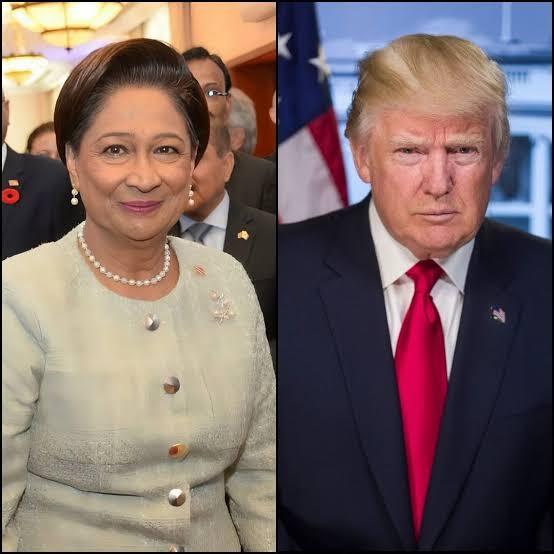
Trinidad and Tobago has broken with more than three decades of diplomatic support for Cuba by voting alongside the United States against a United Nations resolution calling for an end to Washington’s economic embargo on the Caribbean island.
The resolution was adopted by the UN General Assembly on Wednesday, October 28, with 130 countries voting in favour, 17 against and 25 abstaining. Despite opposition from Trinidad and Tobago and the United States, the measure secured overwhelming support, although the number of countries backing it fell sharply from 165 in 2025.
The decision marks a significant departure for Port of Spain, which had supported the resolution every year since 1993, including last year. Trinidad and Tobago abstained when the measure was first introduced in 1992.
The General Assembly resolution calls for an end to the economic, commercial and financial restrictions imposed by Washington on Cuba. Although non-binding, the annual vote has become a prominent international expression of opposition to the embargo, which has remained in place for more than six decades.
The United States maintains that its policy is intended to pressure Cuba’s communist government over its political system and human rights record. Havana, however, argues that the restrictions undermine its economy and impose severe hardship on ordinary citizens.
The vote comes as the Trump administration intensifies pressure on Cuba, including measures affecting fuel supplies and financial transactions. The resulting shortages have worsened an already severe economic and humanitarian crisis on the island.
Trinidad and Tobago’s position also places it at odds with the longstanding approach of several Caribbean Community (CARICOM) countries, which have traditionally supported ending the embargo while maintaining their own differences with Cuba’s political leadership.
The decision is particularly consequential given the region’s history of cooperation with Havana in healthcare, education and technical assistance.
Guyana, Jamaica and Haiti abstained from the resolution, illustrating a broader shift in Caribbean voting patterns. Their abstentions, however, differ from Trinidad and Tobago’s outright opposition.
The Trinidad and Tobago government had not publicly explained the rationale for its vote in the reporting available after the resolution was adopted.
The outcome does not compel Washington to change its policy. Lifting the statutory embargo would require action by the US Congress. Nevertheless, Trinidad and Tobago’s decision signals a notable change in the diplomatic landscape, as Washington seeks to increase international support for its position on Cuba.
The vote raises questions about whether the shift reflects a reassessment of Havana’s policies or changing foreign-policy calculations amid the United States’ renewed efforts to isolate the Cuban government.