by Randy Gopaul
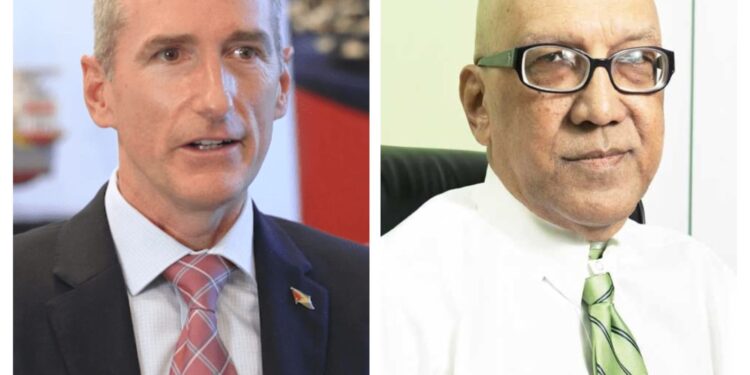
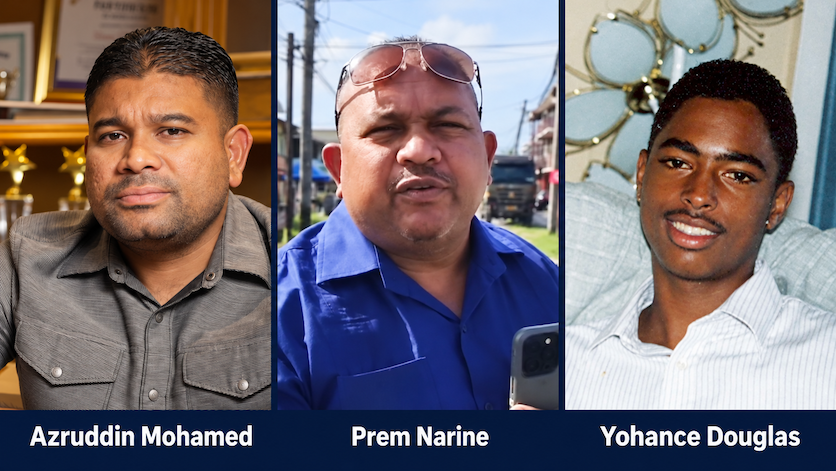
Senior Superintendent Prem Narine’s conduct in opening fire on a vehicle in which the opposition leader, Azruddin Mohamed was a passenger, is one that will make every Guyanese less safe.
Consider the facts as police themselves tell them: a senior officer, head of Special Branch, sees a vehicle pass his home slowly. It passes again. He hears a noise. He fires his service weapon at the vehicle. Four 9mm casings are recovered in his yard. One .32 casing is found on the street.
The opposition leader says he was there filming what he considered excessive police security at Narine’s private residence. Narine says he was shot at first. We have heard this story before. We have heard it so many times that the script is worn thin.
Here is what we know about Prem Narine from his own testimony. He has admitted under oath that he unilaterally initiated surveillance on Opposition Leader Azruddin Mohamed without orders from any superior. He has called Mohamed a “threat to national security”. He has been cross-examined for approximately twenty hours in extradition proceedings. This is a man who, by his own account, decided on his own authority to monitor a political opponent.
And now we are asked to believe that when a vehicle he had previously seen monitoring his residence returned, he acted reasonably in firing his weapon?
Make no mistake: Senior Superintendent Prem Narine’s behavior was reckless. Reckless in the moment and citizens should consider this carefully. If a police officer can fire at a vehicle because he believes its occupants are behaving suspiciously, then what stops any citizen from doing the same? Special Branch operatives routinely follow citizens. They circle homes. They sit in unmarked vehicles outside residences. They engage in precisely the behavior for which Narine claims to have felt threatened.
Are we now saying it is acceptable to open fire on vehicles engaged in “suspicious” behavior? Because that is the standard Narine has set. If a slow-moving car outside a home justifies gunfire, then every Guyanese who has ever noticed a strange vehicle on their street has license to shoot.
For those celebrating this, let me remind you of Yohance Douglas.
On March 1, 2003, a nineteen-year-old University of Guyana architecture student was travelling with friends along Sheriff Street. They had just left basketball practice. Police opened fire on their vehicle. Douglas was killed. His friend Ronson Gray was shot in the jaw. The police version of events was that they were looking for a car that had reportedly left Buxton with five men. The same story. The same suspicious vehicle. The same hail of bullets.
Douglas was a young man with no criminal record. No speeding tickets. A university student. He was exactly what we would want our young people to be. And he was killed by police who thought his vehicle looked suspicious.
One officer was convicted of manslaughter. He served four years before being freed on appeal. The Douglas family never received an inquiry. Justice was never done.
This is not ancient history. This is the foundation upon which incidents like yesterday’s are built. When police can fire on vehicles with impunity, when the official story is almost always that someone fired first, when the consequence for killing an innocent student is four years served, we should not be surprised that we find ourselves here again.
The problem is not only that Prem Narine is uniquely dangerous. The problem is that the institution he leads has been permitted to operate this way for decades. Special Branch monitors citizens. Officers follow people. Vehicles circle homes. And when someone ends up shot, the story is always the same: the officer feared for his life.
We need to be very careful about the case being made here. If you support what Narine did, you are supporting a standard that will be applied to you. Because if you are declared an enemy of the state, what is to stop the police from firing into your car and then saying that he feared for his life.
Yohance Douglas was not a criminal. He was not a threat. He was a university student driving with friends. The bullets did not ask who he was. And neither will the next round fired into a vehicle of your friend or loved one. Be very careful Guyana.