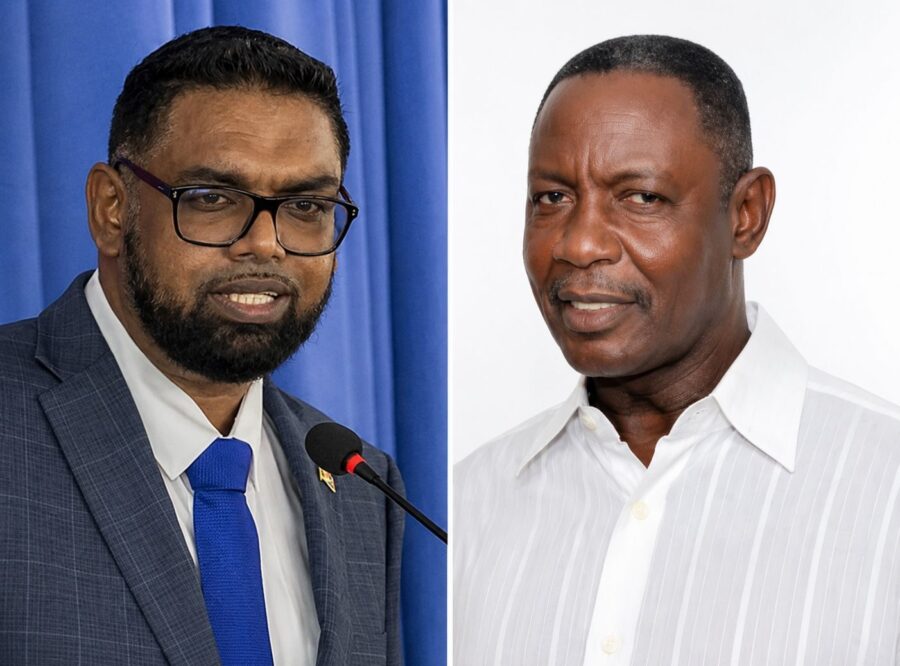
In a commentary published by Village Voice News on October 4, Lewis said Guyana’s growing prosperity must be matched by social inclusion, equitable access to opportunities and stronger democratic participation to prevent inequality and division from undermining the nation’s future.
Lewis challenged the implications of Ali’s projection that approximately three million people could be passing through Guyana by 2030, arguing that such a prospect demands urgent scrutiny of migration, national identity and whether Guyanese risk being sidelined economically and politically in their own country as the population expands.
He said migration was not inherently problematic, but questioned the consequences of increased inward migration occurring alongside the departure of Guyanese seeking better wages, healthcare, education and professional prospects overseas.
“We cannot be indifferent to the possibility that Guyanese could become a smaller proportion of the population while simultaneously being pushed to the margins of their own country’s economic and political life.”
Lewis argued that the country’s expanding revenues and natural-resource wealth must give citizens a genuine opportunity to participate in economic growth rather than leave them feeling disconnected from the benefits.
“A nation cannot call itself developed while its own citizens increasingly question whether they have a meaningful stake in the wealth beneath their feet, the opportunities created by that wealth and the decisions determining their future.”
He maintained that Guyana’s history of ethnic rivalry and political tension should serve as a warning about the consequences of exclusion. He cautioned that economic disparities, political divisions and unequal access to opportunities could erode public trust if they remained unaddressed.
“Guyana’s oil wealth and other natural resources must not produce a country in which citizens are spectators to prosperity.”
According to Lewis, genuine development must extend beyond infrastructure spending, economic indicators and increased government revenue. It should provide decent jobs, encourage business ownership, open pathways for young people and give citizens a meaningful voice in decisions shaping their lives.
The GTUC General Secretary said the labour movement was renewing its call for international charters, conventions and laws to be advanced alongside practical programmes that promote inclusion, civic participation and upward mobility.
He referenced the United Nations’ description of social cohesion as:
“the glue that holds society together.”
Lewis identified social inclusion, social capital and social mobility as three important components of cohesion.
He said inclusion required all citizens and groups to have meaningful opportunities to participate in Guyana’s economic, social and political affairs. He cited the Constitution’s call to:
“Celebrate our cultural and racial diversity and strengthen our unity by eliminating any and every form of discrimination.”
He added that such principles should be reflected in access to employment, national resources and decision-making. The GTUC, he said, had repeatedly advocated constitutional protections for inclusionary democracy, economic development, freedom of association, protection from discrimination and trade union participation in State decision-making.
Lewis also addressed the importance of public confidence in institutions, arguing that trust could be weakened when citizens believed ethnicity, political connections or privilege determined who benefited from national development.
He pointed to the GTUC’s Labour’s Platform for Guyana, which promotes sustainable development, decent work, full employment, stronger governance and democracy, and social and labour rights.
On social mobility, Lewis identified the departure of skilled workers and graduates as a challenge requiring national attention. He called for improved conditions to retain Guyanese talent and encourage citizens living abroad to return.
He further highlighted gender equality, noting that qualified women remained underrepresented in decision-making despite strong educational performance. He also called for urgent attention to declining educational outcomes among boys.
Lewis said Guyana needed modernised data systems to guide evidence-based decisions and a fair tax system under which all taxpayers make an appropriate contribution to national development.
“Guyana is becoming richer, but that does not automatically mean Guyanese are becoming more secure, included or empowered.”
He argued that the country’s development must be inclusive, creating broader opportunities, strengthening institutions and ensuring citizens can see themselves as participants in the nation’s future.