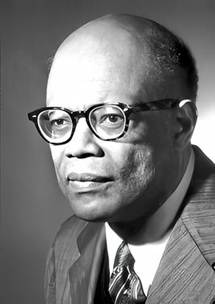
Sir Dr. Arthur Lewis shared the 1979 NOBEL PRIZE AWARD with American Economist Dr. Theodore Schultz for their pioneering work on Economic Development and the Structural Problems facing DEVELOPING NATIONS.
Scientific History: He was also the FIRST Black individual to WIN a Nobel Prize in any of the Scientific Disciplines.
Historical Milestone: To this day IN 2026, his 1979 WIN remains a unique MILESTONE, as no other Black economist has been awarded the ECONOMICS PRIZE since its inception in 1969.
Sir Dr. Arthur Lewis’s path to the 1979 Nobel Prize was defined by intense structural RACISM, INSTITUTIONAL restrictions, and PERSONAL isolation. Despite graduating with the highest marks in the history of the London School of Economics (LSE), he faced constant discrimination in Employment, Housing, and Teaching.
Forced Out of Engineering: Dr. Lewis originally wanted to be an engineer. He abandoned this dream as a teenager because he realized that neither the colonial government nor white-owned private firms in St. Lucia would ever hire a
Black engineer. He pivoted to business and economics because it was a path where he could fall back on legal or administrative roles IF racism blocked his path.
Strict Exploitation and Restrictions at LSE: After arriving at London School of Economics ( LSE) on a SCHOLARSHIP, Lewis SHATTERED ACADEMIC RECORDS.
When the appointments committee unanimously voted to hire him as an assistant lecturer in 1938, the university’s director, Alexander Carr-Saunders, faced severe internal pushbacks. To appease racist governors, the director implemented strict, highly discriminatory rules.
No Private Tutorials: Lewis was explicitly forbidden from teaching white students individually. He was only allowed to teach them in large groups to limit “one-on-one” contact.
Unusual Administrative Validation: His initial contract required a special, highly irregular confirmation process specifically because of his race.
Overworked During World War II: During the war, when white professors were called up for military or civil service, London School of Economics (LSE) dumped a massive, unfair teaching burden on Lewis. He was forced to simultaneously teach LSE and Cambridge students across multiple major subjects to keep the university afloat.
Professional and Social Exclusion: Outside the lecture hall, Lewis was constantly reminded of his second-class citizenship in the British Empire.
Housing Discrimination: In London, he routinely faced “generalized discourtesy” and was repeatedly denied housing by white landlords who refused to rent to a Black academic.
Employment Denials: In 1937, despite having a first-class degree, the British Colonial Services rejected his application for an administrative post in Trinidad & Tobago strictly due to his race.
A Legacy of Shattered Glass Ceilings.
A Legacy of Shattered Glass Ceilings: Lewis responded to this hostility with absolute ACADEMIC EXCELLENCE, eventually forcing institutions to recognize his GENIUS. His career became a sequence of HISTORIC RACIAL milestones:
Lewis responded to this hostility with absolute academic excellence, eventually forcing institutions to recognize his genius.
First Black student and first Black academic at the London School of Economics.
First Black full professor in the entire United Kingdom when he took A CHAIR at the University of Manchester at age 33.
First Black full professor at Princeton University, where he taught for TWO decades.
Sir Dr. Arthur Lewis had already been Britain’s first Black university lecturer. He would go on to become Princeton’s first Black full professor. He would serve as Vice Chancellor of the University of the West Indies, CHANCELLOR of the
University of Guyana, and founding President of the Caribbean Development Bank.
Sir Arthur Lewis published it in 1954: “Economic Development with Unlimited Supplies of Labour.” The dual-sector model. The Lewis Model. A framework that showed how countries with large agricultural populations could achieve sustained industrial growth by systematically reallocating surplus labour into a modern productive sector.
The model became the foundational text of development economics. Its logic has been applied to countries across Africa, Asia, and the Caribbean. The “Lewis Turning Point” — the moment when surplus labour is absorbed and wages begin to rise — has been widely used to understand China’s economic transformation.
He then spent his career building institutions: a University, a Bank, a Discipline, and an Intellectual Legacy that trained generations of development economists at Princeton and Governments across the Global South. His face is on the Eastern Caribbean $100 note.
Sir W. Arthur Lewis introduced this landmark framework in his 1954 seminal paper, “Economic Development with Unlimited Supplies of Labour,“ for which he later won the 1979 Nobel Prize in Economics.
The model Dual-sector model revolutionized development economics by providing a roadmap for how agrarian nations can build wealth through structural transformation.
The Lewis Model operates on a few CORE components:
The Traditional (Subsistence) Sector: A massive, rural agricultural sector characterized by “surplus labor“—meaning there are more workers than necessary, and their marginal productivity is effectively zero. Despite this, traditional workers earn a wage based on their average product.
The Wage Gap: To incentivize workers to migrate to the cities, the modern sector pays a slightly higher wage (a premium of roughly 30%) than the rural subsistence wage.
The Growth Mechanism in Action: Because the rural labor supply is essentially unlimited, the modern sector can hire new workers at this constant, low wage without driving up labor costs. This allows the modern sector to generate massive profits. Capitalists are then expected to reinvest these profits into fixed capital, increasing production and further driving up the demand for labor.
The Lewis Turning Point: This ENGINE of GROWTH continues until the “Lewis Turning Point” is reached. At this critical threshold, all the surplus agricultural labor is absorbed. Once the traditional sector’s labor surplus is depleted, the modern sector can no longer hire workers at a flat, constant wage. Labor supply becomes sensitive to the real wage, forcing modern firms to pay more, which ultimately slows down profit accumulation and leads to the modernization of agriculture.
Guyana and CARICOM can leverage the core logic of the Lewis Model
Guyana and CARICOM can leverage the core logic of the Lewis Model—systematically moving surplus OR underutilized labor into highly productive, capital-reinvesting industries—to solve their unique structural vulnerabilities.
Sir Arthur Lewis was a St. Lucian economist and a fierce advocate for Caribbean regional integration. Applying his model means shifting the region away from volatile primary resource extraction (like oil, gold, or raw sugar) and low-value tourism toward high-productivity manufacturing, agro-processing, and regional trade integration.
How Can Guyana Benefit ?????:
AVOIDING the Resource CURSE: Guyana is experiencing an unprecedented OIL boom. However, OIL is a capital-intensive sector that employs very few people. To achieve a Lewis-style structural transformation, Guyana must use its massive OIL REVENUES as the “Capitalist Surplus” to Finance other High-Productivity Sectors.
FUND Agro-Industrialization: Guyana possesses vast, fertile arable land. Instead of exporting raw agricultural products, the state can subsidize the setup of local factories to process food (e.g., packaged foods, animal feed, biofuels). This absorbs underemployed rural labor into high-wage industrial jobs.
ESTABLISH Strategic Linkages: Government policies should MANDATE that ALL FOREIGN COMPANIES build local supply chains. Investing in domestic manufacturing for housing components, machinery parts, and specialized chemicals creates sustainable, non-oil industrial sectors.
HUMAN Capital Reinvestment: True structural transformation requires upgrading the labor force. Guyana must inject its oil revenues heavily into TECHNICAL and VOCATIONAL TRAINING to transition workers from subsistence farming or low-wage retail INTO high-tech manufacturing and engineering roles.
How Can CARICOM Benefit ?????:
How CARICOM Can Benefit: Creating a Regional Value Chain Individually, many Caribbean nations are too small to support large-scale industrialization. However, as Lewis argued, CARICOM can function as a UNIFIED Economic BLOC to
POOL LABOR, CAPITAL, and MARKETS.
Regional Labor Reallocation: Some CARICOM states suffer from high youth unemployment, while a booming Guyana faces labor shortages. Fully executing the CARICOM Single Market and Economy (CSME) allows surplus labor from across the region to seamlessly migrate to high-productivity infrastructure and MANUFACTURING HUBS in Guyana.
Achieving Food Security (The “25 by 2025” Goal): CARICOM has a notoriously high food import bill. By combining Guyana’s vast land with capital from wealthier member states and regional technology, CARICOM can scale up mega-farms. Moving workers into mechanized regional agriculture increases productivity and replaces Billions in foreign imports.
Pooled Specialization: Instead of multiple islands competing for the same tourism dollars, the region can create a manufacturing value chain. For example, Guyana can produce the raw aluminum or agricultural inputs, Trinidad & Tobago can provide affordable energy for processing, and logistics hubs in Jamaica can distribute the finished products to Global markets.
SWOT Analysis: GUYANA Through the Lens of the Sir Dr. Arthur Lewis Model.
SWOT. Applying Sir Dr. Arthur Lewis’s ECONOMIC framework to 2026 Guyana reveals distinct strategic choices. Below is a structural SWOT analysis evaluating how Guyana can use Lewis’s model of INDUSTRIAL transformation to MANAGE its OIL BOOM, diversify away from primary resources, and transition underutilized labor into high-value sectors.
STRENGTHS
Massive Capitalist Surplus: Huge OIL REVENUES provide the exact “capital surplus” Lewis argued is necessary to fund industrial development without relying on foreign debt.
Abundant Arable Land: Vast, fertile LAND assets allow for immediate scaling of large-scale, mechanized agro-processing hubs to absorb traditional labor.
Global Political Leverage: High international PROFILE attracts top-tier foreign direct investment (FDI) and technology transfers needed to modernize industries.
WEAKNESS
Severe Domestic Labor Shortages: Unlike Lewis’s original assumption of an “unlimited” population, Guyana has a small domestic workforce (under 800,000), making it heavily reliant on cross-border labor.
Infrastructural Deficits: High domestic energy costs and historically poor transport links make local manufacturing less competitive Globally.
Racial and Political Polarization: Internal political division can disrupt long-term, multi-decade economic planning required for true structural transformation.
OPPORTUNITIES.
CARICOM Labor Integration: Using the CARICOM Single Market and Economy (CSME) to absorb surplus labor from neighboring islands, solving Guyana’s small population bottleneck.
Regional Food Security Leader: Capitalizing on CARICOM’s “25 by 2025” initiative to replace food imports with Guyanese-processed agricultural goods.
Green Industrialization: Reinvesting oil wealth directly into SOLAR, hydro, and WIND projects to give new manufacturing sectors a low-cost, sustainable competitive edge.
THREATS.
The Dutch Disease: The booming oil sector risks driving up the national currency value, making non-oil exports uncompetitive, and killing off the manufacturing sector before it can mature.
The Resource Curse & Inflation: Rapid cash inflows can trigger massive domestic inflation, wiping out the “wage premium” needed to incentivize workers to move into new industries.
Institutional Brain Drain: High-tech OIL firms might poach ALL TOP
administrative and technical talent, starving the traditional, manufacturing, and public sectors of qualified managers.
To build a STRUCTURAL TRANSFORMATION, Guyana must STRATEGICALLY coordinate CARICOM LABOR and aggressively NEUTRALISE the THREAT of Dutch Disease.
As the fastest-growing oil economy, producing over 900,000 barrels per day, Guyana is generating a MASSIVE CAPITAL surplus BUT lacks the domestic workforce to support its rapid industrial expansion.
HOW can Guyana use its opportunities to overcome these structural limits?.
Part 1: Solving the LABOR Bottleneck via CARICOM
The classic Lewis Model assumes an “unlimited supply of labor” from a large domestic agricultural sector. Because Guyana has a tiny domestic population (roughly 815,000), its “unlimited supply” must instead be imported from the wider CARICOM region.
Fully OPERATIONALIZE the CSME: Guyana can utilize the CARICOM Single Market and Economy (CSME) to allow the FREE MOVEMENT of SKILLED and UNSKILLED workers from islands experiencing HIGH UNEMPLOYMENT (like Jamaica, Trinidad & Tobago, or parts of the Eastern Caribbean).
The Labor-Capital Swapping Hub: Guyana supplies the capital (oil revenues) and LAND, while regional neighbors provide the LABOR. This prevents skyrocketing wage inflation inside Guyana from freezing its non-oil construction, manufacturing, and agricultural expansion.
Targeted Industrial Migration: By issuing streamlined VOCATIONAL work PERMITS to regional Technicians, Electricians, and agronomists, Guyana can build out its mechanized agro-processing HUBS without cannibalizing its own small public sector.
Part 2: Shielding Non-Oil Sectors from Dutch Disease
Dutch Disease occurs when natural resource windfalls cause a country’s currency to appreciate, making traditional exports uncompetitive and destroying domestic manufacturing. To shield its Agriculture and Industries, Guyana must deploy its OIL surplus carefully.