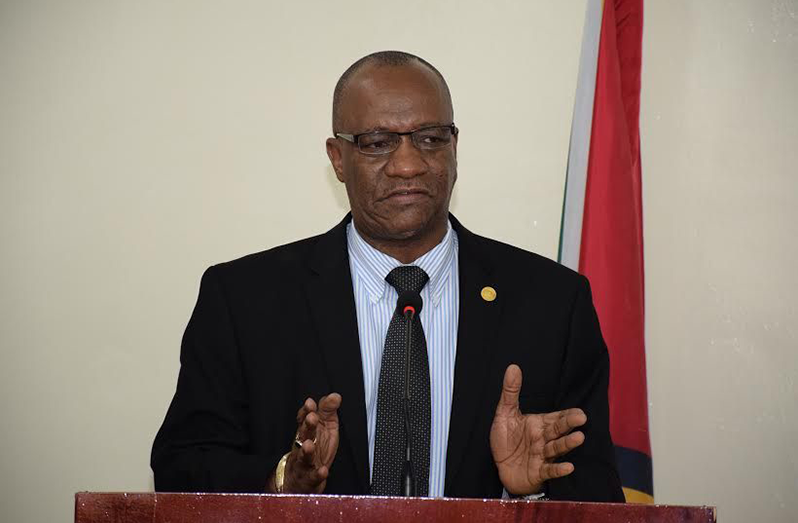
A dispute has emerged over the Guyana Government’s account of Labour and Manpower Planning Minister Keoma Griffith’s participation in the Congressional Black Caucus Foundation’s 55th Annual Legislative Conference, after Guyanese-American Rickford Burke publicly challenged the government’s description of the minister’s engagements with senior U.S. lawmakers.
The Department of Public Information (DPI) said Griffith participated in the conference, held in Washington, D.C., from September 16–20, and used the visit to engage members of the U.S. Congress. The conference is a major policy and networking gathering that brings together lawmakers, policymakers, advocates and other leaders.
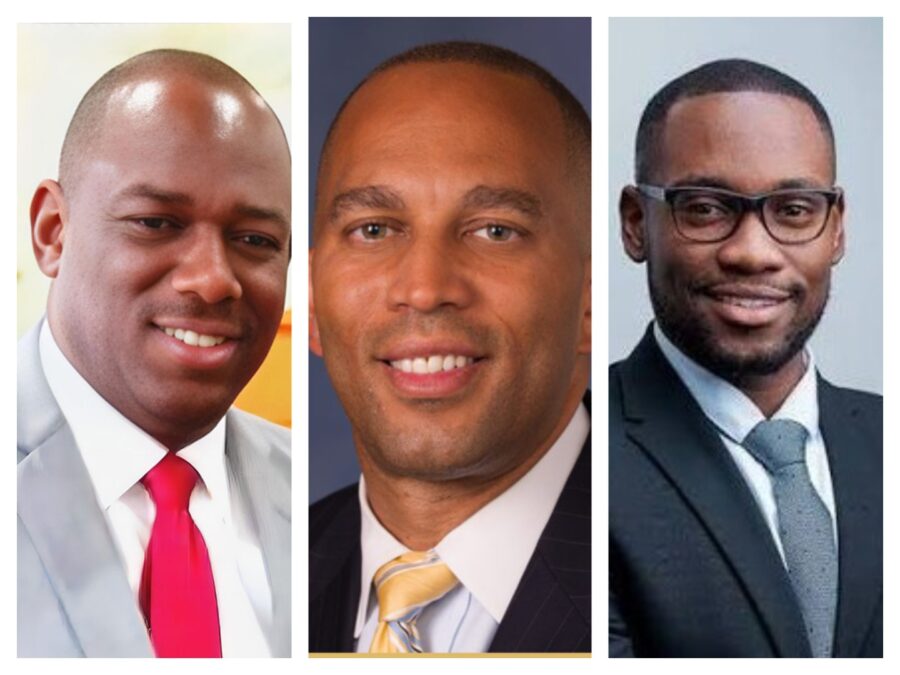
According to DPI, Griffith met or spoke with Congressman Jonathan Jackson, House Democratic Leader Hakeem Jeffries and Congressional Black Caucus Chair Yvette D. Clarke.
DPI stated:
“During the visit, Minister Griffith spoke with Congressman Jonathan Jackson, where the two discussed the importance of continued U.S. support for Guyana’s developmental agenda. The Minister also held conversations with House Democratic Leader Hakeem Jeffries and Congressional Black Caucus Chair Yvette Clarke, among other members of the Caucus, as part of a broader effort to strengthen Guyana’s relationships with lawmakers on both sides of the aisle.”
The government also released photographs showing Griffith with Jeffries and Clarke and said the discussions provided U.S. congressional leaders with updates on developments in Guyana.
DPI further stated that Guyana “continues to enjoy strong, bipartisan support within the U.S. Congress,” and characterised Griffith’s Washington engagements as part of the government’s continuing effort to strengthen relations with U.S. lawmakers.
Burke disputes government’s account
Burke, president of the Caribbean and Guyana Institute for Democracy (CGID), who said he was also in Washington for the conference, directly disputed the government’s account.
In a social-media statement, Burke accused the PPP/C Government of misrepresenting Griffith’s participation and claimed the minister did not attend the conference’s formal sessions.
“PPP government Minister Keoma was not at any of the formal sessions.
Keoma Griffith did not meet with Democratic Leader Hakeem Jeffries or CBC Chairman, Congresswoman Yvette Clarke to discuss anything to deepen ties.”
Burke also alleged that efforts were made by members of Griffith’s delegation to obtain photographs with senior congressional figures.
“One of Griffith’s handlers was going around begging top aides to the Congress Members for photo op with Leader Jeffries and the Congresswoman.”
He then used deliberately disparaging language to question Griffith’s significance in Washington:
“Leader Jeffries don’t meet with small fish like Keoma.
Boy sit down and stop fishing for relevance! You just a little fish!”
Burke’s allegations have not been independently substantiated, while the government has provided photographs showing Griffith with Jeffries and Clarke. The photographs establish that the individuals were together but, by themselves, do not establish the nature, duration or substance of any conversation.
The disagreement therefore centers not on whether Griffith was photographed with the two lawmakers, but on the government’s characterization of those interactions as substantive conversations aimed at strengthening bilateral ties.
The publicly available material reviewed does not include a separate statement from Jeffries or Clarke confirming the substance of the conversations described by DPI. Clarke’s congressional website lists her Washington office and recent activities, but does not currently provide an account of the reported Griffith discussions.
The competing accounts place greater scrutiny on how Guyana’s official engagements with U.S. lawmakers are presented publicly and whether such encounters represent formal diplomatic or congressional meetings, informal conference interactions, or photo opportunities on the margins of a major Washington event.
The government’s account and Burke’s statement remain directly at odds, with no independent public record currently establishing the substance of the disputed encounters.