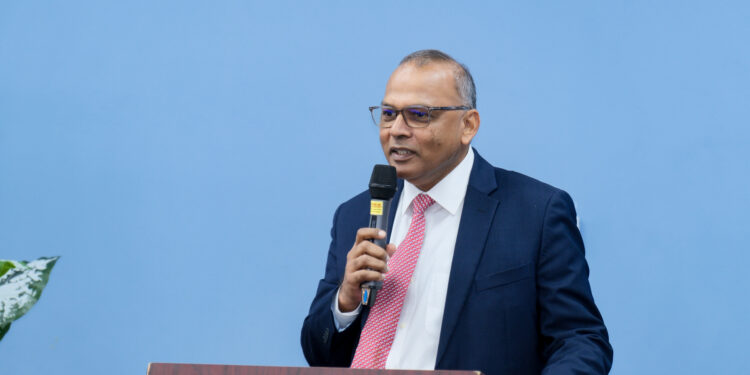
Ali issued the warning on Monday, September 14, during remarks on the country’s electricity situation. He acknowledged that the recent outages are unacceptable and said the power system is under increasing pressure as electricity demand rises faster than the country’s generation and distribution infrastructure can keep pace.
The President said there is currently “no spinning reserve”—meaning the system has little or no immediately available backup generation if an operating unit fails or is taken offline for maintenance.
He warned that the situation is particularly precarious in areas such as the Essequibo Coast, where a failure could have serious consequences for the local supply.
The warning comes despite a massive expansion in government spending on the electricity sector.
The 2026 Budget has allocated tens of billions of dollars toward electricity generation, transmission and distribution upgrades. According to budget-related reporting, approximately $69 billion has been earmarked for electricity-related investments, including strengthening GPL’s transmission and distribution network and modernising the power system. The broader energy strategy is estimated at approximately $119.4 billion.
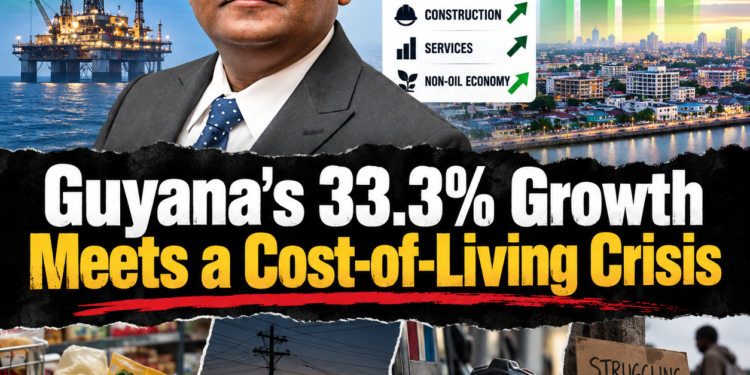
The scale of the spending highlights the growing contradiction confronting Guyana: an oil-producing economy experiencing unprecedented economic growth is still struggling to provide reliable electricity to households and businesses.
Guyana’s economy is projected to grow by 16.2 per cent in 2026, with the oil sector remaining the principal driver. Oil production is expected to average about 840,000 barrels per day, while oil revenues are projected at approximately US$2.79 billion. Yet electricity demand is rising rapidly.
Recent reports indicate that peak demand on the Demerara-Berbice Interconnected System has climbed sharply, while GPL’s available generating capacity has been placed under increasing pressure. Demerara Waves recently reported that national peak demand had reached 257 MW, compared with installed capacity of about 265.6 MW, leaving little room for unexpected equipment failures or maintenance.
The pressure is expected to intensify as Guyana’s economy expands.
GPL’s 2026–2030 development plans project a dramatic increase in electricity consumption, driven by new housing, industrial development, commercial activity and the eventual integration of Linden into the national grid. Peak demand is projected to rise substantially over the period, requiring major investments in generation as well as transmission and distribution.
The government is banking heavily on the Gas-to-Energy project at Wales to transform the electricity sector. The first phase is expected to significantly increase generation capacity and reduce dependence on expensive imported fuel. The project is also intended to support lower electricity costs and greater reliability.
But the benefits of that project have yet to fully reach consumers, while the existing system continues to struggle.
The government has also previously provided substantial financial support to GPL. The 2025 Budget included an $18 billion allocation to assist with electricity generation, while the 2026 spending programme represents an even larger intervention in the sector.
The continued outages therefore raise questions about whether public investment is being translated quickly enough into reliable service.
For ordinary Guyanese, the issue is more than an inconvenience. Frequent blackouts affect businesses, schools, hospitals, households and the wider economy. They also threaten to undermine investor confidence at a time when the government is promoting Guyana as one of the world’s fastest-growing economies.
The country’s oil wealth has dramatically transformed government revenues and national economic indicators since production began in 2019. But the persistence of unreliable electricity demonstrates that economic growth and oil revenues do not automatically translate into functioning public infrastructure.
With demand continuing to climb, Ali’s warning amounts to an admission that Guyana’s electricity system is currently operating dangerously close to its limits—and that more blackouts may be unavoidable before the promised investments begin delivering sufficient additional capacity.