By Stephanie Brown
Key Takeaways
- Watermelon rinds are full of fiber that supports digestion and heart health.
- The rinds have more citrulline than the pink flesh, which may boost exercise performance.
- Always wash watermelons well before cutting to avoid spreading bacteria that could make you sick.
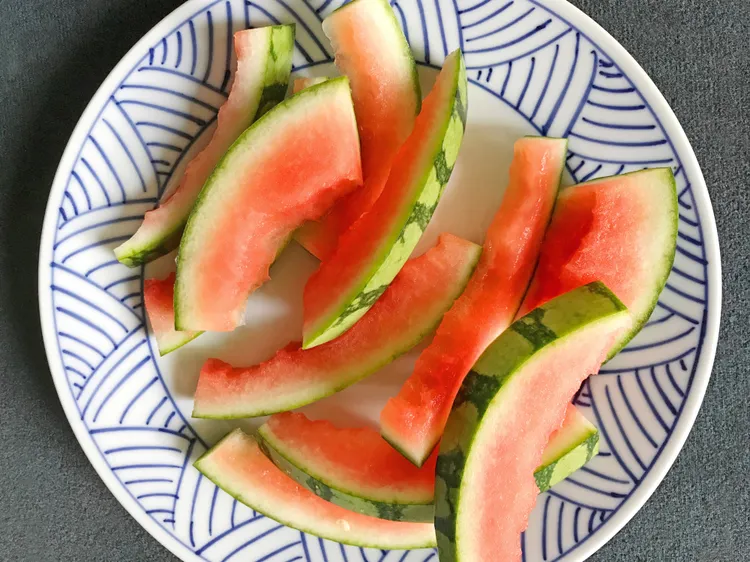
Watermelon rinds are more than just waste; they’re packed with fiber and nutrients that support digestion and heart health. Discover how incorporating them into your diet can boost your nutrition and reduce food waste.1
Watermelon rinds are surprisingly nutritious.
- Good Source of Fiber
Fiber helps maintain regular bowel movements and may reduce the risk of colon cancer and heart disease. Many U.S. adults could benefit from including more fiber-rich foods, such as watermelon rinds, in their diet.
“The rind is very high in fiber, which makes it very different than the inside of the watermelon,” said Julie Stefanski, MEd, RDN, LDN, a Baltimore-based registered dietitian and spokesperson for the Academy of Nutrition and Dietetics.
Stefanski added that most of the fiber in the rind is insoluble, promoting bowel movements. It also contains some soluble fiber, helps lower cholesterol levels.
Because watermelon rind is fibrous, your digestive system may need time to adjust. Eating too much at once may cause gas or bloating.4
- Rich in Citrulline
Watermelon rinds contain citrulline, an amino acid that may support exercise performance and enhance blood flow. For this reason, some social media users suggest blending watermelon rinds into a pre-workout drink.
“One cup of watermelon has about 250-300 mg of citrulline. The rind does have about 60% more than the red flesh,” Sherry Gray, MPH, RD, a registered dietitian and a nutrition educator at the University of Connecticut, told Verywell.
Adding a cup of watermelon rinds to a smoothie can help you get more citrulline. However, Gray noted that you’d need about 3-6 grams of citrulline per day for cardiovascular and muscular performance benefits.
- More Nutritious Than the Flesh
Watermelon rinds have vitamin C, vitamin B6, beta-carotene, calcium, fiber, zinc, and phosphorus, an important mineral that supports normal nerve and muscle function.89
“In some ways, it is more nutritious than the flesh, which is also a nutritious fruit. The rind has some unusual properties that make it very nutritious,” Gray said.
She added that you’d need to eat about 1 to 1.5 cups of rind to get meaningful amounts of these vitamins, minerals, and antioxidants.
Are Watermelon Rinds Really Safe to Eat?
Always wash a watermelon under running water before cutting it, even if you only plan to eat the flesh. Scrubbing the outer green skin with a vegetable brush can help remove dirt and debris.10
“Your knife passes through the outside onto the inside, so even if you’re not using the watermelon rind, you always want to wash the outside of a melon really well, so that your knife doesn’t pass bacteria or dirt from the outside into the inside,” Stefanski said.
Clean watermelon rinds are generally safe to eat, but because they are high in fiber, it’s best to introduce them gradually to avoid digestive issues like bloating, gas, or diarrhea.4
If you plan to eat the rinds, ensure you refrigerate them, as they are perishable, Gray said.
Different Ways to Prepare Watermelon Rinds
If you have never tried watermelon rind, start by peeling off the green skin and eating the white part between the pink fruit and the outer skin. The raw rind is edible, but the taste may not be appealing to everyone.
While watermelon fruit is sweet, its rinds have a different flavor. The green skin is bitter, and the white part tastes similar to cucumber, according to Stefanski.
To improve the taste, you can pickle the rinds or incorporate them into stir-fries, chutneys, salads, and smoothies.2
“The watermelon rind can be a good addition to the diet, but you have to think about how it’s prepared,” Stefanski said. “A lot of recipes have a lot of added salt for pickling or a lot of added sugar if it is a recipe that’s supposed to be a candy or a sweetened rind.”
Some food scientists are exploring ways to add watermelon rinds to food products, such as mixing powdered rinds with wheat flour for baked goods to boost fiber content. (verywellhealth)