By Egland Gomes- Are Guyanese witnessing the systematic fleecing of the nation under the People’s Progressive Party/Civic (PPP/C) government of President Irfaan Ali, or are we witnessing what could become one of the greatest heists of national wealth in the history of the Cooperative Republic of Guyana?
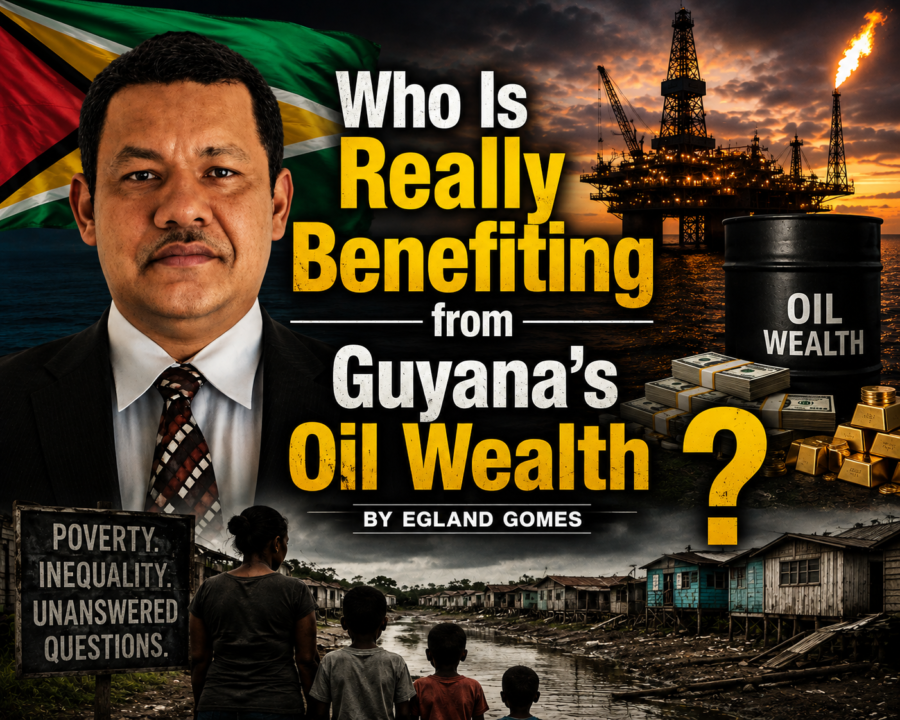
At a time when Guyana is earning unprecedented oil revenues and the national budget has reached historic levels, questions about public spending, contracts, transparency, and accountability can no longer be dismissed or ignored.
Guyana’s National Assembly approved a record-breaking GY$1.558 trillion (approximately US$7.48 billion) spending plan for the 2026 National Budget, themed “Putting People First”, funded heavily by the rapid expansion of the oil sector.
The government is accountable to the people for what appears to be a deficit in public accountability. President Irfaan Ali owes the nation an explanation as to why Sigma, a company first registered in Guyana in 2022, received approximately GY$12 billion in contracts.
What is the Bangladesh-headquartered Sigma Engineering Ltd. Inc.’s record in developing potable water supply infrastructure?
What is the academic and engineering résumé of the President’s brother, Mohamed Aqtar Ali, who is the senior technical consultant in Guyana?
Can Minister Colin Croal, with responsibility for Guyana Water Inc. (GWI), explain how GWI has delivered quality potable water to the nation during more than thirty years of PPP governance?
These are legitimate questions that deserve clear, transparent, and documented answers. They are not questions that should be met with political attacks, evasions, or silence. Public funds belong to the people of Guyana, and the public has a right to know how those funds are being spent, who receives them, and whether contracts are delivering value for money.
Guyanese at home and in the diaspora are called upon to join the movement for government transparency and accountability now. Let’s exercise our collective constitutional rights of civil disobedience to hold the government accountable and demand answers to the unsatisfactory and unacceptable conditions of potable water supply in Guyana.
And while GWI struggles with these failures, why is it now planning to enter the bottled-water supply market in Guyana? Is this another example of a government agency expanding into areas while failing to adequately perform its core responsibility of providing reliable, safe, and quality potable water to the population?
Guyana’s oil wealth was not created for the benefit of a select few. It belongs to the people and future generations. The greater the public expenditure, the greater the obligation for transparency. If the government has nothing to hide, then it should answer these questions openly, provide the relevant records, and allow the public to judge for itself.
Guyana cannot afford silence while billions of dollars in national wealth are being spent. The people deserve answers, accountability, and transparency—and they deserve them now.