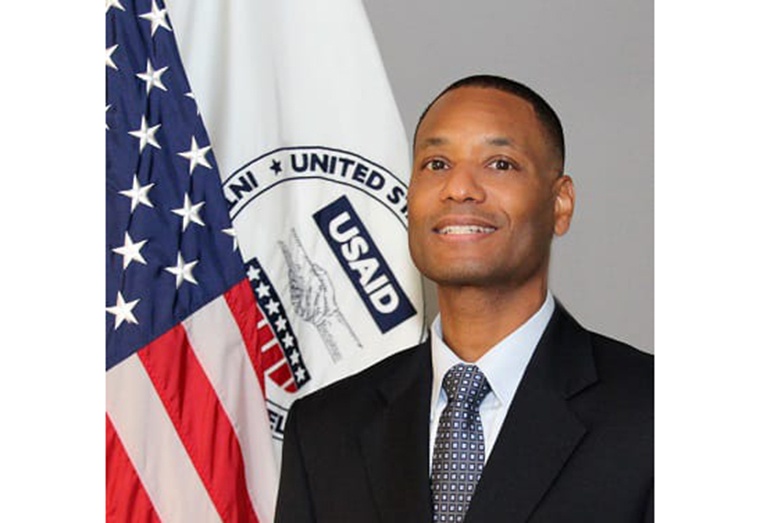
Guyana’s abundance of freshwater could become one of its greatest economic assets, but Dr. Karen Abrams is warning that the country must not allow government intervention to become a threat to the very entrepreneurs it should be empowering.
In an opinion piece published in Kaieteur News on August 9, Abrams, Executive Director of STEMGuyana, welcomed the newly legislated Guyana Development Bank and its proposed interest-free, collateral-free loans of up to $3 million. She said the facility could give young farmers, seamstresses, mechanics, beauticians, food processors and technology entrepreneurs the capital needed to acquire equipment and build sustainable businesses.
But she cautioned that Guyana’s ambitions must extend beyond small-business financing.
“However, $3M cannot finance a modern manufacturing plant, major agro-processing facility, hotel or bottled-water factory. We must therefore distinguish between supporting small businesses and financing the large investments necessary to diversify Guyana’s economy.”
Abrams’ intervention comes as President Irfaan Ali pushes a plan to have all bottled water consumed in Guyana produced locally within 12 months. According to the Department of Public Information, the state-owned Guyana Water Incorporated (GWI), which has entered the bottled-water industry, estimates that locally treated water could be bottled and sold for approximately $100 per bottle or less.
For Abrams, the opportunity is potentially far bigger than supplying Guyana’s domestic market.
With freshwater security becoming an increasingly serious concern around the world, she argues that Guyana could transform its enormous water resources into a major economic industry—creating jobs, generating foreign exchange and building an export sector that could continue producing wealth long after the country’s oil production declines.
“Against this global background, Guyana’s freshwater could become one of our most valuable strategic assets.”
She points to international water crises, including severe pressure on the Colorado River system in the United States and the increasingly alarming situation in Kabul, Afghanistan, to underscore the strategic value of freshwater.
But before Guyana turns water into another commercial commodity, Abrams believes Government must answer a basic question: Can every Guyanese household reliably turn on a tap and receive safe, treated water?
The Government has reported that more than 95 percent of the population has access to potable water. However, Abrams noted that the minister responsible for public utilities recently acknowledged treated-water coverage along the coast at approximately 80 percent.
She argues that the word “access” can obscure the reality experienced by households that depend on wells, standpipes, community systems, water storage or purchased supplies.
“I still hear about villages where households have no direct water supply or where residents must collect, store or purchase water.”
Abrams is calling on GWI to regularly publish independent water-quality results by community so citizens can know whether the water reaching their homes is safe.
She insists that the public utility’s fundamental responsibility must come first.
“GWI’s first responsibility must be to provide safe, reliable and affordable water to the Guyanese people.”
That concern becomes sharper if GWI moves directly into bottled-water production.
Abrams warns that a publicly funded utility could find itself competing against private businesses while benefiting from State-funded wells, treatment facilities, land, equipment, vehicles and employees. At the same time, Government controls permits, certification, taxation, procurement and access to public contracts.
“It should not become both referee and player.”
Rather than Government becoming a dominant commercial player, Abrams proposes that the State build the foundation upon which Guyanese entrepreneurs can build the industry.
She recommends establishing water-quality laboratories, mapping and protecting freshwater reserves, strengthening watersheds, developing export infrastructure and creating shared packaging facilities. Government could also provide partial loan guarantees to help larger Guyanese investors access commercial financing.
Under such a model, private investors would put their own capital at risk while commercial banks assess and finance viable projects. Government would guarantee only part of a potential loss, making banks more willing to lend without turning taxpayers into owners of private enterprises.
The approach could create room for both small and large Guyanese businesses.
The Development Bank could help smaller entrepreneurs, while a properly designed loan-guarantee programme could help local investors establish water-production, manufacturing and agro-processing enterprises.
At its heart, Abrams’ argument is about ownership, opportunity and national confidence. Guyana has spent decades exporting raw resources and watching wealth leave the country. Its water resources offer an opportunity to build an industry in which Guyanese entrepreneurs, workers and communities can participate meaningfully.
“Guyana should certainly develop its water wealth. But the state should first deliver treated water to every home, protect the resource, establish fair rules and unlock financing. Then it should give Guyanese entrepreneurs a fair chance to build the industry.”
For Abrams, Guyana’s water future should not be a choice between Government and private enterprise. The State should create the conditions for Guyanese enterprise to flourish.
The challenge is to ensure that the country’s natural abundance does not become another resource controlled primarily by institutions and interests outside the reach of ordinary Guyanese—but instead becomes a platform upon which local businesses, workers and communities can build lasting prosperity.



![Trump supporters rally outside the Maricopa County vote-counting office in Phoenix as two counterprotesters stand in the rear [Matt York/AP]](https://villagevoicenews.com/wp-content/uploads/2020/11/trump.jpg)