Dear Editor,
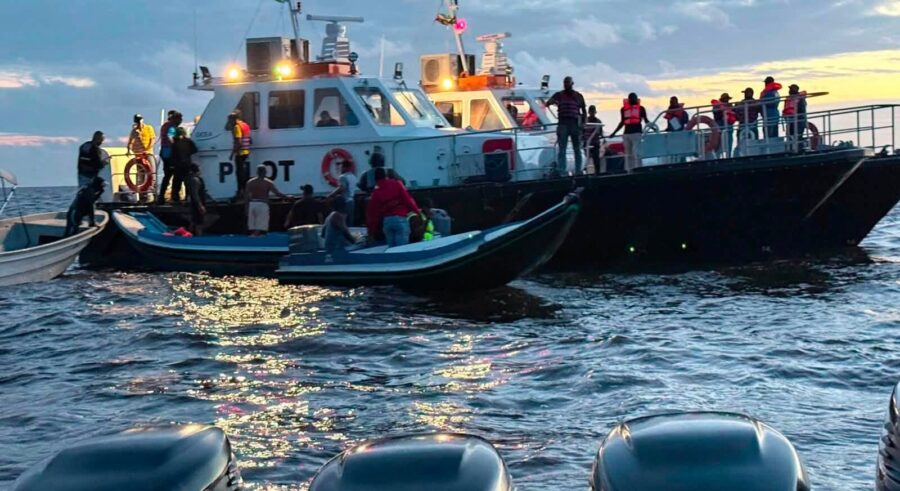
On July 18, 2026, the sinking of the MV Barima transformed an ordinary journey from Georgetown to Port Kaituma into one of the darkest moments in Guyana’s history. As of July 30, 73 deaths had been confirmed, 30 people remained unaccounted for, and 76 passengers and crew members had been rescued. Behind every number is a person whose absence has altered a family, a workplace, a school, a village and, ultimately, the nation. Although public attention is understandably focused on recovery, investigation and accountability, another crisis is unfolding more quietly: the long-term psychological and social impact of mass loss on the Guyanese people.
The effects of this tragedy will not disappear when the official period of mourning ends, when media attention decreases or when the Commission of Inquiry completes its work. Survivors must live with memories of terror and loss. Families must confront empty spaces at dining tables, disrupted livelihoods and, for some, the continued uncertainty of not knowing the fate of a loved one. Children may grow up without parents, siblings or caregivers. Communities connected to Region One may carry a concentrated burden of grief for decades. The MV Barima tragedy must therefore be understood not only as a maritime disaster, but also as a national psychological wound requiring sustained, culturally responsive and compassionate attention.
From a clinical perspective, it is important to use the language of trauma carefully. Guyana is experiencing widespread collective grief and distress, but this does not mean that every citizen has been psychologically traumatised or will develop a mental disorder. Distress after catastrophe is often a normal response to an abnormal event. Many people will gradually recover through family, faith, community support and the restoration of daily routines.
Others, particularly survivors, bereaved relatives, first responders, witnesses and those facing continuing hardship, may experience difficulties that persist for months or years. Recognising both resilience and risk protects us from pathologising normal grief while ensuring that those who need professional care are not forgotten.
The Psychological Aftermath for Survivors
For those who survived the sinking, rescue from the water may mark the beginning rather than the end of their ordeal. Survivors may experience intrusive memories, nightmares, panic, emotional numbness, irritability, difficulty concentrating, exaggerated startle responses and fear of travelling by boat. The sound of waves, darkness, crowded vessels, news reports or an approaching departure date may become reminders of the disaster. These reactions may initially be acute stress responses. Where they remain severe and interfere with daily functioning, some survivors may later meet criteria for post-traumatic stress disorder, depression, an anxiety disorder or another trauma-related condition.
Survivor guilt may be particularly painful. A person may repeatedly ask, “Why did I live when others died?” Someone who shared a life jacket, lost hold of another passenger, or was unable to save a relative may replay the event and imagine actions that might have produced a different outcome. Such thoughts often carry an unrealistic sense of responsibility formed in circumstances where choice and control were extremely limited. Without appropriate support, guilt may lead to withdrawal, substance misuse, self-punishment or reluctance to accept moments of happiness.
Survivors should not be pressured to recount the experience publicly or repeatedly before they are ready. Immediate support should emphasise safety, practical assistance, connection with trusted people, accurate information and access to psychological first aid. Clinical treatment should be offered according to assessed need rather than imposed on everyone. The World Health Organisation recommends layered mental-health and psychosocial support after emergencies: basic services and security for all, family and community support for many, focused non-specialist assistance for people requiring additional help, and specialised clinical services for the smaller group with severe or persistent conditions.
Bereavement Without Certainty
The families of people who remain missing face an especially difficult form of suffering known as ambiguous loss. They may simultaneously hold hope that a loved one will return and fear that the person has died. Because the loss is not fully confirmed, customary mourning rituals, practical decisions and changes in family roles may be delayed. Relatives may feel guilty for grieving while hope remains, or guilty for hoping when evidence points towards death. This uncertainty can freeze a family psychologically between searching and mourning.
Ambiguous loss is not resolved simply by telling families to “accept” what has happened. Families require timely and respectful information, consistency in official communication, opportunities to ask questions, and assistance with identification and legal or financial processes. Even when remains are recovered, the sudden and traumatic nature of the death may complicate mourning. Some relatives may experience persistent yearning, disbelief, anger, avoidance of reminders or an inability to re-engage with life. Prolonged grief disorder cannot be diagnosed in the immediate aftermath; nevertheless, early identification of highly distressed families can help prevent isolation and connect them with care.
Grief will also be shaped by Guyanese cultural and religious practices. Wakes, funerals, prayer services, community gatherings and collective acts of remembrance can provide meaning, belonging and emotional containment. These practices should be supported, not treated as secondary to formal counselling. At the same time, faith and community support should not be used to silence despair or suggest that seeking psychological assistance reflects weak belief. Spiritual care and professional mental-health care can work together.
Children and the Loss of a Secure World
Children affected by the tragedy may not express grief in the same way as adults. Some will ask repeated questions; others may become quiet, angry, clingy or unusually fearful. Younger children may regress in sleeping, toileting, speech or independence. School-aged children may struggle to concentrate, experience falling grades, complain of headaches or stomachaches, or become fearful whenever a caregiver travels. Adolescents may withdraw, take risks, become irritable or attempt to appear unaffected while carrying intense private distress.
The death or disappearance of a parent can alter a child’s emotional security as well as the practical structure of daily life. A surviving caregiver may be grieving, financially strained and emotionally less available. Children may be moved between households, separated from siblings or required to assume adult responsibilities prematurely. Consequently, their difficulties may arise not only from the original event but also from the chain of adversities that follows it.
Schools will therefore be central to long-term recovery. Teachers should receive guidance on recognising trauma and grief without trying to become therapists. Flexible academic expectations, predictable routines, access to school counsellors, peer support and communication with caregivers can help affected learners remain connected to education. Children should receive honest, age-appropriate explanations and reassurance about who will care for them. They should never be forced to participate in memorial activities or publicly disclose their loss. Those showing persistent traumatic grief, marked functional decline, self-harm, severe anxiety or other significant symptoms should be referred for specialised assessment and evidence-based care.
Collective Grief, Media Exposure and National Memory
Guyanese at home and throughout the diaspora may know a victim, a survivor, a responder or a bereaved relative. Others identify strongly because they have travelled on the same route, placed relatives on similar vessels or depended upon maritime transport throughout their lives. This closeness can create a shared sense that the tragedy could have happened to any family.
Repeated exposure to distressing images, lists of victims, survivor accounts and speculation may intensify anxiety and helplessness. Social media can mobilise assistance and preserve stories, but it can also circulate graphic material, misinformation and blame faster than people can emotionally process events. Adults should monitor children’s exposure, and media organizations should balance the public’s right to information with the dignity and privacy of victims. Images of bodies, anguished relatives and traumatized children should not become commodities of public consumption.
Over time, the tragedy will enter Guyana’s collective memory. Anniversaries, maritime travel and public debates about safety may reactivate grief. Children who were very young in 2026 may grow up hearing accounts of the sinking and absorbing the fears of adults around them. This does not mean that trauma is automatically inherited. Intergenerational effects are more likely when grief remains unspoken, family roles are permanently disrupted, economic hardship continues, or children learn that the world is unsafe and institutions cannot be trusted. Open communication, stable caregiving, remembrance and visible reform can interrupt this transmission.
The Particular Burden on Region One and Indigenous Communities
The route to Port Kaituma serves communities for whom river and coastal travel is essential to education, health care, employment, trade and family life. The psychological burden may therefore be especially concentrated in Region One and among Indigenous and hinterland families. In small communities, several deaths can affect nearly every social institution at once: households lose caregivers and earners, schools lose pupils or parents, workplaces lose colleagues, and villages lose people who carried cultural knowledge and community responsibilities.
Access to specialised mental-health care is often more difficult outside Georgetown. A short period of counselling immediately after the tragedy will not be enough. Support must travel to affected communities and remain available after national attention moves elsewhere. Services should be developed with local leaders, health workers, teachers, faith communities and Indigenous representatives. Where appropriate, interventions should respect local languages, mourning practices, kinship systems and cultural understandings of distress. Community members should be partners in recovery, not passive recipients of a programme designed elsewhere.
The tragedy may also deepen fear among people who have no alternative to maritime transportation. Avoidance is not always possible when a ferry is the route to school, medical care or employment. Each future journey may therefore become a confrontation with anxiety. Restoring confidence will require more than reassurance. Passengers must be able to see that safety standards, manifests, loading procedures, life-saving equipment, staff conduct, inspections and emergency communication are being addressed consistently and transparently.
Traumatic bereavement is often complicated when people believe that deaths were preventable.
Questions surrounding the vessel, passenger records, operational decisions and emergency response are now matters for criminal proceedings and an independent inquiry. It is essential not to treat unproven allegations as established fact. It is equally essential to understand that accountability has psychological significance. Families need more than sympathy; they need credible answers.
When official information is inconsistent, delayed or defensive, people may feel abandoned or betrayed. Anger can then become fused with grief. Conversely, transparent communication, respectful treatment, meaningful participation by affected families and visible implementation of safety recommendations can help restore a sense of order and agency.
The Social and Economic Aftershocks
The long-term effects will extend beyond symptoms recorded in a clinic. Some families have lost primary earners, caregivers or several relatives at once. Funeral costs, interrupted employment, legal matters, childcare needs and changes in household composition may create prolonged financial strain. Poverty and uncertainty can sustain psychological distress long after the immediate danger has passed.
Bereaved adults may struggle to return to work, while survivors may be unable to travel or perform previous duties. Children may miss school because of relocation, caregiving responsibilities or reduced family income. Grandparents and extended relatives may assume new parenting roles without adequate resources. These secondary stressors matter clinically because post-disaster mental health is shaped not only by exposure to the event, but also by the stability, or instability, of life afterwards.
Assistance should therefore include more than counselling. Families may require income support, educational assistance, legal guidance, transportation, housing help, rehabilitation and continuity of medical care. A psychologically informed response recognises that distress cannot be treated effectively while practical needs remain overwhelming.
A National Framework for Healing
Guyana now needs a coordinated, long-term recovery framework. First, authorities should establish a confidential register of survivors, bereaved households and significantly affected first responders so that support can be offered over time rather than only during the acute phase. Participation should be voluntary, privacy protected and services based on need.
Second, a stepped-care system should be created. Community outreach, psychoeducation, peer support, faith-based assistance and psychological first aid can serve many people.
Trained counsellors and primary-care professionals can provide focused interventions for moderate difficulties. Clinical psychologists, psychiatrists and other specialists should assess and treat persistent trauma, depression, complicated grief, substance misuse, self-harm risk and severe impairment. Referral pathways must be clear in Georgetown and the regions.
Third, children and families should receive dedicated support through schools and community health services. Teachers, health workers, social workers, police officers, mortuary personnel, divers, fisherfolk and others involved in rescue and recovery should also be monitored.
Responders may experience traumatic stress, moral injury, exhaustion or guilt even when their work was effective. Confidential services can reduce stigma and encourage early help-seeking.
Fourth, public communication should be regular, accurate and compassionate. Authorities should acknowledge uncertainty when facts are not yet known, correct misinformation promptly and avoid promises that cannot be kept. Families should receive important information directly before learning it through the media whenever possible. Their voices should help shape decisions about memorialisation and longer-term support.
Finally, remembrance must be linked to reform. A national memorial, annual observance, scholarship fund or community-based remembrance project could honor those who died and preserve their individual stories. Yet memorialisation becomes hollow if it is not accompanied by measurable improvements in maritime safety and emergency preparedness. Public reporting on the implementation of inquiry recommendations would allow the nation to see whether lessons have become action.
Beyond Survival
Guyana’s response in the coming months and years will determine whether the MV Barima tragedy remains an open national wound or becomes a source of collective responsibility and reform. Healing will not mean forgetting, ending grief on a timetable or asking families to find closure. For many, life will never return to what it was before July 18. Healing will mean learning to carry the loss without being entirely defined by it.
As a society, we must resist two extremes: treating every emotional reaction as mental illness and if time alone will heal everyone. Most people possess considerable resilience, particularly when families and communities remain connected. However, resilience should not become an excuse for institutional neglect. People recover more readily when they have safety, truthful information, stable livelihoods, supportive relationships, culturally meaningful rituals and access to care when ordinary coping is no longer enough.
The MV Barima sank beneath Guyana’s waters, but its consequences will reach far beyond them. They will be felt in homes where a chair remains empty, in classrooms where a child can no longer concentrate, in communities preparing for another difficult journey, and in the questions, citizens ask of the institutions meant to protect them. Our obligation is not merely to mourn this tragedy, but to remember responsibly, support consistently, investigate transparently and reform decisively. Only then can national grief be transformed into a commitment that protects the living and honours those who did not return.
Yours truly,
Dr. Deborah London, MSc, PsyD
Licensed Clinical Psychologist
Registration # 2024/127
APA Membership Number: C2204293533