Internal maintenance records documenting repeated mechanical and electrical defects aboard the MV Barima months before its deadly July 18 sinking have raised fresh questions about whether known safety problems were properly addressed and whether workers were knowingly exposed to dangerous conditions.
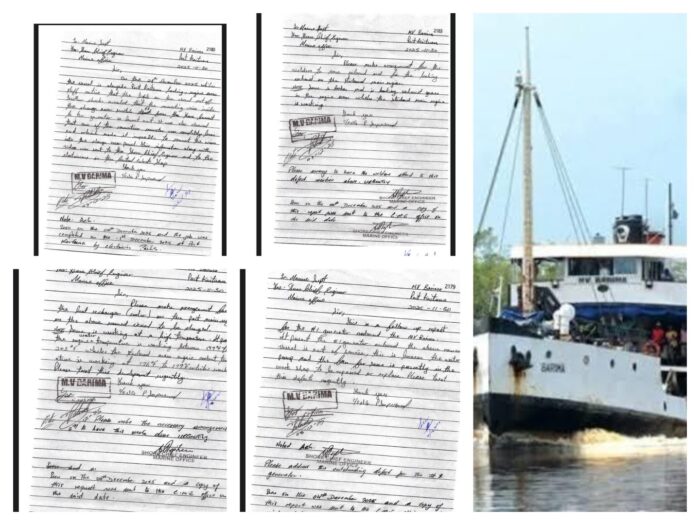
The handwritten records, covering November 2025 through March 2026, identify an array of problems, including an out-of-service generator, overheating machinery, leaking engine exhaust, defective cooling equipment and electrical failures. Several repair requests were explicitly marked as urgent.
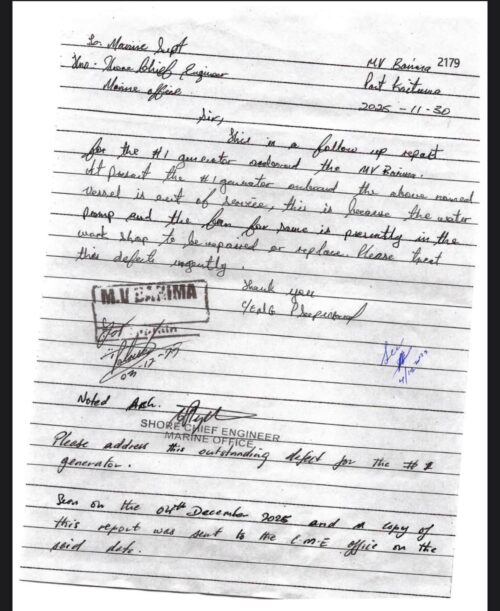
One November 30, 2025 report described the vessel’s Number One generator as “out of service” because its water pump was not functioning and needed repair or replacement. The report called for urgent attention.
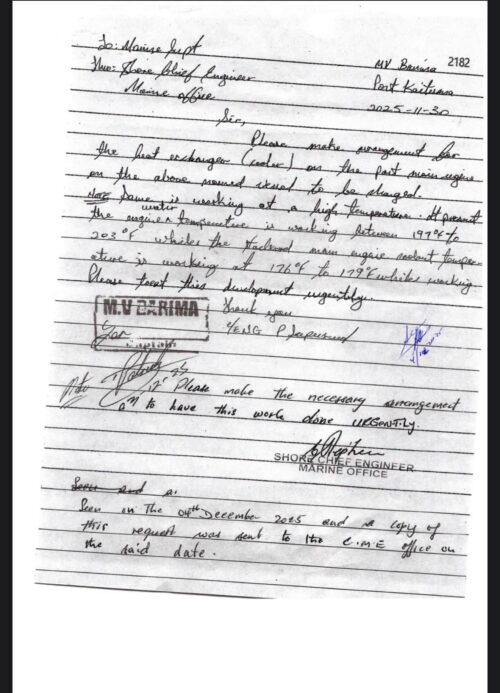
Another report that day flagged the port main-engine heat exchanger or cooler, recording temperatures of approximately 197 to 203 degrees Fahrenheit and again requesting urgent intervention.
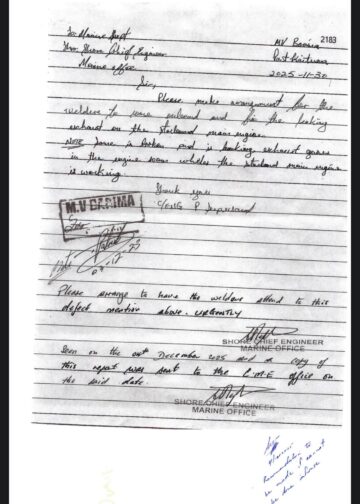
A separate maintenance report called for welders to repair a leaking exhaust on the starboard main engine, warning that exhaust gases were entering the engine room while the engine was operating. The Shore Chief Engineer’s handwritten response also called for the defect to be addressed urgently.
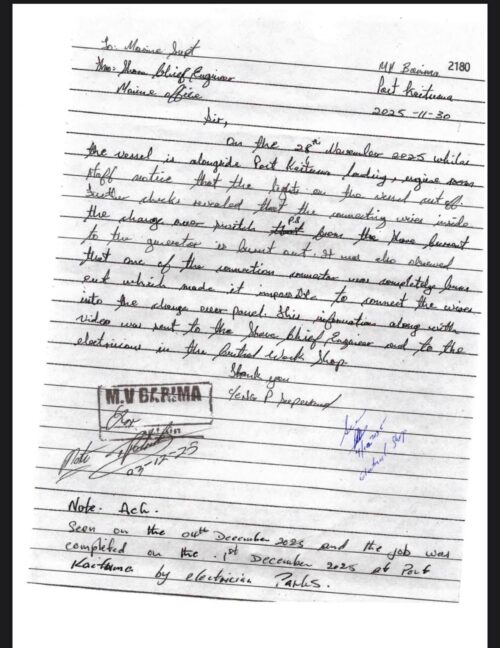
An electrical incident reported at Port Kaituma on November 28, 2025 adds to the concerns. According to the record, the vessel lost lighting after a connecting wire inside the changeover panel between shore power and the generator burned out. A connector was reportedly also completely burnt, preventing reconnection.
The documents do not, on their own, establish that any particular defect caused the sinking, nor do they show whether the reported problems were subsequently repaired. But they raise a critical question for investigators: what was known about the vessel’s condition, what action was taken, and who was responsible for ensuring that it was safe to operate?
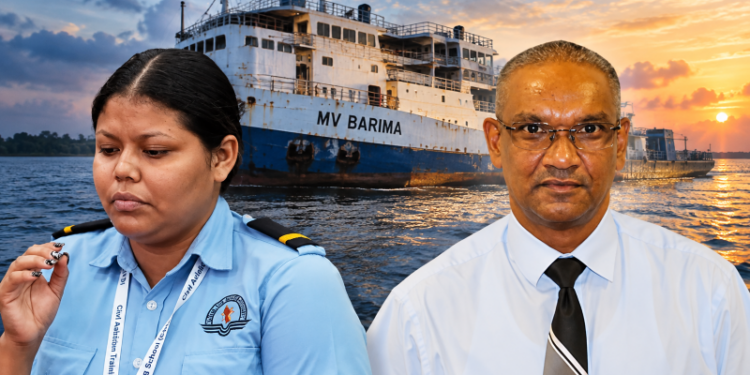
The questions are particularly serious because the MV Barima was an 87-year-old state-operated vessel carrying passengers and crew along Guyana’s remote northwest corridor.
Authorities ultimately estimated that 179 people were aboard, significantly more than the 133 reflected on the initial manifest. Seventy-six people survived, while 73 bodies were recovered and 69 positively identified, according to the government.
Workers’ safety also under scrutiny
The emerging maintenance record has shifted attention beyond the passengers to the men and women who were required to operate and maintain the vessel.
Guyana Trades Union Congress (GTUC) General Secretary Lincoln Lewis, speaking to Village Voice News, said the government had a duty to provide transport workers with the “requisite job protection, which includes safety, health and amenities befitting the job.”
Lewis said that if the documented defects were known and workers were nevertheless required to perform their duties in those conditions, the issue could amount to a serious breach of their occupational health and safety protections.
He described the workers as potentially having been placed in a “death trap”, stressing that employees should not be forced to choose between performing their jobs and protecting their own lives.
Lewis also called for the workers to be released and for an impartial inquiry into the circumstances surrounding the disaster, including the vessel’s maintenance history, inspection records, seaworthiness certification, management decisions and the safety of its crew.
He reiterated a principle he said should guide the investigation:
“Accidents don’t happen; they are caused.”
That means, he argued, investigators must look beyond the immediate actions of the crew and examine the chain of decisions, warnings and responsibilities that preceded the disaster.
The government has already initiated investigations into the sinking and subsequently announced an international commission of inquiry examining issues including loading, seaworthiness, maintenance, crew competence, life-saving arrangements and the emergency response.
The newly surfaced records could therefore become important evidence in determining whether the tragedy was the result of an unforeseeable accident—or whether warning signs were documented, reported and ultimately ignored.
For the families of those who died, and for the workers who served aboard the vessel, the central question remains stark: if serious defects were being reported months before the MV Barima went down, why was the vessel still operating—and who made the decision that it was safe enough to sail?