Key Takeaways
- Blood donation temporarily lowers blood pressure because about 10% of your blood volume is removed.
- Most healthy adults recover quickly as fluid shifts back into the bloodstream.
- Current research does not show that donating blood lowers blood pressure over the long term.
Donating blood causes a small temporary drop in blood pressure because you lose about 10% of your blood volume during the donation. While this may sound concerning, your body quickly adjusts, and blood pressure returns to normal within hours.
How Blood Donation Affects Your Blood Pressure
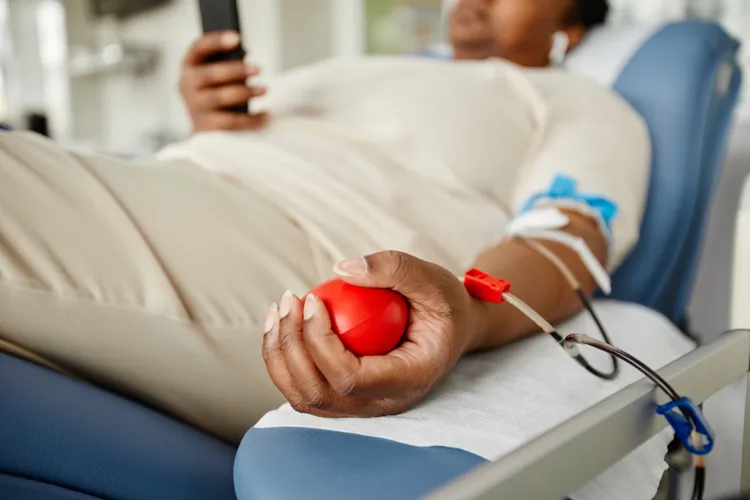
When you donate blood, you give about one pint (473 milliliters), which is roughly 10% of your total blood volume. This temporary drop in fluid means there is less pressure pushing against your blood vessel walls, causing your blood pressure to temporarily drop a few points.
One small study found that right after donating, participants’ systolic blood pressure (top number) dropped by an average of 4 millimeters of mercury (mmHg). Their bottom number and heart rate did not change much.1 Another study confirmed that the potential risks of fainting due to low blood pressure after donation were present but small.
Your body has built-in systems that help keep your core blood pressure steady, protecting your brain and heart. Its first move is a fluid shift, drawing water from your tissues into your bloodstream and stabilizing your circulation within minutes.
Pressure sensors in your neck and chest, called baroreceptors, also sense the dip. They tell your heart to beat a little faster, keeping oxygen flowing smoothly to your brain.
Why You Might Feel Dizzy or Lightheaded
If you feel lightheaded during blood donation, it’s usually due to a temporary vasovagal reaction, which occurs when your nervous system overreacts.5
The needle, the sight of blood, or stress about donating, even if you don’t feel nervous, can trigger your “fight-or-flight” response and a burst of adrenaline. Your vagus nerve tries to calm your body, and sometimes it slams on the brakes too hard. Your heart slows, and your blood vessels widen, dropping your blood pressure too fast.
For a short time, less blood reaches your brain, which can make you feel:
- Dizzy or lightheaded
- Nauseated (sick to your stomach)
- Warm or sweaty
- Weak
Some people also faint, though this is uncommon.
Wu Y, Qi H, Di Angelantonio E, Kaptoge S, Wood AM, Kim LG. Risk factors for vasovagal reactions in blood donors: A systematic review and meta-analysis. Transfusion. 2025;65(1):211-223. doi:10.1111/trf.18078
A vasovagal reaction does not mean you are weak or unhealthy. It is a normal body reflex that occurs more often in some people than others. Your risk is higher if you:6
- Are dehydrated
- Are donating for the first time
- Are younger
- Feel anxious or uncomfortable around blood or needles
- Have a smaller body size or lower blood volume
- Have lower blood pressure before donating
If you do feel dizzy, resting with your legs elevated, drinking fluids, and having a snack usually help you feel better.
Why Dehydration Increases Your Risk of Dizziness
When you are dehydrated, your body has a harder time pulling water from surrounding tissues to replace the lost blood volume. This can cause your blood pressure to drop further and make you feel lightheaded, especially if you stand up too quickly.
How Long Do Blood Pressure Changes Last?
Within minutes, fluid from nearby tissues moves into your blood to help refill lost plasma (the liquid part of your blood). In healthy adults, much of that plasma returns within the first hour, and the rest within about 24 hours. Your blood pressure usually returns to normal within a few hours.
Replenishing your red blood cells takes longer because your bone marrow needs four to six weeks to fully replace them. This is why you have to wait eight weeks before donating again.
Can You Donate Blood With High or Low Blood Pressure?
In most cases, yes, you can donate blood with high or low blood pressure as long as you feel well and your blood pressure is stable. And, taking blood pressure medication doesn’t automatically disqualify you.
On donation day, a staff member checks your blood pressure to make sure it’s safe for you to donate. To qualify, your systolic (top number) must fall between 90-180 and your diastolic (bottom number) between 50-100 mmHg.
Heart disease doesn’t rule you out either. You can usually donate if you’ve been treated for heart disease, have no restrictions on daily activities, and haven’t had any of the following in the last six months:
- A heart attack
- A heart medication change
- Angina (chest pain)
- Angioplasty (balloon procedure to open up blood vessels)
- Bypass surgery
However, if you have a chronic disease or take medications, it’s a good idea to talk with your healthcare provider before donating.
How to Protect Your Blood Pressure Before and After Donating
You can help your body maintain steady blood pressure before and after donating with these steps.
Before donating:
- Drink an extra 16 ounces of water
- Eat a salty snack, unless your provider has told you to limit sodium
During donation:
- Tense your thigh and buttock muscles for about five seconds, release for five seconds, and repeat several times
- Listen to music or read to relax
- Tell the staff right away if you feel dizzy or lightheaded
After donating:
- Rest in the refreshment area for 10-15 minutes and have a snack and a drink
- Keep drinking fluids over the next 24 hours
- Avoid alcohol, heavy lifting, hard exercise, and standing up too quickly for the rest of the day
If you feel dizzy or lightheaded after you leave, sit or lie down until it passes.13
Will Donating Blood Lower Your Blood Pressure Long-Term?
No, current research does not show that donating blood lowers your blood pressure long-term. Your blood pressure may drop slightly right after you donate, but it returns to baseline within about 24 hours as your body replaces lost fluid.8
High blood pressure (hypertension) develops when your blood vessels grow stiff or narrow. It does not come from having too much blood.1
You may come across articles or older studies suggesting that regular blood donors had lower blood pressure over time. However, more recent reviews have found the evidence is mixed. If studies seem to disagree, it may be because:14
- Researchers may follow donors for different lengths of time
- Some people have higher blood pressure during their first donation because they feel nervous6
- Studies compare different groups of people (e.g., regular blood donors may lead healthier lifestyles than the average person)
Because of these differences, researchers cannot say that blood donation itself lowers blood pressure long-term. (verywellhealth)
Written By Brandi Jones, MSN-ED RN-BC. Medically reviewed by Jordana Haber Hazan, MD