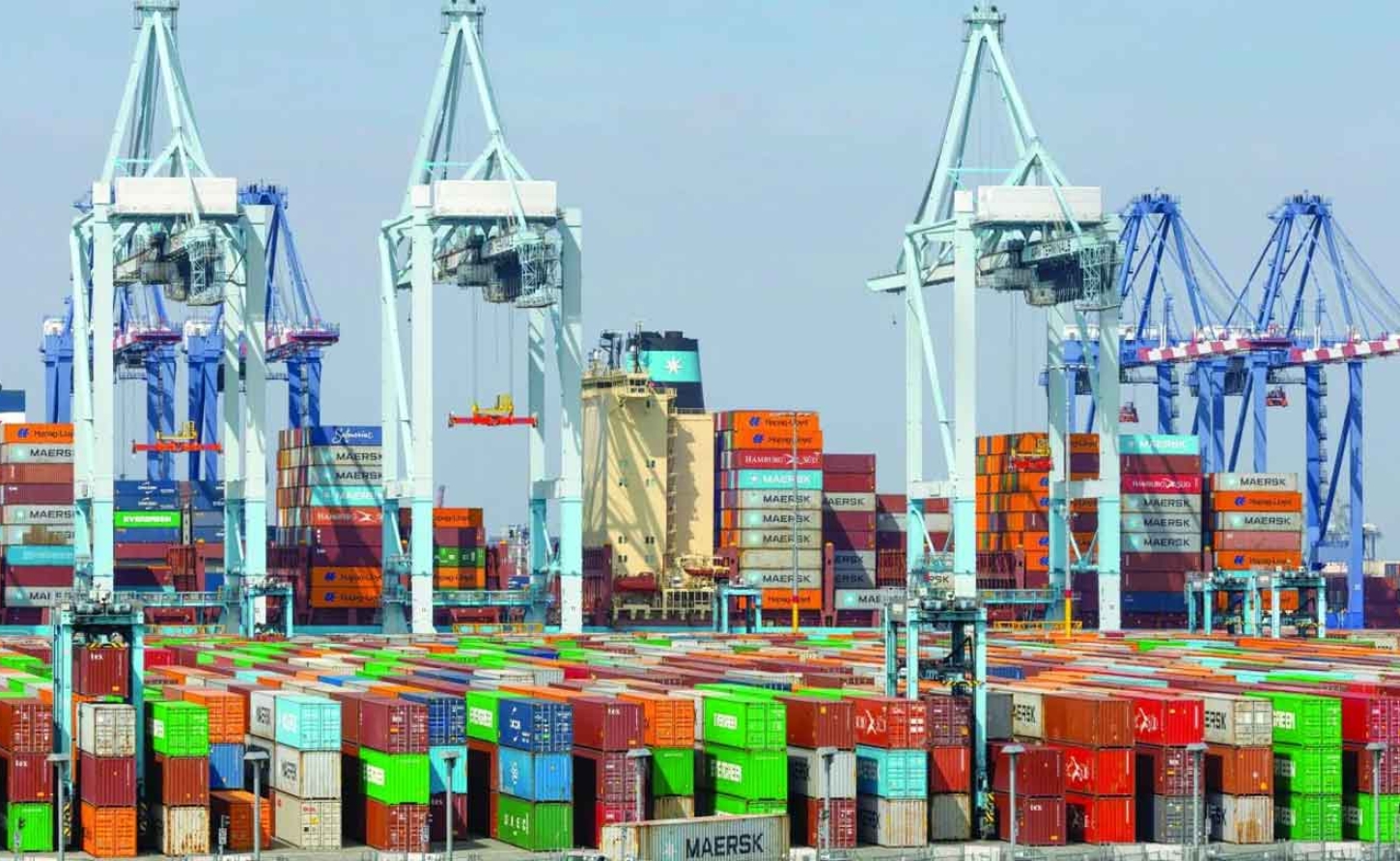
The Opposition blames policy. The Government will blame the weather. The calendar refuses both.
There is an arithmetic in Jamaica’s national accounts that no administration, of either colour, has been willing to own.
Between January and April this year, according to figures from the Statistical Institute of Jamaica cited by the Opposition, Jamaica spent US$2.5 billion importing goods and earned US$547.4 million exporting them — roughly US$4.50 out for every US$1 in. Export earnings fell 10.6 per cent, dragged down by a 41.2 per cent collapse in crude materials.
The People’s National Party calls this the predictable harvest of a Government that never built a diversified export sector. The Administration’s reply, when it comes, will invoke Hurricane Melissa. Both answers are convenient. Neither survives the calendar.
The Gap Was Opening While the Skies Were Clear
Melissa made landfall on 28 October 2025. By the end of that September — a full month before the storm — STATIN data show the merchandise trade deficit had already widened by 5.4 per cent to US$4.38 billion. It closed the year at US$5.87 billion, against US$5.4 billion in 2024, erasing the 3.0 per cent improvement recorded the previous year. Whatever Melissa did, she did it to a deficit that was already growing.
A Bauxite Story With Two Halves

The 41.2 per cent fall in crude materials has a name, and it is bauxite. Alumina production in the first quarter of 2026 fell 30.3 per cent to 267,060 tonnes; bauxite production fell 26.4 per cent; bauxite exports fell 29.7 per cent. Jamalco, Windalco and Discovery Bauxite Partners are all still repairing hurricane damage, work expected to continue throughout the year. That much is genuinely the storm’s doing.
What is not the storm’s doing is Alpart. Some 1.7 million tonnes of refining capacity at Nain, St Elizabeth has stood idle since 2019 under its Chinese owner, JISCO, through two administrations and an unbroken sequence of announcements about modernisation and restart.
The Government is still, in 2026, seeking clarity on a phased reopening. Jamaica walked into the most destructive hurricane in its modern history with a substantial share of its refining capacity already switched off, and no policy answer for it.
The Government’s Case, Fairly Put
There is a serious defence, and it deserves to be heard. Gross international reserves reached a record US$6.8 billion in February, some 155.8 per cent of the adequacy benchmark. The dollar has appreciated rather than slid. Inflation fell to 3.9 per cent in January, and the Bank of Jamaica felt able to cut its policy rate to 5.50 per cent.
Bauxite and alumina earnings are forecast to rebound 24 per cent to US$760 million this year. And the merchandise deficit counts goods alone: tourism and remittances have historically closed the gap, delivering a current account surplus of 3.0 per cent of GDP in FY2024/25.
Reserves are a buffer, not a plan. Jamaica is drawing down a cushion it took a decade of austerity to build.
Why the Cushion Is Thinner Than It Looks
The trouble is that the offsets are precisely what Melissa damaged. The Bank of Jamaica projects the current account swinging by as much as 3.5 percentage points of GDP in a single year, from comfortable surplus to near balance or deficit.
Crude prices rose 59.4 per cent between March and May. By the end of May, reserves had slipped to US$6.48 billion, and the commentator Ralston Hyman has flagged a US$454 million fall in April alone as a warning signal.
The Indictment Both Benches Share
Strip away the party arithmetic and one figure remains. Jamaica spent US$2.24 billion importing raw materials in 2025 — more than the US$1.65 billion it earned from every export it sold that year. That bill rose 10.5 per cent and now accounts for close to 30 per cent of the import account. National expenditure on research and development stands at 0.07 per cent of GDP.
That is not a hurricane. That is a development model, chosen and re-chosen across three decades of alternating government, in which the country buys the inputs, adds the least profitable part of the value, and ships the result to a single market — the United States, which takes more than 40 per cent of Jamaican exports and now applies a 10 per cent tariff on them.
The Opposition is right that this demands a costed strategy rather than a press conference. It is equally true that the structure it describes was built with both parties holding the trowel. Melissa did not create this imbalance. She merely blew the cover off it.
WiredJA