Sunday, July 5, 2026
Village Voice News
ADVERTISEMENT
  • Home
  • News
  • Sports
  • Editorial
  • Letters
  • Global
  • Columns
    • Eye On Guyana
    • Hindsight
    • Lincoln Lewis Speaks
    • Future Notes
    • Blackout
    • From The Desk of Roysdale Forde SC
    • Diplomatic Speak
    • Mark’s Take
    • In the village
    • Mind Your Business
    • Bad & Bold
    • The Voice of Labour
    • The Herbal Section
    • Politics 101 with Dr. David Hinds
    • Talking Dollars & Making Sense
    • Book Review 
  • Education & Technology
  • E-Paper
  • Contact Us
No Result
View All Result
  • Home
  • News
  • Sports
  • Editorial
  • Letters
  • Global
  • Columns
    • Eye On Guyana
    • Hindsight
    • Lincoln Lewis Speaks
    • Future Notes
    • Blackout
    • From The Desk of Roysdale Forde SC
    • Diplomatic Speak
    • Mark’s Take
    • In the village
    • Mind Your Business
    • Bad & Bold
    • The Voice of Labour
    • The Herbal Section
    • Politics 101 with Dr. David Hinds
    • Talking Dollars & Making Sense
    • Book Review 
  • Education & Technology
  • E-Paper
  • Contact Us
No Result
View All Result
Village Voice News
No Result
View All Result
Home Feature

Village Voice News to Examine Broader History of 1964 Racial Violence

Admin by Admin
July 5, 2026
in Feature, News
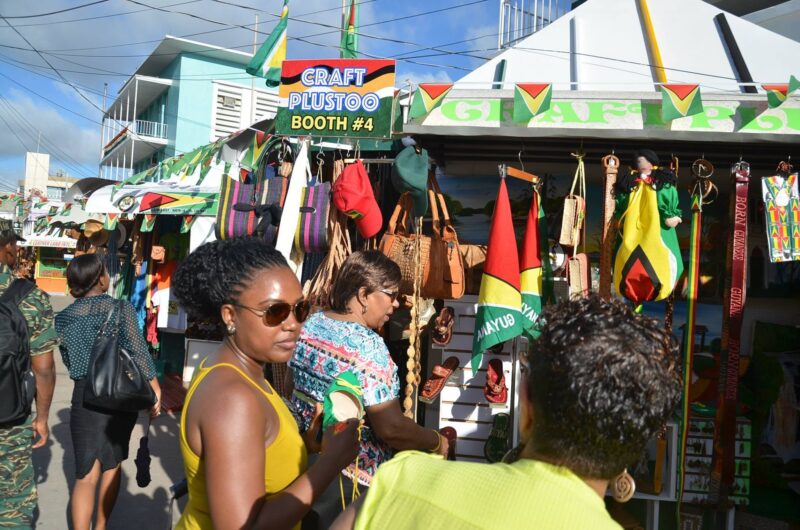
Guyanese (Inews photo)

Guyanese (Inews photo)

0
SHARES
0
VIEWS
Share on FacebookShare on Twitter

Village Voice News will launch a series of interviews examining the broader history of Guyana’s 1964 racial conflict, given that public discourse has increasingly focused on a limited number of incidents while overlooking the wider pattern of violence that affected multiple communities.

The series is inspired by the philosophy of veteran Guyanese statesman Eusi Kwayana, whose oft-cited declaration, “No Guilty Race,” serves as a reminder that no single ethnic group should bear exclusive blame or be viewed as the sole victim of the country’s racial upheavals.

READ ALSO

Bombshell:When Politics Determines Who Eats: Allegations of Contractor Victimization Demand National Attention

Could a Presidential Salary Finance a Billion-Dollar Ranch?

Recent public discussions have largely centred on the Wismar disturbances and the Sun Chapman bombing, creating a perception that a particular group or demographic was the primary or only victim of the 1964 conflicts, and that these conflicts were confined to Linden. While those tragedies remain an important part of Guyana’s history, they do not fully reflect the scope of the violence that occurred during the period.

As part of its series, Village Voice News will feature interviews with Guyanese from different communities who lived through the unrest and will recount other incidents of racial violence that have received comparatively little public attention.

In announcing the initiative, the publication referenced a contemporaneous report published by TIME magazine on June 5, 1964, titled “British Guiana: Race War.”

The article described British Guiana as being engulfed in widespread ethnic violence, stating that “terrorist bands of East Indians and Negroes roamed British Guiana day and night,” carrying out killings, looting, arson and assaults. It reported that the deployment of approximately 1,200 British troops, operating under shoot-to-kill orders, helped prevent the unrest from escalating into full-scale civil war.

According to the TIME report, tensions intensified during a sugar workers’ strike and spread across several parts of the colony. The magazine documented attacks on sugar workers, police officers and civilians, as well as retaliatory violence between East Indian and African communities.

The report detailed attacks against East Indians, including the burning of homes and killings at Bachelor’s Adventure and Wismar, where British troops later evacuated approximately 1,700 East Indians to safety.

It also reported violence against Afro-Guyanese, including the killing of an elderly couple on their farm, attacks on police patrols and other incidents that occurred during the period of unrest.
By the end of the week covered by the report, TIME said at least 33 East Indians and Africans had been killed, while more than 2,000 people had been injured.

The historical account illustrates that the violence of 1964 affected multiple communities and forms part of the broader historical record.

Forthcoming interviews are intended to document additional accounts and contribute to a more comprehensive understanding of one of the most turbulent periods in Guyana’s history.

It also aims to broaden the historical record by preserving the testimonies of Guyanese whose experiences have seldom featured in public discussion. Members of the public who lived through the period—or whose families were directly affected by the violence—are welcome to share their stories. Submissions and expressions of interest for interviews may be sent by email to villagevoicegy@gmail.com

Understanding our history requires acknowledging the experiences of all those who suffered. The interview series aims to encourage a fuller national conversation consistent with Kwayana’s enduring message of “No Guilty Race.”
ShareTweetSendShareSend

Related Posts

News

Bombshell:When Politics Determines Who Eats: Allegations of Contractor Victimization Demand National Attention

by Staff Writer
July 5, 2026

Contractors who spoke with Village Voice News on the condition of anonymity have alleged that businesses and individuals perceived to...

Read moreDetails
News

Could a Presidential Salary Finance a Billion-Dollar Ranch?

by Staff Writer
July 5, 2026

By now, one fact is no longer in dispute. President Irfaan Ali has acknowledged that the sprawling ranch at the...

Read moreDetails
News

President Ali Admits Ranch Is His: Questions Grow Over the Scale and Financing of a Multi-Billion-Dollar Agricultural Empire

by Staff Writer
July 5, 2026

President Irfaan Ali has now publicly acknowledged that the sprawling agricultural ranch at the centre of growing public controversy belongs...

Read moreDetails
Next Post
Dr. Carla Burnett- CARICOM  Secretary General

Collective Action Key to CARICOM's Future — Dr. Barnett


EDITOR'S PICK

A medical insurance service station in Changzhou City, east China's Jiangsu Province, September 13, 2024. /CFP

China expands medical insurance, boosts accessibility and coverage

December 15, 2024
Kriskal Persaud receives his prize from FIDE Arbiter John Lee

PERSAUD WINS BERBICE 20/20 RAPID CHESS TOURNAMENT

August 28, 2025
Chief Justice, Roxane George-Wiltshire

Toy gun man attacks cops at Chief Justice house

October 21, 2020

GAWU: We feel that discriminating practices, whatever their form will not serve to promote a national environment of trust, confidence

March 17, 2022

© 2024 Village Voice

No Result
View All Result
  • Home
  • News
  • Sports
  • Editorial
  • Letters
  • Global
  • Columns
    • Eye On Guyana
    • Hindsight
    • Lincoln Lewis Speaks
    • Future Notes
    • Blackout
    • From The Desk of Roysdale Forde SC
    • Diplomatic Speak
    • Mark’s Take
    • In the village
    • Mind Your Business
    • Bad & Bold
    • The Voice of Labour
    • The Herbal Section
    • Politics 101 with Dr. David Hinds
    • Talking Dollars & Making Sense
    • Book Review 
  • Education & Technology
  • E-Paper
  • Contact Us

© 2024 Village Voice