While out of government, the People’s Progressive Party told the world that it stood firmly on the side of transparency. There was a time when the PPP argued that contracts involving the resources of Guyana belonged to the people and not to a handful of government officials sitting behind closed doors.
There was a time when the PPP demanded the release of the ExxonMobil Agreement and condemned the APNU/AFC Government for withholding that contract from public scrutiny. Then Opposition Leader Bharrat Jagdeo publicly argued that the secrecy surrounding the agreement was tied to the US$18 million signing bonus and insisted that Guyanese had a right to know what was being negotiated in their name. The PPP was correct then.
The question before the nation today is simple. What has changed?
Today Guyana stands at the center of one of the largest resource booms in its history. New oil developments continue offshore. New mining projects are advancing across the country. Major investors are securing concessions and agreements involving gold, uranium, critical minerals, energy resources and strategic assets worth billions of United States dollars.
We hear announcements, we hear projections, we hear promises, but where are the contracts? Where are the agreements governing these investments? Where are the environmental obligations? Where are the social impact commitments? Where are the guarantees for local content, local employment, technology transfer, environmental restoration and community benefits? The people of Guyana are repeatedly told to celebrate investments that they are not permitted to examine.
This concern extends beyond oil and mining. It extends to the Gas-to-Energy Project, one of the largest public infrastructure undertakings in Guyana’s history. The people have a right to see the contracts governing the offshore pipeline, the integrated natural gas liquids and power generation facilities, the consultants advising the government, and all related agreements associated with this project.
The same principle applies to the contracts governing the Power Ships that continue to place significant financial obligations on the people of Guyana, where at the end of 2026 Guyana will be paying over US$200 million in retail. If these arrangements are in the national interest, there should be no hesitation in publishing them.
Oil companies continue to secure approvals for new developments offshore. Major gold developments are advancing. Billions of dollars in investments are being discussed and announced. Yet the Guyanese people are still being asked to accept assurances rather than evidence. They are expected to trust without seeing. They are expected to applaud without knowing. They are expected to surrender oversight of their national patrimony.
Yesterday’s sitting of Parliament once again highlighted why transparency matters. Questions concerning accountability, oversight and corruption were met not with greater openness but with resistance to meaningful scrutiny. When, like we saw yesterday, government’s unwilling to facilitate robust oversight through Parliament, the case for full public disclosure becomes even stronger.
No nation becomes prosperous by hiding agreements from its citizens. No democracy is strengthened when contracts involving national resources are shielded from public scrutiny. No government can credibly claim to be acting in the interests of the people while denying those same people access to the terms under which their resources are being developed.
The president at a press conference last week told us that this is a new era. We were told that international business requires flexibility. We were told that global investors expect confidentiality. But Guyana is not a private corporation. Guyana is a sovereign nation. Our oil belongs to the people. Our gold belongs to the people. Our minerals belong to the people. Our forests, rivers, lands, and natural wealth belong to the people. The PPP should know that it is only the temporary custodians of these assets. They are not their owners.
The Constitution does not place sovereignty in the hands of ministers, presidents, corporations, investors, or foreign interests. Sovereignty rests with the people of Guyana. That principle must mean something.
If an agreement is fair, publish it. If environmental safeguards are adequate, publish them. If social obligations are strong, publish them. If local benefits are guaranteed, publish them. Publish the Gas-to-Energy contracts. Publish the pipeline agreements. Publish the consultant contracts. Publish the power ship agreements. Publish the major mining agreements. Publish the supporting studies and reports. Once weaknesses exist, then let those weaknesses be corrected before future generations inherit the consequences.
The PPP once demanded transparency when the APNU/AFC government held power. The PPP once insisted that secrecy surrounding resource agreements was unacceptable. Surely, a principle does not cease to be a principle simply because one moves from the opposition benches to the government benches.
The people of Linden, the miners of the interior, the farmers of the coastland, the teachers, the nurses, the public servants, the vendors, the small business owners and the young people whose future depends on decisions being made today all have a stake in these agreements. All have a right to know.
Transparency is not anti-investment. Accountability is not anti-development. Public scrutiny is not anti-business. Those who ask questions are not enemies of progress; they are defenders of the national interest.
History has shown repeatedly that nations lose the greatest share of their wealth not because they lacked resources but because decisions involving those resources were hidden from the people until it was too late.
Guyana must not become another sad story of this. The time has come for full disclosure of major resource agreements. The time has come for transparency to mean the same thing in government that it meant in opposition. The time has come for the Guyanese people to see, examine, question, and understand the contracts being signed in their name.
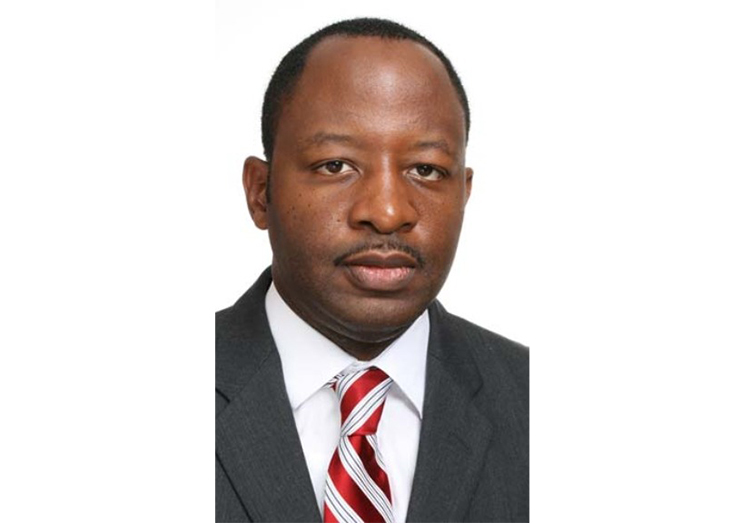
Hon. K. Sharma Solomon
Member of Parliament