By Mark DaCosta-In an emphatic affirmation of the workers’ rights movement, Lincoln Lewis, General Secretary of the Guyana Trades Union Congress (GTUC), proclaimed the critical importance of the right to strike in a powerful analysis that appeared in his Eye on Guyana column last Sunday. Lewis contends that this right is not merely a supportive tool for collective bargaining but a fundamental entitlement necessary for safeguarding workers’ interests, ensuring justice, and maintaining the integrity of democratic principles across societies.
The ruling by the International Court of Justice (ICJ) on May 21, 2026, which reaffirmed that the right to strike must be respected universally, comes at a pivotal moment for workers in our country. Employers and governments, including the ruling People’s Progressive Party (PPP), must acknowledge that this right is intrinsic to the fabric of industrial relations. Lewis emphasises that the ICJ’s position echoes what unions have championed for generations, underlining the significance of collective action as a cornerstone of democracy.
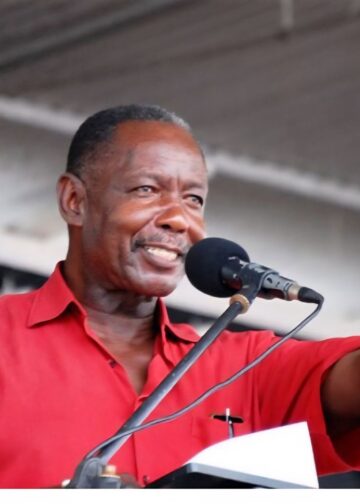
As Lewis noted, “The right to strike remains valid in every society.” This assertion echoes the historical struggles endured by workers who fought tooth and nail for recognition of their rights. The journey has not been easy; for a long time, strikes were treated as criminal acts, facing harsh penalties from authorities.
However, with the establishment of the International Labour Organisation (ILO) in 1919 and the enactment of international human rights laws, the dialogue regarding the right to strike shifted dramatically.
The right to strike is defined as the collective withdrawal of labour when workers refuse to work until their demands regarding working conditions or pay are met. It is a powerful assertion of autonomy that allows workers to voice their grievances when all other avenues have been exhausted.
Lewis highlights that without this right, “collective bargaining becomes little more than an empty exercise.” The historical context reveals that the ILO, established to create standards for fair working conditions, recognizes the right to strike as a vital element of freedom of association, a partnership involving governments, employers, and trade unions.
The noted trade unionist pointed out that “[t]he ILO has consistently embraced and defended the right to strike.” This commitment extends through various international conventions, notably the ILO Conventions No. 87 and No. 98, which underscore the necessity of allowing workers the freedom to organise and engage in collective bargaining.
Moreover, Article 8(1)(d) of the International Covenant on Economic, Social and Cultural Rights, adopted by the United Nations, compels state parties to protect the right to strike within their jurisdictions, provided it aligns with national laws. This framework underscores the global consensus on the need to protect this vital right.
In the context of our nation, the situation faced by the Guyana Teachers Union (GTU) serves as a stark reminder of the challenges confronting workers. Despite recent judicial support for the principles of collective bargaining, the PPP-led government has continued to undermine these rights by withholding automatic deductions for union dues, jeopardising the integrity of agreements reached with workers. According to Lewis, “Rights that have been recognised by law, affirmed through collective bargaining, and supported by international labour standards must not be treated as optional.”
This erosion of rights not only has implications for the teachers but also poses a broader threat to the labour movement in our country. When the government refrains from respecting agreements, it raises existential questions about whether workers can have faith that their rights will be upheld. Lewis contends that the governing bodies must reflect a profound respect for the citizens who elected them, asserting that “their decisions ought therefore to reflect respect for the people and respect for the rights they possess.”
A concerning trend has emerged where governments worldwide, including the PPP in Guyana, seek to curtail the right to strike while maintaining the freedom to lock out workers, creating an untenable imbalance in power relations. The advocate for workers argues vehemently that “rights cannot be applied selectively,” and fairness cannot operate solely in favour of employers.
The current climate warrants vigilance and responsibility from all citizens, as the future of workers’ rights hangs in the balance. “We must work assiduously to ensure that the right to strike, the right to collective bargaining, and the rights of workers are respected not only in words but in practice.” In finality, Lewis reminds us that the rights enjoyed by workers today have been hard-won through relentless struggle. Therefore, remaining passive in the face of their erosion would amount to a betrayal of the sacrifices made by those who fought for justice and fairness.
As we reflect upon these critical developments, it becomes increasingly clear that the movement to uphold the right to strike transcends single trade unions. It embodies a broader commitment to justice for all workers in our nation. The call to action is unequivocal: every citizen must recognise that safeguarding collective rights is essential to safeguarding our democracy and ensuring that our society remains just and equitable for future generations.