By Mark DaCosta-The request for supplementary funding by the government mere months after the approval of a historical national budget has raised significant concerns regarding its financial governance, underscoring a pattern of poor planning and lack of oversight.
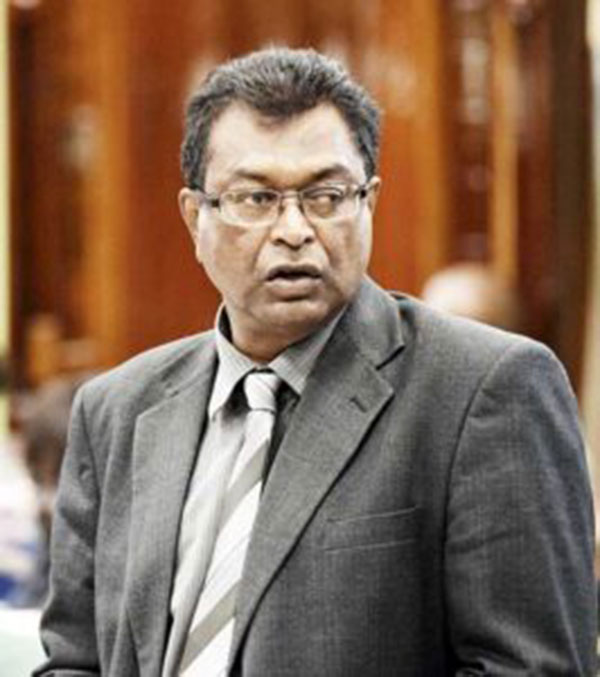
On Friday, June 5, the People’s National Congress Reform/A Partnership for National Unity (PNCR/APNU) issued a statement expressing alarm over the government’s request for an additional $54.8 billion in supplementary funding, which was presented by Senior Minister in the Office of the President with responsibility for Finance and the Public Service, Dr. Ashni Singh, during that day’s sitting of the National Assembly.
The request is particularly unsettling, coming just four months after Parliament approved a record $1.558 trillion national budget that was touted as a landmark achievement. According to the PNCR/APNU, the need for such a substantial supplementary allocation so soon after the budget’s passage raises serious questions about the government’s financial planning, budgeting practices and ability to execute public spending efficiently.
The PNCR/APNU contends that citizens deserve clarity and accountability regarding the management of our nation’s finances, especially against the backdrop of booming oil revenues. They question the competence of a government that “boasts of having unlimited oil revenues” yet fails to forecast and manage its expenditures effectively. The current trend of regularly seeking supplementary budgets is seen not merely as an anomaly but as an alarming new standard for governance under the People’s Progressive Party/Civic (PPP/C).
The fundamental purpose of the national budget process is to scrutinise, debate, and approve government priorities and expenditures thoroughly within the National Assembly. However, the PNCR/APNU asserts that under the PPP/C’s administration, the approval of supplementary budgets is becoming increasingly ordinary rather than a response to unforeseen circumstances. This normalisation of supplementary appropriations suggests a deeper issue: the government may either lack the necessary skills for financial planning or deliberately exclude substantial expenditure proposals from the parliamentary budget discussions.
This practice, they argue, diminishes the role of the National Assembly and erodes essential mechanisms of accountability, reducing it to a mere formality in approving budgets. With billions requested shortly after the original budget’s passage, the integrity of parliamentary oversight is at stake. The PNCR/APNU stresses that “the people of Guyana deserve transparency and honest answers” about why significant expenditures are not delineated during the annual budget discussions.
There is growing frustration among citizens as the government, instead of committing to a disciplined and realistic budgeting process, resorts to supplementary measures that indicate a “culture of fiscal indiscipline.” The PNCR/APNU points out that taxpayers’ money must be managed with the utmost respect, transparency, and accountability. They are adamant that continuous recourse to supplementary appropriations signifies a failure to uphold these values.
In stark contrast, during the tenure of the A Partnership for National Unity and Alliance for Change (APNU+AFC) administration from 2015 to 2020, fiscal responsibility and stringent adherence to budgetary frameworks were prioritized. The focus was to ensure that public expenditures were initiated only with prior parliamentary approval and were subjected to rigorous scrutiny. The emphasis was on responsible spending rather than the recurrent process of seeking additional financing post-budget approval.
The PNCR/APNU stands firm in its belief that given Guyana’s rapidly increasing revenues, particularly in the oil and gas sector, there is an urgent need for stronger financial governance. They argue, “Every dollar spent belongs to the people of Guyana,” demanding enhanced oversight to ensure that these resources are deployed effectively for the collective benefit of citizens.
As the PNCR/APNU assesses the implications of continuous supplementary budget requests, they make a case for restoring integrity and credibility to the budgeting process. They vow that an administration led by the APNU would prioritise fiscal discipline, strong parliamentary oversight, and a commitment to managing taxpayers’ resources responsibly.
Our nation deserves leadership that engages in thorough planning and efficient expenditure, not one that resorts to significant funding requests merely months after the budget has been established. The concerns raised by the PNCR/APNU point to deeper issues within the current government, encouraging a call for accountability and enhanced financial governance to protect the interests of all citizens. The path forward must involve a commitment to responsible financial management, ensuring that our government respects the authority of Parliament while safeguarding the taxpayer’s trust.