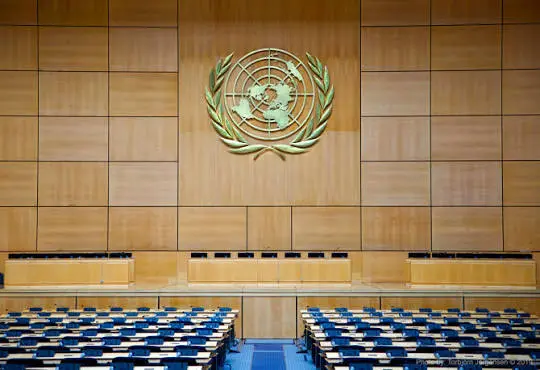
A draft resolution seeking United Nations recognition of Bonaire as a Non-Self-Governing Territory has been formally registered as part of the administrative process of the 80th Session of the UN General Assembly, marking what campaigners describe as the most significant constitutional development affecting the Dutch Caribbean island in more than 70 years.
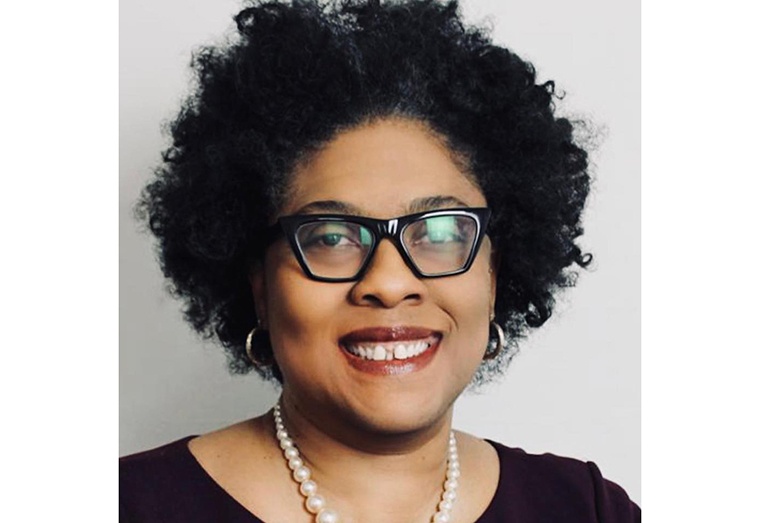
The announcement was made on 1 July by Bonaire human rights advocate James Finies, who disclosed that the Bonaire Draft Resolution, sponsored by two Caribbean Community (CARICOM) member states, was formally submitted and registered by the United Nations General Assembly Secretariat on 10 June.
Bonaire is a Dutch Caribbean island located off the coast of Venezuela. It was formerly part of the Netherlands Antilles until that federation was dissolved in October 2010. Unlike Curaçao, Aruba and Sint Maarten, which enjoy autonomous country status within the Kingdom of the Netherlands, Bonaire became a special municipality administered directly by the Netherlands. Its constitutional status has remained the subject of debate among some Bonairean groups, who argue that the island should be recognised by the United Nations as a Non-Self-Governing Territory entitled to a process of self-determination under the UN Charter.
According to Finies, the draft resolution has now been uploaded to the UN’s e-Delegate system, making it available to all 193 United Nations member states for consideration.
The announcement coincided with the commemoration of the abolition of slavery in the colonised Dutch Caribbean islands in 1863.
If adopted, the resolution would recognise Bonaire as a Non-Self-Governing Territory within the meaning of the UN Charter and affirm that the Kingdom of the Netherlands, as the administering Power, is obligated under Article 73 of the Charter to report to the United Nations on the island’s political, economic, social, educational and cultural development.
It also calls on the UN Special Committee on Decolonisation to consider Bonaire’s status at its next session and report its findings to the General Assembly during its 81st Session.
Finies described the registration as a historic milestone.
“Since 1955, when Bonaire and the former Netherlands Antilles islands were removed by the Netherlands from the United Nations List of Non-Self-Governing Territories (NSGT), this is the most significant step taken toward a major constitutional action concerning the colonised Dutch Caribbean islands.”
The United Nations maintains a list of territories that have not yet attained full self-government, with the Special Committee on Decolonisation responsible for monitoring their progress towards self-determination.
Finies said UN recognition would require the Netherlands to become formally accountable for Bonaire’s development.
“It means that the Netherlands will be obligated to be accountable and report to the United Nations General Assembly on the social, economic, cultural, political, and educational development of the native Bonerian people, in accordance with the Charter of the United Nations and the treaties that the Netherlands agreed to and signed in 1945.”
He noted that similar action has occurred only three times in modern history, citing New Caledonia in 1986, French Polynesia in 2013 and, now, Bonaire in 2026.
Finies said the development follows more than two decades of advocacy. He explained that he publicly opposed constitutional changes affecting Bonaire between 2003 and 2010 before leaving his career in commercial banking to become a full-time volunteer human rights defender.
Following what he described as the failure to respect the outcome of Bonaire’s 2015 referendum, he undertook a decade of lobbying across the Caribbean, Latin America, Europe and at the United Nations in Geneva and New York, advocating for Bonaire’s return to the UN’s list of Non-Self-Governing Territories.
He said the advocacy group he leads has consistently pursued that objective since 2003.
Finies also expressed concern over what he described as the rapid demographic decline of the indigenous Bonairean population.
He claimed that Bonerians, who accounted for more than 70 per cent of the island’s population before 2010, now comprise less than 30 per cent and could fall below 15 per cent by 2035 if current trends continue.
Describing the situation as a humanitarian crisis, Finies called on the international community to intervene to protect the rights, identity and future of the Bonairean people.
The United Nations has not indicated when the draft resolution may come before member states for formal consideration.