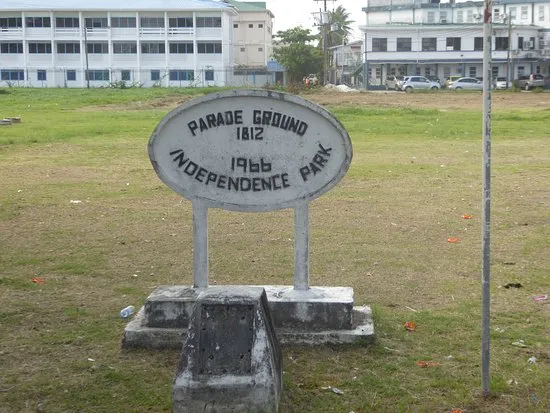
Former Georgetown Mayor Ubraj Narine is urging the Government to halt plans for new structures at the historic Parade Ground, arguing that the site where enslaved Africans were executed following the 1823 Demerara Slave Rebellion should be preserved as sacred ground and a place of national remembrance.
In an opinion piece published in Wednesday’s Village Voice News, Narine described the Parade Ground as “a site of memory and moral reckoning,” warning that any intrusion on the historic space without regard for its past risks erasing one of the darkest chapters in Guyana’s history.
“Beneath its grass and goalposts rests a history marked by terror, resistance, and colonial violence,” he wrote. “Any contemporary discussion about its use must begin with an honest acknowledgment of what transpired there during and after the 1823 Demerara Slave Rebellion.”

His intervention comes amidst growing controversy over government plans for the Parade Ground. The Ministry of Culture, Youth and Sport has installed floodlights and proposed additional structures, including pavilions and washroom facilities.
Historians, African cultural organisations and heritage advocates have opposed the plans, arguing that the site should be protected because of its direct connection to the execution of enslaved Africans following the rebellion.
The debate intensified after Georgetown Mayor Alfred Mentore halted construction works near the 1823 Monument last year, citing a lack of consultation with the Mayor and City Council. Opponents argued that the proposed structures would diminish the historical significance of a site closely linked to one of the most important acts of resistance in Guyanese history.
Site of Resistance and Repression
The 1823 Demerara Slave Rebellion, centred on plantations along the East Coast of Demerara, involved between 10,000 and 13,000 enslaved Africans demanding freedom and relief from oppressive conditions. Led by Quamina and his son Jack Gladstone, it became one of the largest slave uprisings in the British Caribbean and helped strengthen the abolitionist movement in Britain.
Colonial authorities responded with overwhelming force. Hundreds were killed during and after the suppression of the uprising, while others were captured, court-martialled and executed. Historical records indicate that the Parade Ground became one of the principal sites where those punishments were carried out publicly.
“The colonial response was swift and merciless,” Narine wrote. “After the rebellion was suppressed, the Parade Ground became a theatre of repression. Enslaved Africans were court-martialed, sentenced, and executed there. Bodies were publicly displayed. Heads were mounted on stakes.”
‘Land Remembers’
According to Narine, the significance of the Parade Ground extends beyond its physical boundaries because it represents a place where colonial authorities sought to crush African resistance and self-determination.
“Land remembers,” he wrote. “The Parade Ground is not merely a location where executions occurred; it is a site where colonial authority sought to extinguish Black dignity, resistance, and self-determination.”
He called on the PPP/C administration to reconsider plans for additional structures at the site.
“In my humble view, no infrastructure—no buildings, monuments of convenience, or commercial development—should be erected on that sacred ground,” Narine stated. “To do so would be to build progress on the unmarked graves of resistance, without consent from history or conscience.”
While stressing that he is not opposed to public access, Narine said decisions affecting the Parade Ground must be guided by “historical truth and moral responsibility.”
“The enslaved Africans executed at the Parade Ground did not die as criminals. They died as resisters to oppression,” he wrote. “Their defiance helped expose the moral bankruptcy of slavery and hastened its eventual demise across the British Empire.”
Concluding his appeal, Narine argued that the Parade Ground should remain “a national conscience” and warned that “development that ignores its history is not progress. It is erasure.”