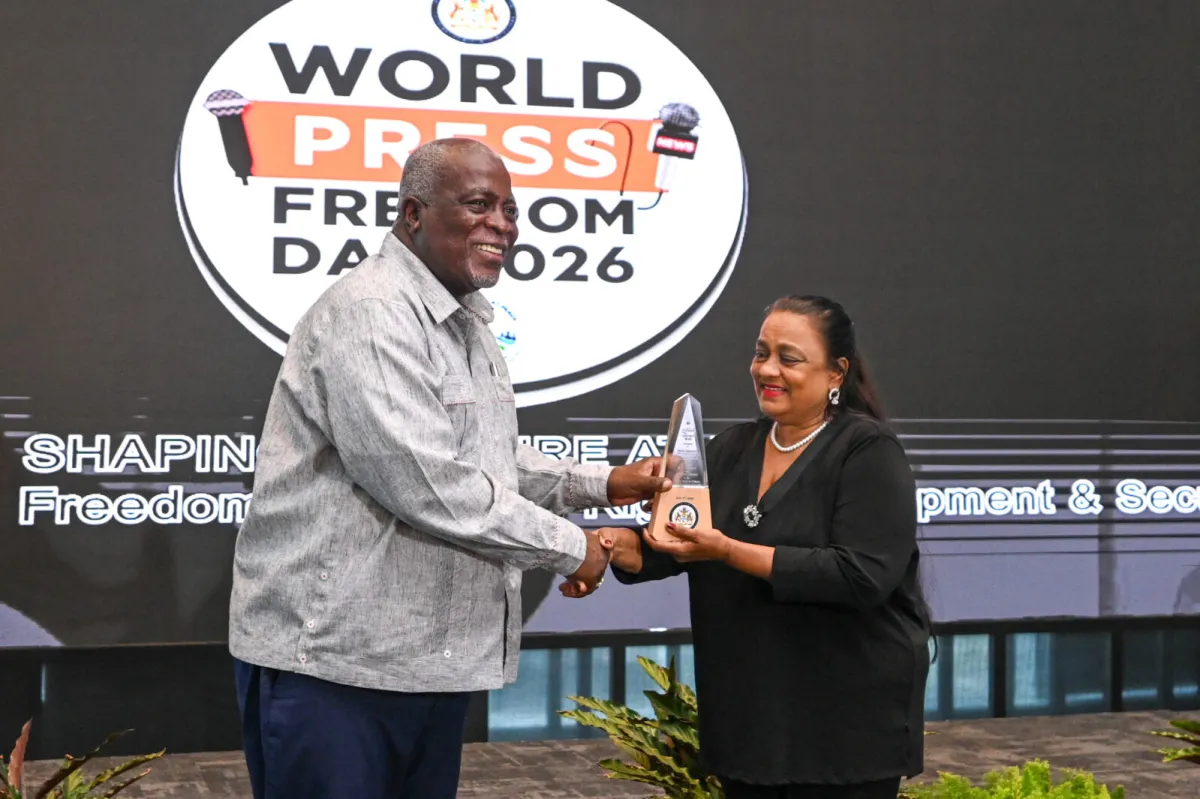
By Mark DaCosta- In a time when the importance of an independent media has never been greater, the Guyana government’s commitment to press freedom faces significant scrutiny. This perspective emerges following Prime Minister Mark Phillips’ address during the World Press Freedom Day luncheon on May 3, 2026, where he extolled the virtues of a free press while our nation grapples with concerning trends in media liberties according to international assessments.
Prime Minister Phillips spoke eloquently about the role of the media as a crucial pillar in our democracy, stating, “Foremost among these institutions is the press, not merely as a channel of information, but as a foundational pillar of democratic society.” However, despite such proclamations, the reality on the ground starkly contrasts with these noble words. Reports from esteemed journalism watchdogs indicate a stark decline in press freedoms within our country, prompting scepticism regarding the government’s genuine commitment to safeguarding these rights.
Since achieving independence, our nation has faced numerous challenges related to the core values of democracy. The government’s relationship with the media has often been one of tension, particularly in recent times, as journalists contend with a burgeoning atmosphere of intimidation and censorship.
For instance, a survey conducted by regional and international partners has uncovered a marked increase in self-censorship among journalists, fuelled by the fear of retaliation for reporting on issues sensitive to the ruling party. Such a climate is antithetical to the essence of democracy, wherein the press serves as a watchdog, holding those in power accountable.
While the Prime Minister noted the critical role of a responsible press in fostering public accountability and awareness, the realities faced by those in the media contradict such assurances. Journalists have found themselves on the receiving end of harassment, legal challenges, and outright hostility for endeavours to unveil uncomfortable truths about governmental policies. In essence, the overriding sentiment among media professionals appears to be one of fear, a stark indicator that the relationship between the state and the press remains fraught, undermining the very democratic ideals that the government claims to uphold.
The government’s assertions of commitment to press freedom are further complicated by its apparent attempts to control the narrative. Official statements touting advancements in media support seem overshadowed by the very real challenges facing journalists daily. Assertions about fostering a “constructive engagement” between the government and media appear dissonant when juxtaposed against the backdrop of rising intimidation and an environment that often feels hostile to dissenting voices.
According to an analyst, the prime minister’s remarks culminate in a seemingly hollow promise — to ensure an environment where the media can operate with integrity and freedom. However, the ongoing realities present compelling evidence to suggest otherwise. For many in our nation, the narrative is all too familiar: government authorities have increasingly attempted to shield themselves from scrutiny, employing tactics that stifle the media’s voice and impede its ability to inform the populace effectively.
In observing World Press Freedom Day last Sunday, it is essential to honour not just the ideals of free expression but also the journalists who have suffered and continue to suffer for their pursuit of truth. The sacrifices made by these brave individuals should galvanise our collective resolve to push for a media landscape where independence and freedom are not just clandestine goals but attainable realities.