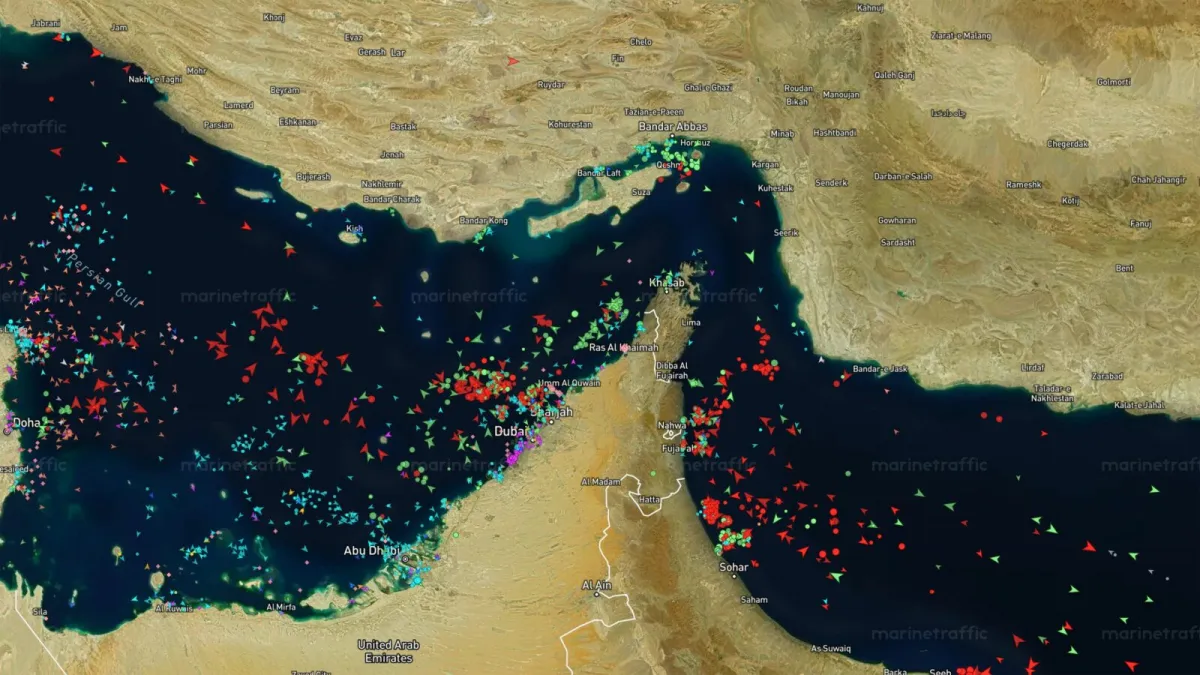
The International Labour Organisation (ILO) has sounded the alarm over the worsening humanitarian crisis facing thousands of seafarers trapped in conflict-affected waters, calling for urgent international intervention to protect an estimated 20,000 crew members stranded in and around the Strait of Hormuz.
In a statement issued from Geneva, the Officers of the Special Tripartite Committee (STC) of the Maritime Labour Convention, 2006 (MLC, 2006), expressed “grave concern” over the plight of seafarers caught in one of the world’s most volatile maritime corridors, warning that their safety, wellbeing and access to essential supplies are increasingly at risk.
The STC Officers called on all ILO Member States to act without delay, urging governments to cooperate and “take all the necessary measures to safeguard the lives, safety, and wellbeing of affected seafarers.” They also appealed to flag States and the global shipping industry to exercise “the highest level of caution” until adequate security conditions are restored.
The intervention comes as tensions in the Gulf region continue to disrupt commercial shipping, leaving vessels unable to transit one of the world’s most strategic oil and trade routes. The International Maritime Organization (IMO) has already warned that the humanitarian and logistical fallout could intensify if access remains blocked.
The ILO officials stressed that the Maritime Labour Convention remains fully enforceable even during emergencies, underscoring that labour protections for seafarers cannot be suspended because of war or geopolitical instability. “The MLC, 2006 remains fully applicable even in times of crisis. It is more critical to uphold the Convention under the current circumstances,” the Officers said.
Building on the IMO’s position, the committee emphasised the urgent need to maintain uninterrupted deliveries of food, water and fuel to vessels stranded in the strait, warning that prolonged delays could create dangerous shortages onboard ships. The Officers also encouraged governments to facilitate crew changes and repatriation in line with the Convention and other international standards to protect seafarers’ health, safety and communication with their families.
In a broader call for labour protections, the STC urged governments to formally recognize seafarers as key workers and implement practical measures to ensure their safe movement, including access to shore leave, medical treatment and repatriation, in keeping with the 2025 amendments to the Convention.
The committee also raised human rights concerns, insisting that seafarers must retain the right to decide whether to work in high-risk conflict zones without fear of retaliation or damage to future employment prospects.
The Officers welcomed ongoing cooperation between ILO Director-General Gilbert F. Houngbo and IMO Secretary-General Arsenio Dominguez, commending the IMO’s leadership in coordinating the international response to the crisis.
The Special Tripartite Committee, established under Article XIII of the Maritime Labour Convention, brings together governments, shipowners and seafarers to oversee the implementation of global maritime labour standards. Its latest intervention highlights growing international concern that seafarers — the backbone of global trade — are once again bearing the human cost of geopolitical conflict.