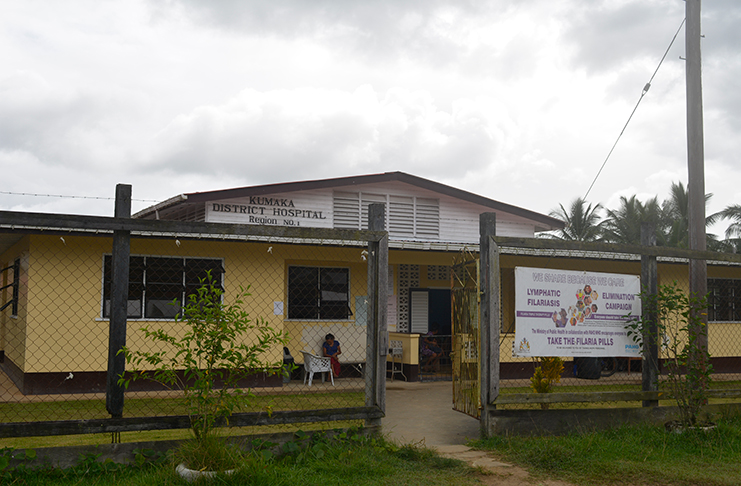
The parliamentary opposition, We Invest in Nationhood (WIN), led by Opposition Leader Azruddin Mohamed, has sharply criticised the state of healthcare at Kumaka District Hospital in Moruca, saying the situation exposes the widening gap between Guyana’s oil wealth and the quality of care reaching ordinary citizens.
WIN, which holds 16 of the 29 opposition seats in Guyana’s 65-member National Assembly, making it the main parliamentary opposition, issued the criticism after reports that nurses and doctors at the hospital have been forced to use cellphone flashlights during power outages while attending to patients.
The party’s criticism comes against the backdrop of Guyana’s record G$161.1 billion health budget for 2026 and the country’s rapidly expanding oil revenues.
Government figures show Guyana earned more than US$2.1 billion in profit oil in 2025, while new oil inflows in the first quarter of 2026 alone exceeded G$159 billion, cementing Guyana’s position as one of the world’s fastest-growing oil economies.
Yet WIN argues that the benefits of that wealth are not reaching vulnerable communities.
The opposition described conditions at Kumaka District Hospital as dangerous, warning that lives are being placed at risk because of unreliable electricity.
“This is not just an inconvenience; it is a total failure of the health system. Lives could be lost as a result.”
The hospital, which serves Moruca and surrounding communities in Region One—predominantly Amerindian populations—remains dependent on the Moruca Power and Light system, which operates on a restricted schedule, supplying electricity from 5:00 a.m. to 3:00 p.m. and again from 5:00 p.m. to 11:00 p.m.
Outside those hours, the facility reportedly relies on a backup generator that is poorly maintained and prone to failure, plunging sections of the hospital into darkness.
That reality carries serious medical consequences.
In modern healthcare, uninterrupted electricity is critical for oxygen support, refrigeration of vaccines and medication, sterilisation of instruments, emergency procedures, laboratory diagnostics, and maternal care. In remote hospitals, power failure can mean delayed intervention, compromised treatment, and increased risk of death.
The government has repeatedly promoted massive investments in health infrastructure since oil production began in 2019, with health spending rising annually as oil revenues expand. But WIN said the conditions at Kumaka raise serious questions about whether oil wealth is translating into real healthcare delivery.
The situation has intensified scrutiny over healthcare standards in Guyana’s oil era and whether the country’s unprecedented petroleum earnings are reaching its most vulnerable communities in practical, life-saving ways.
WIN also pointed to what it called the irony of the situation, noting that Amerindian Affairs Minister Sarah Browne, who hails from Moruca, has access to reliable electricity and backup systems while residents in her home district face medical care in darkness.
The opposition is now calling on Browne and Health Minister Frank Anthony to urgently intervene and install a reliable power solution at the hospital.
In Moruca, the issue goes beyond budgets and policy—it is about whether a hospital can function safely when every second matters and every life depends on reliable care.