The Central Government’s unilateral decision to assume control of 22 streets in Georgetown—now declared public roads—is drawing sharp criticism from City Councillor Lelon Saul, who warns the move could financially cripple City Hall and weaken local democracy.
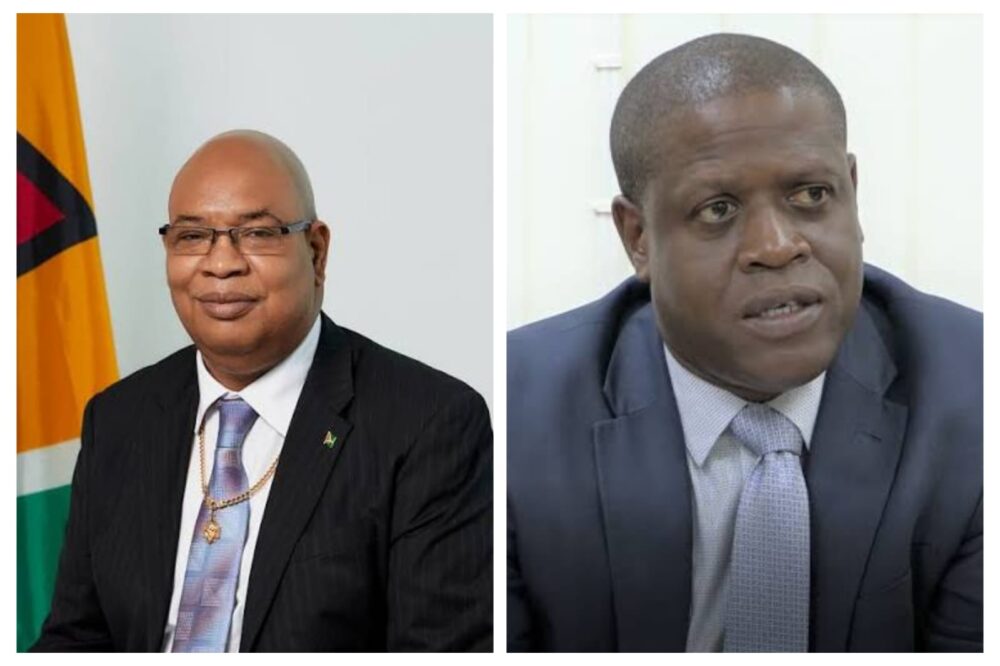
Public Works Minister Juan Edghill has defended the takeover, arguing that the Mayor and City Council (M&CC) has failed to adequately maintain the roads. He contends that Central Government has effectively been doing the work, citing major investments between 2020 and 2025.
According to Edghill, approximately G$19 billion was spent on roads during that period, with an additional G$5.3 billion invested in urban road works. He further stated that G$4 billion went towards maintenance, G$7.4 billion towards drainage interventions, and about G$5 billion towards enhancement works—bringing total government expenditure on Georgetown’s infrastructure to roughly G$40.7 billion.
But Saul argues that the government’s position ignores the financial reality facing the municipality and sidesteps the structural constraints imposed on City Hall.
In an interview with Village Voice News, Saul said the council simply does not have the revenue base to meet its responsibilities under the Municipal and District Councils Act (Chapter 28:01). “Under the present construct and capacity to earn, the City Council will [be] unable to do that,” he said.
He noted that the council generates about G$2 billion annually—roughly G$10 billion over five years—far below the more than G$40 billion the government says it has spent over the same period.
Saul pointed out that the city’s tax system remains anchored to a 1997 valuation, severely limiting revenue generation. “The average tax for residential property in East Ruimveldt is about $6,000 per year,” he said, adding that with such limited income the council is expected to manage waste, repair roads, maintain community spaces, street lighting, and provide public and environmental services.
He also rejected claims that Georgetown’s waste management challenges are unique, arguing instead that the issue is national in scope.
More pointedly, Saul accused the government of bypassing consultation and undermining the principles of local governance. He said the administration is “operating like Kim Jong-Un where they are not consulted, has no regard for local government which is founded on participatory democracy and consultation,” adding that “all the People’s Progressive Party (PPP) government is interested in doing is hookwinking people.”
The councillor warned that the reclassification of the roads threatens key municipal revenue streams. With the streets now under central control, the council risks losing the ability to charge vendors, collect billboard fees, and impose container charges on businesses operating within the city.
“This is another effort at economic strangulation of the city,” Saul said, cautioning that the loss of income could force layoffs within the municipality.
He also questioned how the government is financing its expansive infrastructure programme, arguing that it is relying on oil revenues or borrowing—resources unavailable to the council.
“When one looks at the billions the government is using on road construction and asks where they are getting the money from…it is oil money (the people’s money) the government is using or borrowing to expedite these projects which the council does not have capacity to do,” he said.
Saul further contended that the move signals a broader attempt to erode the local government system. “The Government is looking at the erasure of the local government system, starting with Georgetown, in its attempt to grab at power and control every space,” he warned.
He also raised concerns about the lack of clear criteria used to designate the roads as public. Referencing the United Kingdom’s classification of trunk roads—major arteries designed to facilitate connectivity—Saul questioned whether similar standards were applied in Georgetown.
He pointed to major corridors such as Carifesta Avenue to Clive Lloyd Drive, Sheriff Street, and Mandela Avenue as examples that could reasonably qualify, asking whether the current designations were based on policy or “whim.”
Saul also criticised the parliamentary opposition—We Invest in Nationhood (WIN), A Partnership for National Unity (APNU), and the Forward Guyana Movement (FGM)—for failing to present a unified response.
“All they are doing is busing down one another,” he said, arguing that such divisions have enabled unilateral government action. He added that such a move would not have been possible under a more cohesive opposition, as existed during the tenure of former President David Granger.
“No democracy can work without a proper functioning opposition,” Saul said, calling on opposition parties to “remember who they are elected to serve and defend.”