By Lt Colonel (ret’d) Lelon Saul- On March 25, 2026, the United Nations General Assembly adopted a resolution declaring the transatlantic trafficking of enslaved Africans and racialized chattel enslavement as “the gravest crime against humanity”. The vote—123 in favour, 52 abstentions, and only three votes against—marks a watershed moment in the long struggle for historical recognition. Yet for African Guyanese, whose ancestors endured the brutal sugar plantations of Demerara, Berbice, and Essequibo, this resolution is not merely a diplomatic triumph. It is a mirror reflecting both the progress made and the profound distance yet to travel toward justice.
A Vote That Exposes the Fault Lines of Global Conscience
The passage of this resolution, proposed by Ghana on behalf of the African Group and supported by CARICOM, represents the culmination of decades of advocacy. Ghana’s Foreign Minister Samuel Okudzeto Ablakwa captured the moment’s significance: “We have not simply passed a text; we have affirmed a truth. We have chosen remembrance over silence, dignity over erasure and shared humanity over division”
Yet the vote tally tells a more complicated story. Fifty-two nations abstained, including the United Kingdom and most European Union member states. The United States, Israel, and Argentina voted against. The UK’s ambassador argued that “no single set of atrocities should be regarded as more or less significant than another”. The U.S. ambassador went further, objecting to what he called “the cynical usage of historical wrongs as a leverage point to reallocate modern resources to people and nations who are distantly related to the historical victims”.
These objections reveal the enduring tension between acknowledging historical wrongs and accepting their present-day consequences. For African Guyanese, this tension is not abstract—it is lived daily in the persistent inequalities that trace directly back to the system the resolution now condemns.
Guyana’s Central Role in the “Second Slavery”
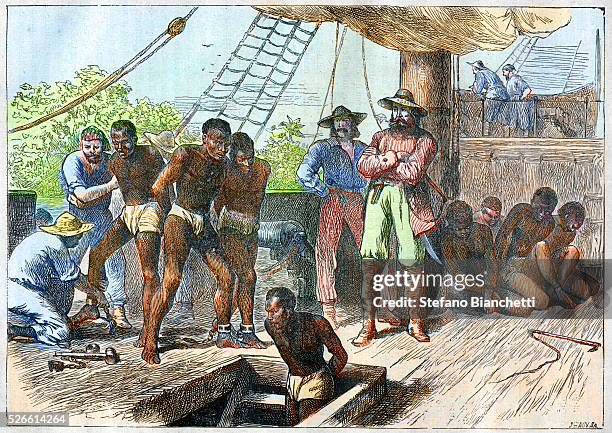
Guyana’s history offers a particularly stark illustration of why this resolution matters. Between 1803 and 1838, British Guiana underwent a transformation that historian Wazir Mohamed describes as part of the “second slavery”—a period when, even as abolitionist sentiment grew in Britain, sugar production in the colony expanded dramatically through intensified exploitation. The numbers are staggering between 1807 and 1838, the enslaved population declined from approximately 100,000 to 82,284, yet sugar production increased from 1,410 tons in 1804 to 62,272 tons in 1827.
This paradox was achieved through brutal regimentation. As the slave trade was abolished in 1807, cutting off fresh supplies of enslaved labour, planters in Guyana responded by extracting more from those they already held. The colony became a laboratory for what Mohamed terms “the renewed regimentation and oppression of slave labour” carried out with impunity. Scottish firms like Sandbach Tinne & Co. dominated this system, building vertically integrated operations that linked Guyana’s cotton and sugar production to global capitalism. When Britain finally ended slavery in 1834, these same Scottish firms claimed compensation from the UK government totalling £231,871 for 4,431 freed people—accounting for five percent of all those freed in Guyana.
Not a single shilling of that compensation reached the enslaved. The “compensation” was paid to the enslavers.
The Unfinished Business: Poverty Amidst Oil Wealth
The legacy of this history is not confined to textbooks. Today, Guyana stands as one of the CARICOM nations identified among countries with the highest poverty incidence in Latin America and the Caribbean. Despite being transformed by massive offshore oil discoveries into one of the world’s fastest-growing economies, more than half of Guyana’s population lives below the poverty line, with over thirty percent classified as extremely poor.
This is not a coincidence. The structural inequalities forged in the crucible of the second slavery—the concentration of land ownership, the exclusion of African-descended people from capital accumulation, the spatial segregation that isolated communities from infrastructure and opportunity—have proven remarkably persistent. Poverty in Guyana is often chronic, with families remaining poor for many years rather than experiencing temporary hardship. Households with children are especially vulnerable, with thirty-five percent of those in extreme poverty being aged zero to fifteen years.
Economists note a crucial pattern: “Oil wealth tends to be capital-intensive, not labour-intensive. That means GDP can grow dramatically while everyday livelihoods change very slowly”. This is the contemporary face of the same structural dynamics that shaped the second slavery—an economy organized to generate wealth for capital while labour remains marginalized.
A Troubling Domestic Dynamic
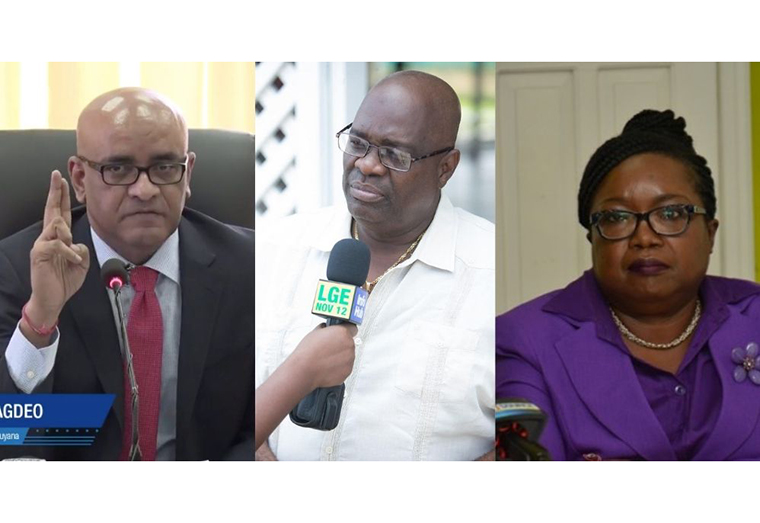
The pursuit of justice for African Guyanese has also revealed troubling domestic fault lines. In 2023, the International Decade for People of African Descent (IDPADA-G) presented testimony to a UN forum detailing what it described as government failures to address historical injustices. The government’s response, delivered by then-Minister Oneidge Walrond, accused IDPADA-G representatives of making “false assertions” and suggested their concerns were a “convenient vehicle for the realisation of thinly veiled political ambitions”.
The dispute centred on substantive issues: claims of discriminatory immigration policies, the status of a Commission of Inquiry into land that allegedly produced no implemented recommendations, and frustrations over the Dutch government’s apology for slavery—which notably excluded Guyana despite two centuries of Dutch colonial rule. Whether or not one accepts the government’s characterization of these claims, the episode reveals a deeper problem: even within a CARICOM nation that supported the UN resolution, there is no unified national approach to addressing the legacy of slavery. The very groups advocating for African Guyanese find themselves in conflict with the state.
The CARICOM Reparations Framework
CARICOM has been a consistent advocate for reparatory justice, and the UN resolution explicitly affirms “that claims for reparations represent a concrete step towards remedying historical wrongs”. The CARICOM Reparations Commission has developed a ten-point plan addressing everything from public apologies to debt cancellation to cultural institutions. Yet progress has been slow. The Guyana Reparations Committee receives government support, but as the 2023 dispute demonstrated, the relationship between civil society advocates and the state remains fraught.
Recommendations for Meaningful Action
The UN resolution, while historic, is a declaration—not a binding instrument. Its power lies in what nations and communities choose to do with it. For Guyana and the CARICOM region, several concrete steps are urgently needed:
- Establish Transparent Reparations Mechanisms. The resolution calls for the establishment of “reparations frameworks”. Guyana should move immediately to create a legislated Reparations Commission with independent authority, clear terms of reference, and adequate funding. This commission must include representatives of African Guyanese civil society, not merely government appointees. The 2023 dispute over IDPADA-G’s UN testimony demonstrated that trust between the state and advocates is dangerously low. A genuinely independent commission is the only path to restoring it.
- Redirect Oil Revenues to Targeted Investments. With oil revenues flowing into the treasury, Guyana has a historic opportunity to address the structural inequalities inherited from slavery. The data is clear: economic growth alone is not reducing poverty. The government should establish a dedicated “Reparatory Justice Fund” drawing on a fixed percentage of oil revenues, with transparent oversight, to finance: Education and skills training programs specifically targeting African Guyanese communities; Land redistribution and housing programs addressing the legacy of plantation-era land concentration and Heritage preservation and cultural institutions documenting the history of slavery in Guyana.
- Pursue the Dutch Government for Meaningful Acknowledgment. The Netherlands issued an apology for its role in slavery, but notably excluded Guyana from the countries addressed despite Dutch rule lasting over two centuries. The Guyanese government should make inclusion in the Dutch apology a formal diplomatic priority, accompanied by demands for concrete reparations—not symbolic gestures. This aligns with the UN resolution’s call for former slave-trading nations to “consider apologizing for the slave trade and contributing to a reparations fund”.
- Demand British Compensation Documentation. The UK government holds detailed records of the £231,871 paid to Scottish firms like Sandbach Tinne & Co. for the “loss” of their enslaved property in Guyana. These records identify the individuals who received compensation—many of whose descendants likely still hold wealth derived from that payment. The Guyanese government should formally request full documentation of these payments and use them as the basis for reparations claims against both the UK government and the successor institutions of those compensated firms.
- Address Geographic and Racial Inequalities in Development. Poverty data shows that African Guyanese face disproportionate economic marginalization. Yet the government’s development strategy, focused on oil extraction and large-scale infrastructure, risks exacerbating rather than alleviating these inequalities. A comprehensive national development plan must explicitly address racial disparities in poverty rates, land ownership, and access to capital. This should include affirmative procurement policies for African Guyanese-owned businesses and targeted infrastructure investment in communities with high concentrations of African-descended residents.
Strengthen the CARICOM Regional Framework.
The UN resolution was a CARICOM success, with all member states voting in favour. But CARICOM’s reparations agenda has sometimes moved slowly. Guyana should use its growing economic influence to push for a more aggressive regional approach, including: A unified CARICOM demand for British disclosure of compensation records across all Caribbean colonies; regional mechanisms for sharing best practices in reparations implementation and a coordinated strategy for engaging European governments on return of looted cultural artifacts, as called for in the resolution
Conclusion: From Recognition to Repair
The UN resolution declaring the transatlantic slave trade the “gravest crime against humanity” is a monumental achievement—one that African Guyanese and the broader Caribbean diaspora have earned through generations of advocacy. It affirms a truth that the descendants of the enslaved have always known that the system which brought their ancestors in chains to the sugar plantations of Demerara was not merely a historical wrong but a crime of such magnitude that its effects continue to shape lives today.
But resolutions do not build schools, redistribute land, or heal the psychological wounds of racism. As UN Secretary-General Antonio Guterres noted, the international community now requires “far bolder action”. For Guyana, the challenge is particularly acute. With oil wealth flowing and poverty entrenched, the gap between national potential and lived reality for African Guyanese has never been more stark or more urgent.
The three nations that voted against the resolution—the United States, Israel, and Argentina—chose denial. The fifty-two that abstained chose evasion. But the 123 that voted yes chose accountability. For African Guyanese, the question now is whether their own government, which voted with the majority, will match its diplomatic support with domestic action.
The ancestors who rose in the Demerara slave rebellion of 1823 demanded freedom. Their descendants today demand something more: not merely recognition of the crime committed against them, but repair. The UN resolution has given the world the language to name that crime. It falls to nations like Guyana to give that language meaning.