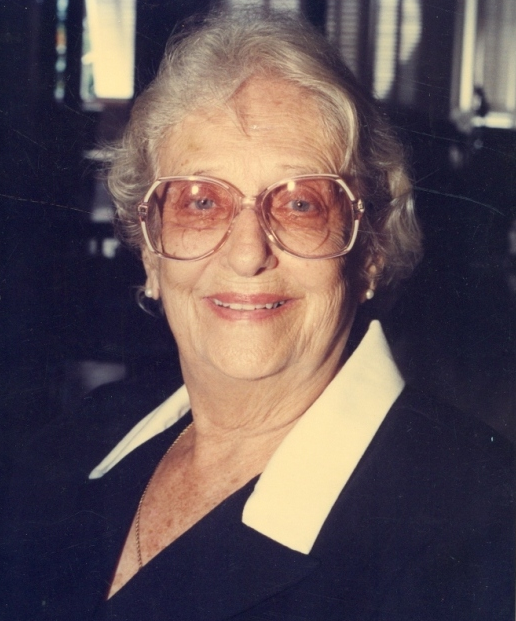
As Guyana observes Women’s History Month, the life of Janet Jagan stands as one of the most consequential—and contested—in the nation’s political history.
A Chicago-born activist who rose to become Guyana’s first elected female president, Jagan’s career spanned anti-colonial struggle, sweeping social reforms, and a presidency marked by unrest, disputed elections, and enduring controversy.
From Activist to Architect of a Political Movement
Janet Jagan arrived in British Guiana in the 1940s and quickly became a central figure in the fight against colonial rule.
In tracing her early political influence, Janet Jagan was also a founding member of the Political Affairs Committee (PAC), established on November 6, 1946 as one of the first organised nationalist groups in British Guiana. The PAC played a key role in mobilising anti-colonial sentiment and political education among workers and citizens, laying the ideological groundwork for what would become the People’s Progressive Party (PPP), officially formed in 1950.
Alongside her husband, Dr. Cheddi Jagan, Forbes Burnham and others, she co-founded the PPP, helping to mobilise workers, women, and rural communities.
Her early political career was shaped by confrontation with colonial authorities. After the PPP’s 1953 electoral victory, the British suspended the constitution and removed the government, citing fears of communist influence during the Cold War.
Jagan was jailed and restricted—experiences that probably defined her combative political style for decades.
A Reform That Changed Women’s Lives
Long before she became president, Janet Jagan made a significant, if often overlooked, impact as Minister of Health.
At the time, a colonial-era policy barred nurses from being married or having children—forcing women to abandon their careers if they chose family life.
Jagan moved to abolish the rule.
The implications were immediate and far-reaching:
- Nurses were able to remain in the workforce after marriage
- Hospitals retained experienced staff, improving healthcare delivery
- Women gained the ability to pursue long-term careers while raising families
The reform helped transform nursing from a temporary occupation into a sustainable profession and marked a broader shift in women’s economic independence in Guyana.
Breaking Barriers in Government
Jagan’s political ascent continued over decades:
- One of the first women elected to the legislature
- The country’s first female Deputy Speaker
- Guyana’s first female Prime Minister
In December 1997, following the death of her husband, under the PPP ticket she became Guyana’s first female elected president.
Elections Disputed, Legitimacy Challenged
Her presidency began under a cloud.
The 1997 elections were immediately challenged by the Opposition, which alleged irregularities and declared the results invalid. Though international observers did not uniformly condemn the process, protests erupted across the country.
The crisis led to the Herdmanston Accord, (January 17, 1998) a CARICOM-brokered agreement that called for electoral audits, constitutional reform, and early elections. It was also followed by the St. Lucia Agreement.
The St. Lucia Statement was issued on July 2, 1998, following talks in Saint Lucia between Janet Jagan and Desmond Hoyte under CARICOM mediation.
The Statement emerged as regional leaders sought to defuse the post-election crisis in Guyana following the disputed 1997 polls. It brought together Desmond Hoyte, Leader of the Opposition, and Janet Jagan, under the mediation of CARICOM heads of government in Saint Lucia.
The Statement committed both sides to dialogue and laid the groundwork for a peaceful resolution, helping to ease tensions and paving the way for the implementation of the Herdmanston Accord, which formalised agreements on constitutional reform and early elections.
The legitimacy of the 1997 general elections was later challenged in court, culminating in a landmark ruling by then Chief Justice Claudette Singh. In a 2001 decision, she found that the elections had been “vitiated” (null and void) due to constitutional breaches, particularly the use of voter identification procedures that were not properly enacted into law.
While the court did not remove Janet Jagan from office retroactively, the ruling validated opposition concerns about the electoral process and reinforced the need for reforms already set in motion following the Herdmanston Accord.
The Writ Incident
The swearing-in of Janet Jagan in December 1997 was marked by a dramatic confrontation when a court order—intended to halt the proceedings—was presented at State House. According to contemporaneous reports, Jagan took the document and threw it over her shoulder, an act that drew sharp criticism from the opposition, sections of civil society and the legal community, who viewed it as a disregard for judicial authority.
At the center of the legal dispute was Doodnauth Singh, who was serving as Chairman of the Guyana Elections Commission (GECOM) at the time. Singh had overseen the electoral process and defended its conduct amid mounting challenges, while also becoming a key figure in the legal and constitutional battles that followed the contested results.
The incident involving the writ became emblematic of the wider crisis—where electoral legitimacy, judicial intervention, and executive authority collided in full public view.
The incident remains one of the most enduring symbols of her leadership style.
A Presidency Marked by Unrest
Jagan’s time in office was brief and turbulent.
Her administration faced:
- Persistent protests
- Parliamentary boycotts by the opposition
- A major public service strike in 1999
Amid declining health and mounting political pressure, she resigned in August 1999, less than two years into her presidency.
Legacy: Reformist, Revolutionary, or Polarising Leader?
The legacy of Janet Jagan resists easy categorisation.
Her achievements include:
- Advancing women into top political leadership
- Building one of Guyana’s most enduring political parties
- Reforming labour and healthcare systems, including expanding women’s rights in the workforce
Her controversies remain significant:
- A presidency born out of disputed elections
- Political instability and deep national divisions
- Actions that raised questions about democratic norms
Women’s History Month Reflection
As Guyana reflects on the role of women in shaping its history, Jagan’s story highlights both progress and complexity.
She broke barriers at the highest levels of power while also presiding over one of the country’s most politically volatile periods. Yet beyond the headlines, reforms like the removal of the marriage ban on nurses quietly transformed everyday life for generations of women.
In the end, her legacy is not singular. It is a convergence of reform and resistance, achievement and controversy—mirroring the evolving story of Guyana itself.
Sources:
World Wide Web and interviews