By Mark DaCosta- In our nation, secondhand smoke presents a pressing public health issue that cannot be ignored. As the Tobacco Control Act of 2017 places stringent regulations on smoking, particularly in healthcare and hospitality sectors, debates surrounding the interpretation and enforcement of these laws grow increasingly relevant. Despite efforts to curb tobacco use and protect citizens, the effectiveness of Manages in these sectors remains critically under scrutiny, revealing a gap between legislation and reality.
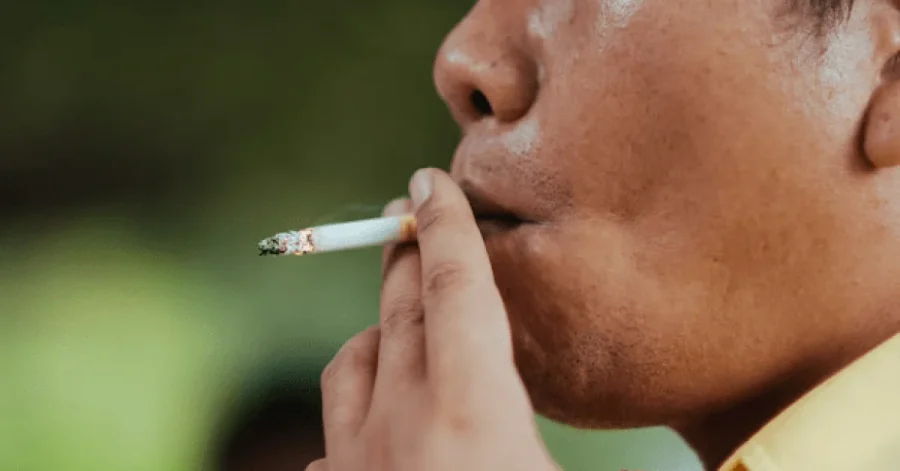
The detrimental impacts of secondhand smoke are well-documented, yet the challenge surrounding its regulation exemplifies a broader societal struggle. According to research, secondhand smoke — comprising both side stream smoke from lit tobacco products and mainstream smoke exhaled by smokers — contains over 7,000 chemical compounds, many of which are pernicious carcinogens – things that cause cancer.
It poses serious health risks, particularly to vulnerable populations such as children and those with pre-existing respiratory conditions. Dr. Jane Smith, a notable public health expert, emphasises that “the toxic mixture present in secondhand smoke not only endangers smokers but also threatens innocent lives nearby.”
Within the healthcare realm , in Guyana, the guidelines established by the Tobacco Control Act put forth a zero-tolerance policy towards tobacco use. Smoking is prohibited not only inside medical facilities but also within a 5-meter radius of the premises. This expansive regulatory approach aims to safeguard patients and healthcare workers alike.
For instance, hospitals face hefty penalties — up to $200,000 fine or six months of imprisonment — for administrators who fail to enforce these rules or who allow smoking on the grounds. As noted by Dr. Alan Johnson, a leading respiratory physician in our country, “the healthcare sector must exemplify the highest standards of safety by eliminating any form of smoking-related exposure.”
Conversely, the hospitality industry grapples with the distinction between indoor and outdoor spaces when it comes to smoking regulations. Many establishments, such as bars and restaurants, often utilise covered outdoor areas, which can lead to confusion regarding the legality of smoking in these settings. While the Act categorises any roofed structure as an indoor area, the definition occasionally creates loopholes.
The ongoing struggle in enforcing these smoking regulations illustrates a concerning trend. As enforcement of these laws primarily targets hospitality managers, the risk of significant sanctions looms over those who fail to comply fully. Hospitality sector expert, Ms. Lisa Green, cautions that “ambiguity in the law shouldn’t be leveraged to undermine its intent; we must strive for clarity and consistent enforcement across all sectors.”
The penalties for smoking violations in both sectors highlight the severity of the issue at hand. Businesses face financial penalties up to $200,000 for management failures, while individual smokers can incur fines of $10,000 for initial infractions. Although these consequences are intended to deter smoking, their enforcement relies heavily on the diligence of managers and proprietors, who must navigate the complexities of smoking legislation to protect their constituents.
Even with robust laws, the implications of secondhand smoke extend beyond mere statistics. There’s a profound societal impact, particularly concerning children, who are disproportionately affected by this silent hazard. Dr. Sarah Rodriguez, a paediatrician, warns, “children’s respiratory systems are uniquely vulnerable; their exposure to secondhand smoke can lead to chronic infections and even increase the risk of Sudden Infant Death Syndrome.”
The ongoing threat of secondhand smoke is compounded by the prevalence of thirdhand smoke — the residual toxins that linger long after a cigarette has been extinguished. These chemicals not only pose risks to health but also complicate the challenge of maintaining safe living environments, especially for families with young children.
The road ahead requires a comprehensive and unified approach to combatting smoking. A concerted effort to strengthen public awareness campaigns, improve enforcement measures, and foster a culture of health within our society is paramount. As Dr. John Brown, a tobacco control advocate, succinctly puts it: “Public health solutions are built on collective action; it’s time we acknowledge that a smoke-free environment is a fundamental right.”
As our nation grapples with the realities of secondhand smoke, there lies an urgent need for clear, actionable strategies that empower individuals and protect the most vulnerable among us. Ultimately, fostering a healthier environment for all will require commitment from our leaders and responsibility from every sector of society. Only then can we hope to diminish the grip of tobacco and honour the rights of our citizens to breathe clean air.