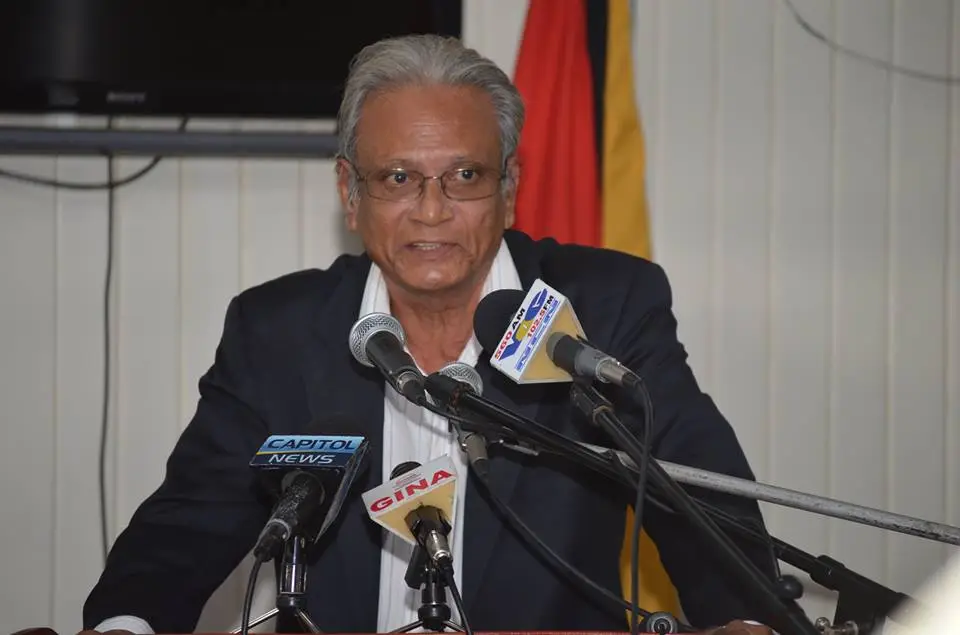
By Mark DaCosta-The death of Dr. Rupert Roopnaraine on February 23, 2026, bears a profound significance for our nation as it coincides with two monumental events in our history: the Berbice Slave Rebellion and the day we became a Republic in 1970. This date symbolises a legacy of resistance against oppression, echoing the persistent quest for freedom that Roopnaraine himself embodied throughout his life.
Veteran trade unionist, Lincoln Lewis poignantly notes, “It is fitting that Rupert’s life closed on a date that symbolises resistance and the continuing quest for freedom.” The loss of this influential figure invites a critical reflection on his role within our political and cultural landscape.
Lewis urges us to engage with Roopnaraine’s legacy through a lens not merely coloured by accolades but rooted in the depth of thought, struggle, and commitment he demonstrated as a leader as we navigate the current political climate.
Lewis highlights the importance of recognising those who dared to challenge authority and expand democratic spaces, especially at a time when the political fabric of our country appears increasingly tainted by self-interest. The question arises: how can we build upon Roopnaraine’s legacy to further our own quest for justice and equality?
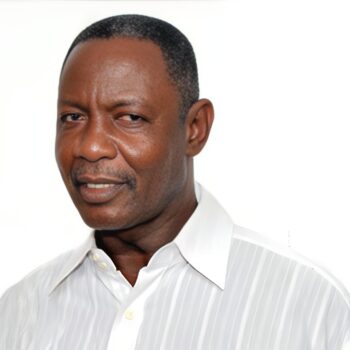
Rupert Roopnaraine was more than a notable playwright or politician; he was a founding member and co-leader in the Working People’s Alliance (WPA). His commitment to socio-political reform and multi-racial unity set a tone for activism that many still aspire to.
Lewis reflects, “From my own conversations with Rupert… I can say he never shied away from difficult discussions about the role he and his party played in Guyana’s politics during those turbulent times.” This candid approach is emblematic of Roopnaraine’s unwavering dedication to truth and justice.
n revisiting the challenges faced by the WPA during a period of intense political turmoil, Lewis recalled several moments of internal reflection within the party as it opposed the People’s National Congress (PNC) government.
Notably, Roopnaraine himself acknowledged that the WPA had once contemplated acquiring arms during its struggle against the government. According to Roopnaraine the WPA was accumulating weapons long before the murder of Dr Walter Rodney. “We were accumulating weapons… we were accumulating equipment of various kinds. A certain amount of that was coming from the, from the military.”
Lewis said this admission underscored the lengths to which some were prepared to go in their efforts to challenge and remove government from office. Describing Roopnaraine as one of the few “honest politicians,” Lewis also shared: “Rupert told myself and Andrew Garnett that the WPA burnt that building,” referring to the controversial destruction of the Ministry of National Development, an incident often cited in discussions about the tense confrontation between dissenting political forces and the state.
Conversely, Lewis noted that Roopnaraine was also a strong advocate for coalition politics and not opposed to rethinking. He recalled that “Roopnaraine suggested that Guyanese may have misinterpreted aspects of the leadership of [Forbes] Burnham and argued that our historical understanding required deeper reflection and correction.”
Roopnaraine was also more than just a political figure; he was a respected academic and an award-winning author. Born in 1943, he dedicated his life to literature and education, earning degrees from esteemed institutions such as Cambridge and Cornell. His insights as a scholar greatly enriched the intellectual discourse of our nation.
Notably, his collection of essays, “The Sky’s Wild Noise,” earned him the OCM Bocas Prize, solidifying his impact as a significant voice in Caribbean literature. “Rupert Roopnaraine… was a titan of Guyanese public life, distinguished as an academic, politician, and award-winning author,” Lewis eloquently summarises.
Roopnaraine’s dedication to education was evident during his tenure as Principal, Critchlow Labour College, and later as Guyana’s Minister of Education, where he championed initiatives to improve student welfare and abolish corporal punishment. His vision for a more just society extended beyond the classroom, seeking to address the psychological and social needs of students, thus reflecting a deep understanding of the holistic nature of education. This focus on the welfare of the youth in our country reflects the kind of forward-thinking leadership he associates with.
The legacy of Rupert Roopnaraine reflects the complex role that resistance and collective action have played in Guyana’s ongoing struggle for justice and equality. Lewis called for a frank and honest assessment of Roopnaraine’s legacy, stating that Roopnaraine himself would not have shied away from an examination of his contributions to society—good, bad, or indifferent.
Lewis said such reflection is necessary for a deeper understanding of the nation’s political history. “United, we must strive to reclaim our dignity and rights,” he noted, reminding Guyanese of the resilience required to effect meaningful change in society.
The lessons imparted by Roopnaraine’s life and work should galvanise us to unite in the face of adversity, drawing upon the spirit of solidarity that characterised his political philosophy. In honouring his legacy, it is incumbent upon us to build upon the foundation he laid, reinforcing the need for a concerted effort to uplift the voices of our nation’s workers.
While the loss of Rupert Roopnaraine is a profound one, his enduring legacy offers a roadmap for the future we must aspire to — one defined by justice, unity, and a relentless pursuit of progress. As we reflect on his life and contributions, we are called to action, to uphold the principles he so passionately championed and to continue the fight for a better tomorrow in our nation.