Public scrutiny has intensified over the constitutional rules governing eligibility to sit in Guyana’s National Assembly, following remarks by Speaker of the National Assembly Manzoor Nadir and subsequent media reporting that has sparked widespread debate about how the law is interpreted and applied.
The controversy was fueled by a report published in the Guyana Chronicle on March 4, 2026, titled “‘If you’re convicted of a criminal offence, you can’t be in Parliament’,” which referenced the Speaker’s comments but did not cite or provide context from the relevant constitutional provision.
Under Article 155(1)(c) of the Constitution of Guyana, ‘Disqualification for election as members’….
“No person shall be qualified for election as a member of the National Assembly who… is under sentence of death imposed on him or her by a court, or is serving a sentence of imprisonment (by whatever name called) exceeding six months imposed on him or her by a court or substituted by competent authority for some other sentence imposed on him or her by a court, or is under such a sentence of imprisonment the execution of which has been suspended;”
A legal analyst told Village Voice News that the intent of the clause is to safeguard the integrity of the legislature by preventing individuals who are currently serving serious criminal sentences from holding elected office in the National Assembly.
That omission quickly triggered reactions from citizens, particularly on social media, with many questioning whether the public had been given a full and accurate explanation of the constitutional rules governing when a person can be disqualified from serving in Parliament.
Some commentators questioned the continued presence in Parliament of Minister Kwame McCoy, a member of the governing People’s Progressive Party (PPP), who has past criminal convictions, while others also referenced a senior government minister who was previously incarcerated and later changed his name after serving his sentence.
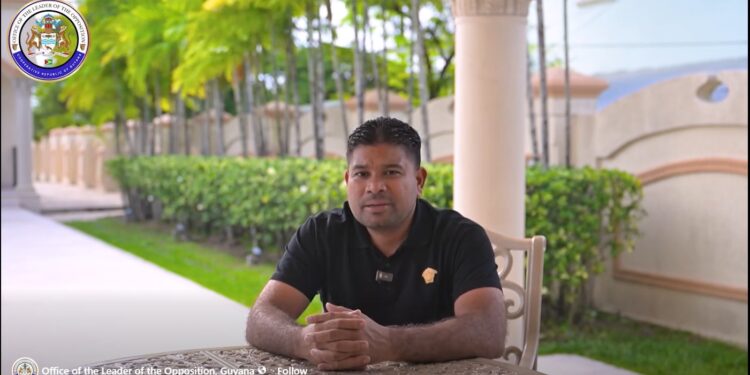
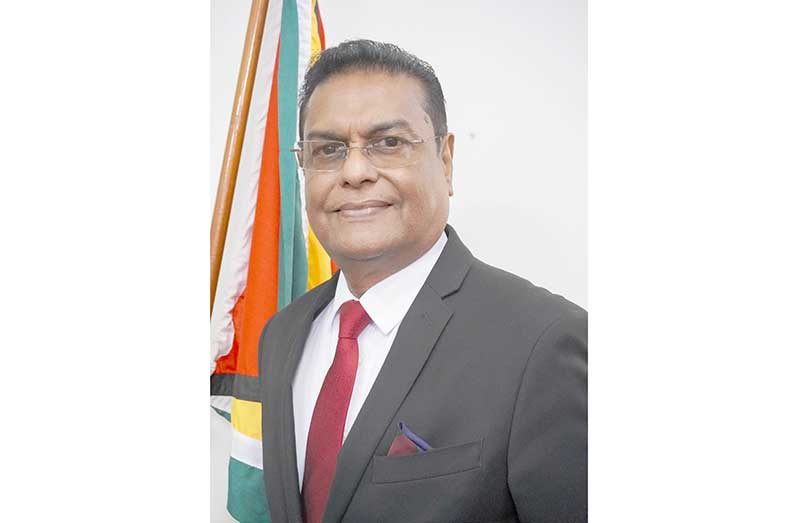
Public debate intensified following remarks by Speaker Nadir during an interview on The Guyana Dialogue, where he addressed the constitutional implications should Opposition Leader Azruddin Mohamed be convicted of a criminal offence.
“If you’re convicted of a criminal offence, you can’t be in Parliament. That’s quite clear. So, we don’t have any discretion there again,” Nadir said.
The comments prompted questions from some citizens about how the rule is interpreted and applied.
In a widely circulated social media post, one commentator referenced the Speaker’s remarks, writing: “The Speaker of the National Assembly (Guyana) Manzoor Nadir said: ‘If you’re convicted of a criminal offence, you can’t be in parliament. That’s quite clear. So, we don’t have any discretion there.’ So, my question is: Why then is Kwame McCoy sitting in Parliament after he was convicted of a criminal act?”
The individual added: “Yall read below, and hopefully some smart lawyer will ask the Speaker to have him removed as a Member of Parliament with immediate effect.”
Other citizens have argued that the constitutional provisions must be applied consistently.
One individual told this publication that “while I hold no brief for the Mohamed, the Speaker cannot be allowed to get away with thinking he can fool all the people all the time and get away with selective removal from the Parliament. The law must be enforced across the board.”
Several persons also pointed to Kwame McCoy’s past convictions, noting that the PPP minister was convicted of assaulting a man by gun-butting him following an argument over election campaign posters.
McCoy was also found guilty in March 2017 for a separate 2011 assault on social activist Mark Benschop, for which he was fined by the court. Additionally, he was previously convicted in 2012 for gun-butting another man.
Those raising concerns contend that if the constitutional principle referenced by the Speaker is to guide parliamentary eligibility, it must be interpreted and applied uniformly.
Meanwhile, the broader discussion emerged amid ongoing legal proceedings involving Opposition Leader Azruddin Mohamed and his father Nazar Mohamed, owners of Mohamed’s Enterprise, who are currently on $150,000 bail each while contesting extradition to the United States.
Their case is scheduled to continue on March 12, 2026, before Principal Magistrate Judy Latchman at the Georgetown Magistrates’ Court, with bail conditions requiring them to surrender their passports and report weekly to the Ruimveldt Police Station.
The pair face an 11-count indictment in the U.S. District Court for the Southern District of Florida, including allegations of wire fraud, mail fraud, money laundering, conspiracy and customs violations linked to an alleged US$50 million gold export and tax evasion scheme. The indictment was issued by a grand jury in October 2025.
In June 2024, the Mohameds, their businesses and then Permanent Secretary Mae Toussaint Jr. Thomas were sanctioned by the U.S. Treasury’s Office of Foreign Assets Control (OFAC) over allegations of gold smuggling and corruption involving more than US$50 million in unpaid taxes.
Observers say the controversy highlights the importance of responsible journalism and accurate reporting of constitutional provisions. They caution that when media reporting fails to provide full legal context, it can fuel public confusion and deepen political tensions.
Analysts warn that when media platforms are used not to inform and empower citizens but instead to promote ignorance, partisan agendas, or discord, the consequences can be serious. In a politically charged environment, incomplete or misleading information can erode public trust, inflame divisions, and ultimately undermine both democratic institutions and the broader body politic.