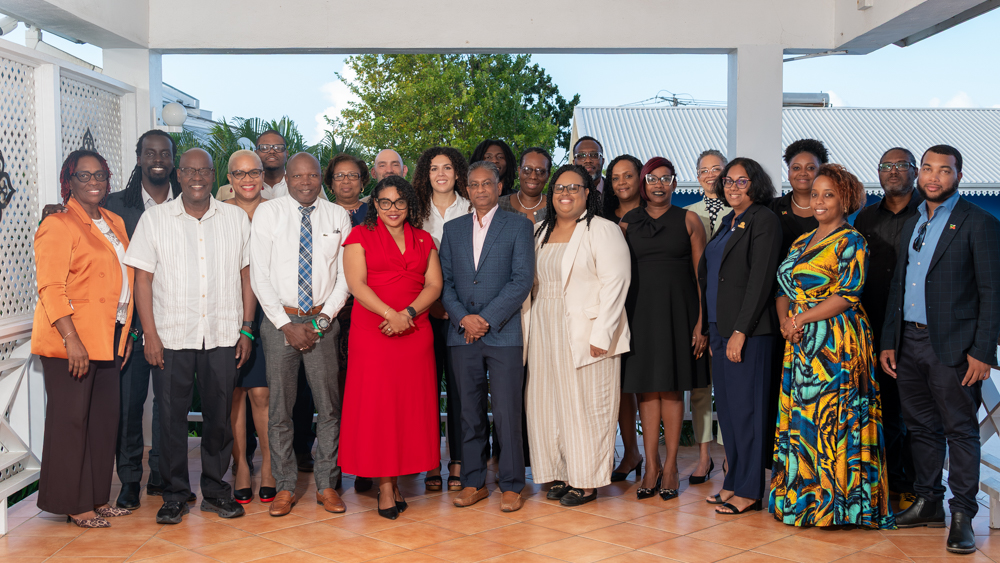
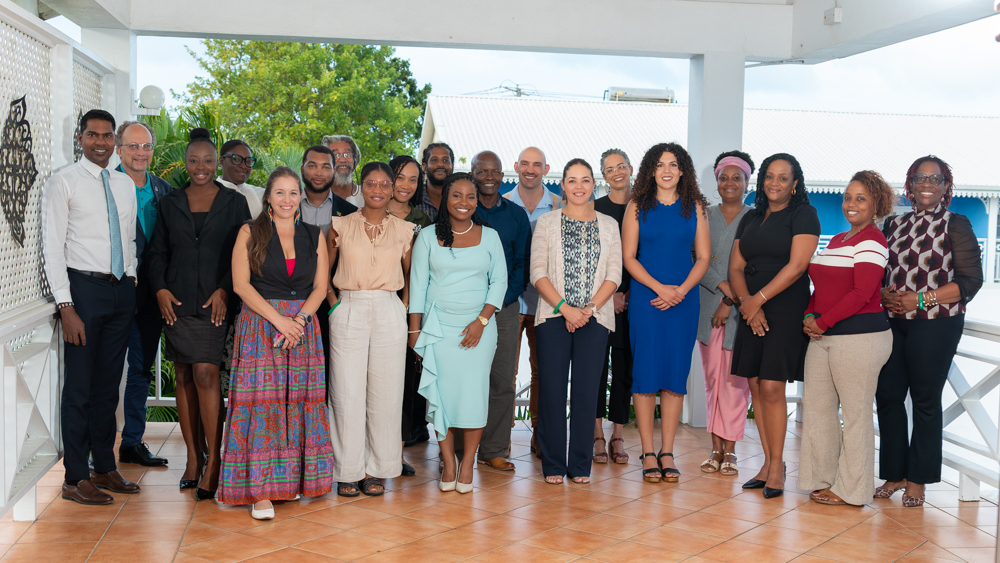
Senior government officials and civil society leaders from across the Caribbean convened on 2–3 March 2026 at the Bay Gardens Hotel in Saint Lucia for the Caribbean Convening on a Global Just Transition from Fossil Fuels, reaffirming the region’s commitment to shaping international cooperation toward a fast, fair, and financed global phase-out of oil, gas and coal.
The convening took place at a critical juncture in international climate diplomacy. Despite growing global consensus on the need to transition away from fossil fuels, negotiations remain stymied on the central questions of governance, finance, and implementation required to deliver an equitable and science-aligned transition. International climate and financing discussions continue to face gridlock, even as climate impacts intensify worldwide.
According to the 2025 UNEP Production Gap Report, governments are projected to produce 120% more fossil fuels by 2030 than is consistent with limiting warming to 1.5°C – underscoring the widening gap between climate ambition and production realities.
Caribbean countries have long called for increased climate ambition and scaled-up financing. The region played a decisive leadership role in securing the 1.5°C temperature limit under the Paris Agreement, and several Caribbean governments are among the 18 countries participating in diplomatic discussions on a proposed Fossil Fuel Treaty, an initiative aimed at managing an orderly, fair, and science-based transition away from fossil fuels.
And as the Convening clearly showed, now is not the time for Caribbean civil society and governments to back down or shy away from the bold actions needed to steer the world away from fossil fuel dependence.
Dr. James Fletcher, Executive Director, Caribbean Community Climate Change Centre, said, “Caribbean civil society has never been silent in moments like this. From the fight to secure the 1.5°C goal in the Paris Agreement to global advocacy for Loss and Damage, small island developing states – including those in the Caribbean – have consistently championed the concept of Loss and Damage, even when others denied its legitimacy. Today, the Caribbean’s credibility in global diplomacy regarding fossil fuel phase-out and energy transition rests not only on our vulnerability but on our vision. If we are calling for a just transition away from fossil fuels, we must also clearly articulate how that transition will support small island developing states – through concessional finance, debt reform, expanded energy access, renewable scale-up, and social protection for affected communities.”
Preparing for the Santa Marta Conference
The Saint Lucia convening serves as a regional preparatory meeting ahead of the First International Conference on Transitioning Away from Fossil Fuels, to be held in Santa Marta, Colombia, on 24–29 April 2026. The Conference, co-hosted by Colombia and the Netherlands, was announced at COP30 in Belém, Brasil, and aims to launch a dedicated diplomatic process to explore pathways, scenarios, governance options, and financial mechanisms required to achieve a global just transition.
The Santa Marta Conference aims to bring together high-ambition first-mover countries, outside the formal UNFCCC negotiating space, to move beyond dialogue and begin scoping the practical building blocks of a managed global phase-out of fossil fuels.
The decision to hold this first conference in Colombia, followed by a second conference to be held in the Pacific region within a year, was made at a Senior Officials meeting of the countries participating in the Fossil Fuel Treaty Initiative last June in Bonn. The initiative draws from lessons of past diplomatic processes – including the Mine Ban Treaty, the Convention on Cluster Munitions, and the Treaty on the Prohibition of Nuclear Weapons – which began with focused diplomatic coalitions and ultimately strengthened international cooperation on major global threats.
Alex Rafalowicz, Executive Director, Fossil Fuel Treaty Initiative, said, “The 1.5°C limit is at risk – and we must be clear about why. The industry will say it’s because of emissions, and that’s true. But beneath those emissions are their primary drivers: coal, oil, and gas. If we are serious about protecting 1.5°C, we must confront the planned expansion of these fuels. They are not only driving the climate crisis, but also worsening public health impacts, accelerating biodiversity loss, fueling the plastics crisis, and contributing to local pollution. In that sense, continued fossil fuel expansion poses a profound risk to human life and to life on our planet.”
Emphasising Caribbean climate leadership and the need for financing
The two-day meeting strengthened regional coordination and clarified Caribbean priorities ahead of the Santa Marta Conference.
Day one convened civil society representatives to examine the scientific, legal, and multilateral context for a fossil fuel transition, including the role of NDCs, and to define shared priorities and red lines. Day two brought together senior government officials to assess barriers and opportunities for transition in the Caribbean context, concluding with agreement on the core elements of a coordinated regional position for Santa Marta.
Dr. Theresa Rodriguez-Moodie, Chief Executive Officer, Jamaica Environment Trust, said, “In the wake of Hurricane Melissa, Jamaica faced the stark reality of loss and damage: communities were submerged, roads rendered impassable, and homes and buildings destroyed. Hospitals and other critical infrastructure sustained severe damage, thousands were displaced, agriculture suffered heavy losses, electricity and water systems were disrupted, and families were left trying to determine what, if anything, could be salvaged.”
Her words underscore what science has made increasingly clear: climate-related loss and damage is no longer a distant threat but a lived reality across the Caribbean. With global temperatures on track to overshoot the 1.5°C threshold, the urgency for immediate and decisive action has never been greater.
For Caribbean civil society, climate action is a legal and human rights obligation. Communities across the region are already bearing the cost of inaction.
Continued fossil fuel exploration in this context is neither just nor sustainable; it entrenches the very systems driving the region’s vulnerability. At the same time, an unmanaged transition risks worsening inequality and undermining economic and social rights, underscoring the need to empower workers and communities to participate meaningfully in emerging green sectors.
Caribbean civil society continues to champion climate justice, holding governments accountable while amplifying the lived experiences of affected communities. Inaction today not only deepens present harm – it compromises the rights and security of future generations.
But finance is needed to flow directly into the movement away from fossil fuels.
Ms. Charlin Bodlee, Chief Technical Advisor Caribbean Centre for Renewable Energy and Energy Efficiency, said: “Caribbean countries face a significant climate finance gap that makes implementation of our Nationally Determined Contributions (NDCs) extremely challenging. Studies estimate that Caribbean Small Island Developing States require substantially more finance than they currently receive to meet energy transition and adaptation targets, and much of the climate finance we do access comes in the form of loans rather than grants, adding to debt pressure rather than reducing it. Studies also show that climate finance flows to the region remain a fraction of what is needed, and the reliance on loan-based finance can contribute to fiscal strain and limit long-term resilience-building. Addressing this will require large-scale debt-sensitive mechanisms, increased grant finance, and innovative structures that support the Caribbean’s transition away from fossil fuel dependence while bolstering economic and energy resilience.”
As preparations continue for Santa Marta, Caribbean stakeholders reaffirmed their shared commitment to ensuring that any global phase-out framework reflects principles of equity, common but differentiated responsibilities, and meaningful support for small island developing states.