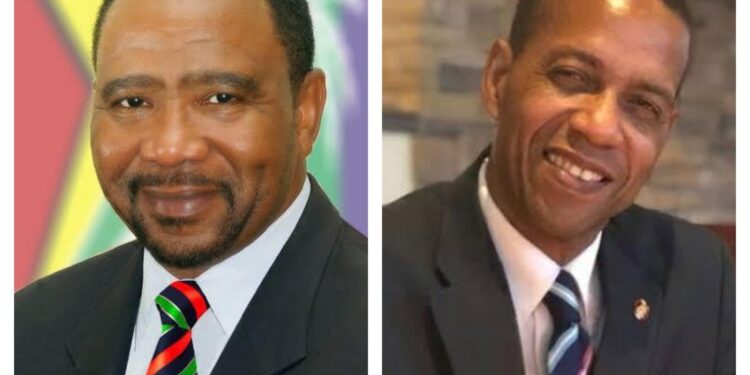
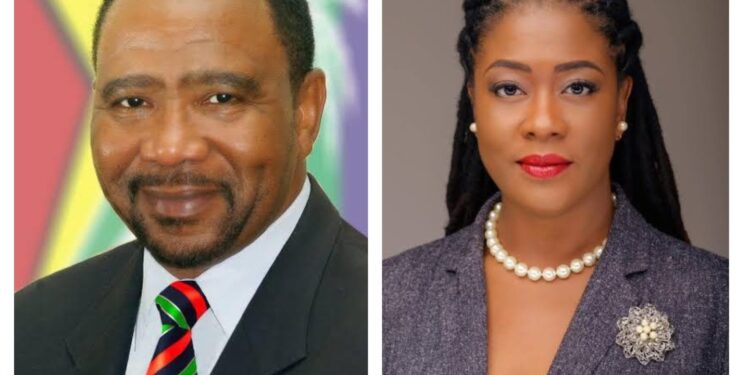
A high-stakes political showdown has shifted beyond Guyana’s borders and into Washington, where both the People’s Progressive Party (PPP/C) government and Opposition Leader Azruddin Mohamed have retained U.S. lobbying firms in what appears to be a widening battle to shape narratives, defend reputations and influence policymakers.
Filings under the United States Foreign Agents Registration Act (FARA) confirm that on February 24, 2026, Mohamed — leader of the We Invest in Nationhood (WIN) party and Leader of the Opposition — retained Linden Global Strategies (LGS, LLC), a Wyoming-based firm, to “engage the United States government and private sector” on his behalf. Reports indicate WIN paid an advance of US$250,000 to the firm.
The move comes as Mohamed and his father, Nazar “Shell” Mohamed, face U.S. sanctions and looming extradition proceedings tied to a Miami federal indictment. WIN representatives have framed the contract as necessary to ensure their perspective is heard in Washington amid mounting legal and reputational pressure.
But Mohamed is not the only one investing in Washington’s influence network.
The PPP/C government is currently paying a combined US$90,000 per month — approximately US$1.08 million annually — to two U.S. lobbying firms, according to disclosures. At current exchange rates, that amounts to roughly G$224.6 million per year in taxpayers’ money.
Foreign Affairs Minister Hugh Todd confirmed the payments, detailing that:
-
DR Consultancy receives US$40,000 per month;
-
Continental Strategy LLC receives US$50,000 per month.
Public filings show that Guyana first engaged Continental Strategy LLC — a firm with reported Trump-era connections — under an agreement filed in late 2024, with additional consultants contracted since then to advocate for Guyana’s foreign policy interests in Washington.
Minister Todd defended the expenditure in Parliament, arguing that the Ministry of Foreign Affairs “lacks capacity” to conduct high-level outreach in Washington and that the lobbying contracts are necessary to safeguard Guyana’s economic and territorial interests, particularly amid tensions with Venezuela and as the country’s oil wealth expands.
Analysts, however, have questioned whether the annual G$224 million price tag is justified, pressing the government for greater transparency about deliverables and oversight.
The lobbying fight has grown more contentious in recent months.
Mohamed has publicly accused the PPP/C government of using taxpayers’ funds to target and discredit him through its U.S. lobbyists. Mohamed claims that materials prepared by Continental Strategy LLC portrayed him to U.S. lawmakers as a “pro-Maduro puppet” and a “threat to democracy.”
He has described the effort as a politically motivated smear campaign financed by public funds and has signaled potential legal action.
The PPP/C government has denied instructing any firm to target Mohamed, maintaining that its contracts are focused on broader diplomatic and foreign policy objectives, including issues related to Venezuela and Guyana’s territorial integrity.
Analysts note that the use of U.S. lobbyists by Caribbean and Latin American governments has surged since 2024, as political leaders seek direct access to American decision-makers in an increasingly polarised Washington. In that context, both a sitting government and an embattled opposition leader turning to registered U.S. influence firms reflects a broader regional trend.
The optics are impossible to ignore. On one side, the PPP/C government is channeling millions in taxpayers’ money each year into Washington lobbying efforts to advance its agenda. On the other, the Opposition Leader has laid down a US$250,000 upfront payment to fight for influence in the very same corridors of power.
With extradition proceedings unfolding, sanctions in place and parliamentary tensions rising, the political contest between the two camps now appears to be playing out not only in Georgetown — but in Washington as well.