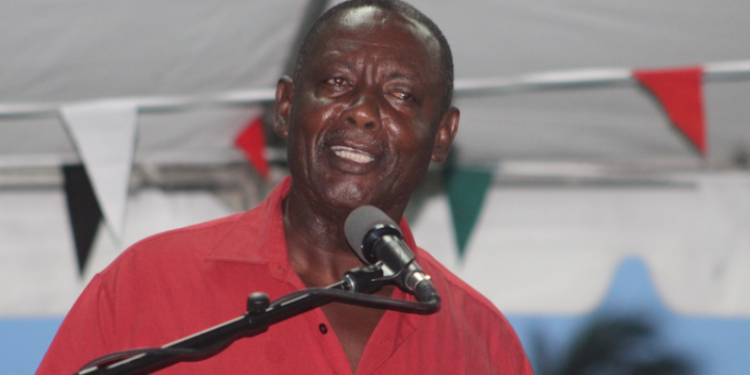
By Mark DaCosta- Lincoln Lewis, General Secretary of the Guyana Trades Union Congress (GTUC)and the veteran advocate for workers’ rights, has expressed his observations on the recent political landscape in our nation following the declaration of the results from the 2025 General and Regional Elections. Despite some factions celebrating victory, many citizens feel discontented, with the newest political party, We Invest in Nationhood (WIN), asserting that the election results reflected manipulation by the Guyana Elections Commission (GECOM). Lewis emphasises the critical need for opposition parties to unite in their efforts to address the adversities faced by our country, and he warns of the potential ramifications of a divided opposition in furthering the interests of the ruling People’s Progressive Party (PPP).
The latest election results have sent ripples across the political spectrum, with WIN claiming a mandate not only through their electoral performance but also through a popular sentiment for change from the status quo that has long dominated our parliamentary landscape. While WIN leads the opposition, it is important to understand their place in the political ecosystem; intact with this assertion is Lewis’s point that the opposition has, for the most part, accepted the declared results, even if under duress. This acceptance does not eliminate the pressing need for a collective strategy to counteract the perceived injustices perpetrated by the incumbent government.
As dissatisfaction grows among the electorate regarding representation, the rise of WIN is indicative of a broader disillusionment with traditional political norms. “The challenges confronting the nation must be viewed from both sides of the fence — that is, from the behaviour of the government and that of the opposition,” Lewis states, illustrating an increasingly fractured political climate. The essence of WIN’s emergence lies in the critical void left by older parties, which, as many voters contend, have failed to adequately address their needs and aspirations. Lewis clearly articulates that continuity in WIN’s influence will hinge on their effectiveness in addressing societal issues — a responsibility they must not take lightly.
However, Lewis also highlights a worrying trend among some supporters of the opposition coalition, A Partnership for National Unity (APNU. )Post-election discussions reveal a perception that they now view WIN as a more significant challenge than the incumbent PPP regime. This realignment in focus could lead to fragmentation within the opposition, especially as WIN has not yet occupied any executive roles. The suggestion from Lewis is clear; the need for a unified and cohesive response from opposition parties is paramount. He urges that negotiation within opposition ranks must be prioritised for them to mount any serious challenge to the current government, which appears increasingly undeterred by scrutiny from the opposition.
The expectation from the electorate was that the meeting of opposition parties — especially in electing a Leader of the Opposition — would have been leveraged to initiate constructive discussions aimed at forging a united front. Regrettably, what transpired was an absence of genuine commitment to cooperate, with indications that differing priorities could lead them down separate paths. Lewis laments this disconnection, stating, “This does not bode well for future relations if it is not addressed promptly.” The urgency of establishing dialogue and consensus cannot be overstated, as the effectiveness of the opposition hinges on their ability to present a united front against the rising tide of an unchecked PPP.
Moreover, Lewis cautions against the risk of exclusionary practices that could alienate not only the electorate who did not support the ruling party but also those who feel disenfranchised by the opposition’s internal divisions. The value of an “inclusionary democracy,” enshrined in our country’s Constitution, must be held sacred, particularly when it comes to respecting the voices of all citizens irrespective of their political affiliation. Should the opposition fail to mend relations and pursue a common agenda, they effectively undermine their fundamental role within the parliamentary framework, aligning themselves dangerously close to the exclusionary tactics practiced by the PPP.
“The people are fed up with leadership that does not uphold our desire to live in peace and harmony,” warns Lewis, further reinforcing the imperative for the opposition to tackle governance issues head-on. The dissatisfaction with leadership that appears detached from the electorate’s realities cannot be understated. Citizens expect more than just rhetoric; they demand action that reflects their needs and aspirations.
Furthermore, Lewis stresses the significance of responsible representation, noting, “No government can be effective and efficient in the face of a weak opposition.” This sentiment underscores the critical relationship between the opposition and governance. If opposition parties, particularly those within the APNU and Forward Guyana Movement (FGM), fail to produce strong representation and effectively hold the government accountable, they risk not only their future political viability but also the welfare of the nation.
With the ongoing budget debates highlighting the urgency for strategic collaboration, the clock is ticking for the opposition parties to coalesce around shared goals. The absence of agreement on a cohesive strategy jeopardises their ability to challenge the ruling PPP’s agenda adequately. The time for introspection and action is now, as the stakes for our country’s future cannot be higher.
In summation, Lincoln Lewis’s analysis serves as both a wake-up call and a rallying cry for the opposition. The momentum generated by the emergence of WIN must be harnessed positively, and the opposition must prioritise unity over discord to fulfil their duties to the citizens who entrusted them with their votes. The road ahead remains fraught with challenges, but through collaborative efforts, they might yet forge a path towards accountability, justice, and a brighter future for Guyana.